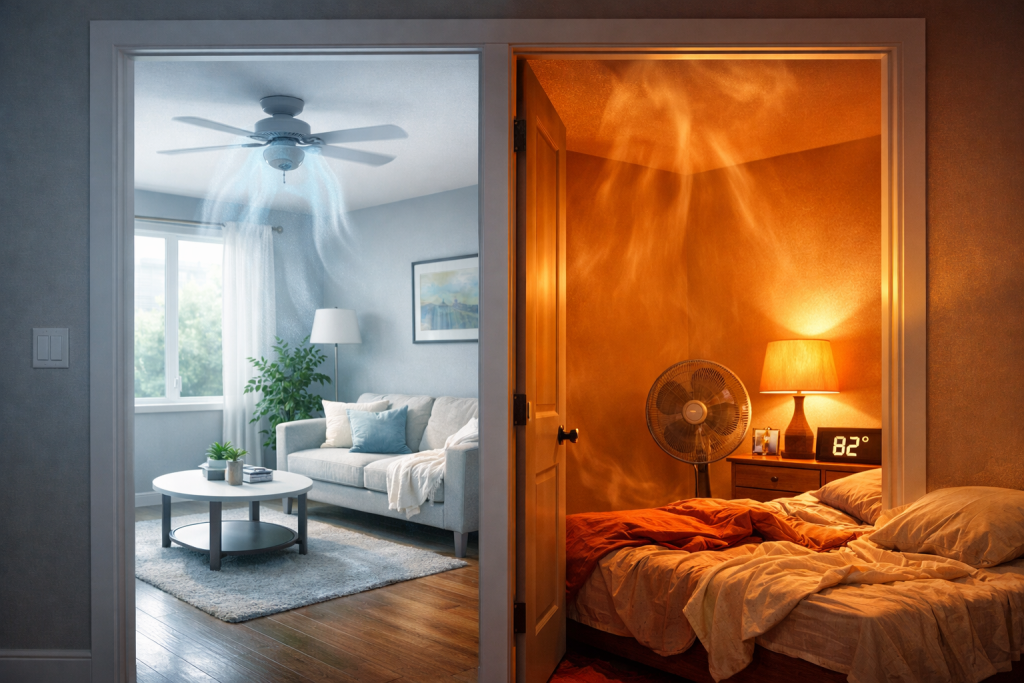
You walk into your living room, perfectly cool and comfortable. Then you step into your bedroom, and suddenly it feels like a completely different climate.
If this sounds familiar, you’re dealing with one of the most common household frustrations: uneven temperatures caused by HVAC airflow problems.
This issue doesn’t just affect comfort. It can also:
- Increase your energy bills
- Put unnecessary strain on your HVAC system
- Reduce overall indoor air quality
The root of the problem usually comes down to one thing: air isn’t being distributed evenly throughout your home.
How HVAC Airflow Works (Simple Explanation)
Think of your HVAC system like your home’s circulatory system.
- The air handler pushes conditioned air
- The ductwork acts like arteries
- The vents and registers deliver air into each room
If anything in this system is blocked, leaking, or poorly designed, airflow becomes uneven, leading to hot and cold spots.
Even small issues can disrupt the balance.
7 Common HVAC Airflow Problems
Let’s break down the most common reasons some rooms feel hotter than others.
1. Blocked or Closed Vents
This is the simplest, and most overlooked, problem.
Furniture, rugs, or curtains can block vents, preventing proper airflow. Sometimes vents are accidentally closed or partially shut.
What happens:
Air gets redirected to other areas, creating imbalance.
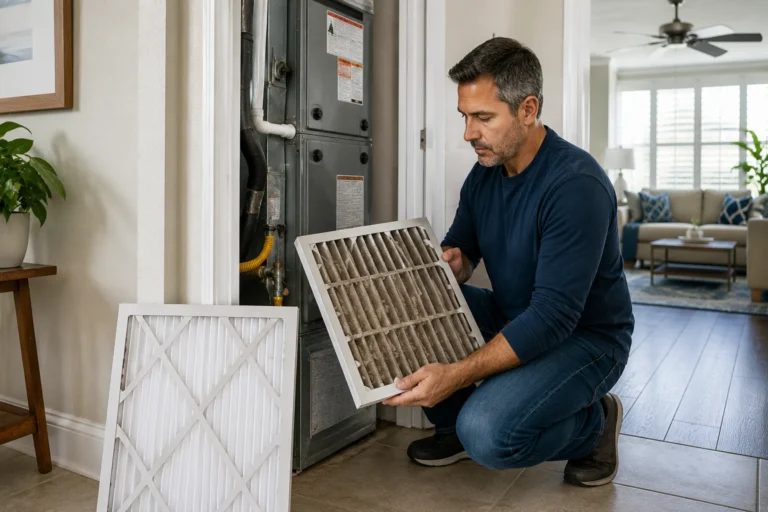
2. Dirty Air Filters
A clogged air filter restricts airflow across your entire system.
Signs:
- Weak airflow from vents
- Increased dust
- Higher energy bills
Replacing your filter is one of the easiest and most effective fixes.
3. Leaky or Damaged Ductwork
If your ducts have leaks, cooled or heated air escapes before reaching certain rooms.
Result:
Some areas get plenty of air, others get almost none.
4. Poor HVAC System Design
Not all systems are designed perfectly, especially in older homes or renovations.
Issues may include:
- Improper duct sizing
- Long duct runs to distant rooms
- Lack of zoning
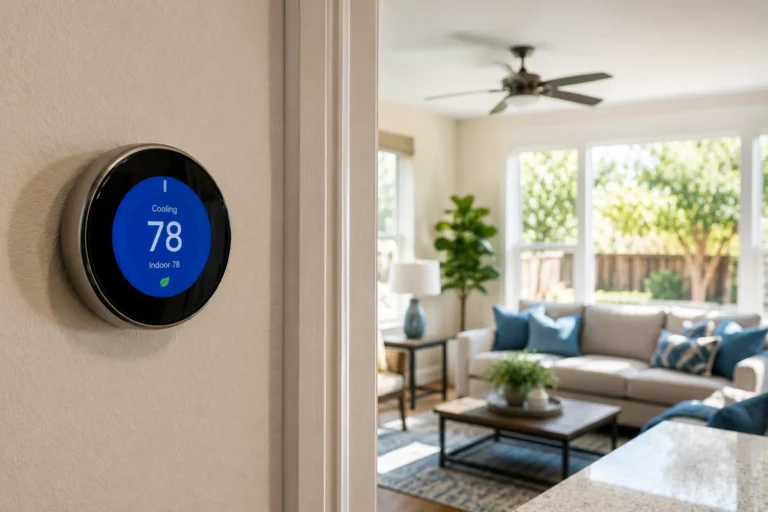
5. Thermostat Location Issues
If your thermostat is located in a cooler or warmer area, it can misread your home’s actual temperature.
Example:
If it’s near a window, it may shut off cooling too early.
6. Poor Insulation
Rooms with poor insulation, especially upstairs, tend to trap heat.
Even if airflow is fine, temperature imbalance still occurs.
7. Aging or Undersized HVAC System
If your system is too small or losing efficiency, it may struggle to distribute air evenly.
How to Diagnose Airflow Issues in Your Home
Before calling a professional, you can do a quick DIY check:
- Walk room to room and compare airflow strength
- Hold your hand near vents to feel differences
- Check if certain vents are barely pushing air
- Inspect visible ducts (if accessible)
- Replace your air filter if it’s dirty
You’re looking for patterns, not perfection.
Simple Fixes You Can Try Right Now
Here are quick actions that often solve airflow issues:
- Open all vents fully
- Move furniture away from registers
- Replace dirty air filters
- Clean vent covers
- Use ceiling fans to improve circulation
These small changes can make a noticeable difference.
When Airflow Problems Require Professional Help
Some issues go beyond DIY fixes.
You may need professional help if:
- Certain rooms consistently receive little to no airflow
- You suspect duct leaks or disconnections
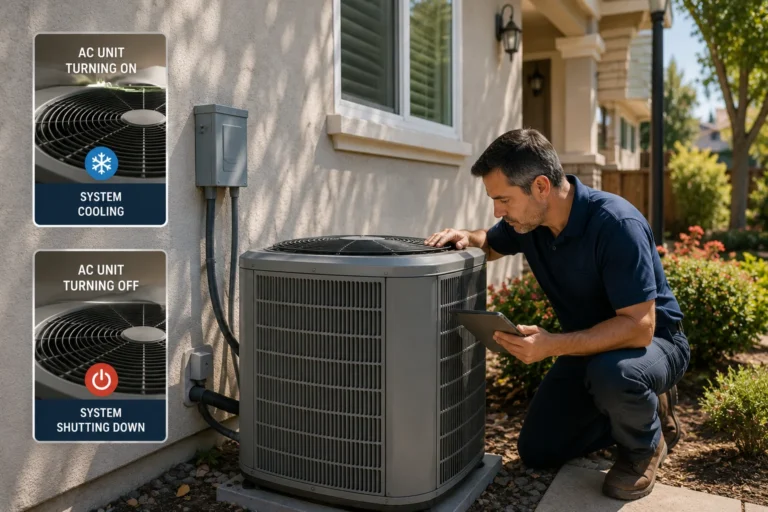
- Your system cycles frequently without reaching set temperature
- Airflow problems are getting worse over time
A technician can perform:
- Airflow testing
- Duct inspection and sealing
- System balancing
- Load calculations
How to Prevent Airflow Issues in the Future
Prevention is always easier (and cheaper) than repairs.
Here’s how to keep your airflow consistent:
- Change filters every 1–3 months
- Schedule regular HVAC maintenance
- Keep vents unobstructed
- Upgrade insulation where needed
- Consider zoning systems for larger homes
Consistency is key.
Room-by-Room Airflow Optimization Guide
Not all rooms in your home behave the same when it comes to airflow. Each space has unique challenges depending on size, usage, sun exposure, and vent placement.
Bedrooms
Bedrooms often suffer from poor airflow because:
- Doors are closed for long periods
- Furniture blocks vents
- Distance from HVAC unit is greater
Optimization Tips:
- Keep vents fully open
- Use a ceiling fan to circulate air
- Slightly crack doors open to improve return airflow
Living Rooms
Living rooms usually have better airflow, but large windows can create heat gain.
Optimization Tips:
- Use curtains or blinds during peak sunlight
- Ensure large furniture isn’t blocking vents
- Add area fans if airflow feels stagnant
Kitchens
Heat-generating appliances make kitchens naturally warmer.
Optimization Tips:
- Use exhaust fans while cooking
- Keep supply vents unobstructed
- Consider additional airflow support if heat persists
Home Offices
Electronics generate heat, often making offices warmer than other rooms.
Optimization Tips:
- Improve airflow with fans
- Keep vents clean and open
- Avoid placing desks over vents
Understanding HVAC Zoning Systems
If airflow problems persist, your home may benefit from HVAC zoning.
A zoning system divides your home into different areas (zones), each controlled independently.
How It Works
- Dampers are installed inside ductwork
- Thermostats control each zone
- Airflow is directed only where needed
Benefits
- Eliminates hot and cold spots
- Improves energy efficiency
- Customizes comfort for each area
When It Makes Sense
- Multi-story homes
- Large floor plans
- Homes with consistent temperature imbalances
The Role of Return Vents in Airflow Balance
Most homeowners focus on supply vents, but return vents are just as important.
Think of airflow as a loop:
- Supply vents push air into rooms
- Return vents pull air back into the system
What Happens When Return Air Is Restricted?
- Pressure builds in rooms
- Air circulation slows down
- Some rooms become uncomfortable
Common Problems
- Blocked return vents
- Too few return vents
- Closed interior doors
Static Pressure: The Hidden Cause of Airflow Issues
Static pressure is one of the most overlooked causes of airflow problems.
What Is Static Pressure?
It’s the resistance air faces as it moves through your HVAC system.
Causes of High Static Pressure
- Dirty filters
- Undersized ducts
- Blocked vents
- Closed dampers
Why It Matters
High static pressure:
- Reduces airflow
- Damages components
- Shortens system lifespan
Multi-Story Homes and Airflow Challenges
If you live in a two-story home, airflow problems can feel unavoidable.
Why Upstairs Rooms Get Hotter
- Heat rises naturally
- Longer duct runs reduce airflow
- Roof exposure increases heat gain
Solutions
- Adjust dampers seasonally
- Install zoning systems
- Improve attic insulation
Seasonal Changes and Their Impact on Airflow
Airflow issues don’t always stay consistent year-round.
Summer Challenges
- Increased cooling demand
- Hot attic air affecting ducts
Winter Challenges
- Uneven heating distribution
- Cold drafts
What You Can Do
- Adjust vents seasonally
- Schedule maintenance twice a year
- Monitor performance changes
Smart Thermostats and Airflow Efficiency
Smart thermostats don’t just control temperature, they can improve airflow efficiency.
Key Features
- Scheduling
- Remote access
- Learning behavior
How They Help
- Prevent overworking your system
- Maintain consistent airflow cycles
- Support zoning systems
Cost Breakdown: Fixing HVAC Airflow Problems
Understanding costs helps you make informed decisions.
Typical Cost Ranges
- Air filter replacement: Low cost
- Duct sealing: Moderate cost
- Air balancing service: Moderate to high
- Zoning system installation: Higher investment
Key Insight
Fixing airflow issues early is almost always cheaper than ignoring them.
Advanced Airflow Testing and Professional Diagnostics
When basic troubleshooting isn’t enough, professionals use advanced tools.
Common Tests
- Airflow measurement at vents
- Static pressure testing
- Duct leakage testing
What This Reveals
- Exact airflow distribution
- Hidden inefficiencies
- System design flaws
How Furniture Placement and Interior Design Affect HVAC Airflow
Most homeowners don’t realize that their interior design choices can directly impact HVAC airflow. You might have a perfectly functioning system, but poor furniture placement can quietly sabotage it.
Why Furniture Placement Matters
Your HVAC system is designed with the assumption that air can flow freely through your space. When furniture blocks vents or disrupts circulation pathways, airflow becomes restricted, leading to uneven temperatures.
Think of airflow like water flowing through a river. If you place obstacles in its path, the flow slows down or diverts elsewhere. The same thing happens with conditioned air inside your home.
Common Design Mistakes That Restrict Airflow
Here are some of the most common (and easily overlooked) issues:
- Couches over floor vents: This completely blocks airflow into a room
- Beds placed against vent walls: Prevents proper air distribution in bedrooms
- Curtains covering vents: Especially problematic for wall-mounted registers
- Bookshelves or cabinets over returns: Restricts air from circulating back into the system
Even partially blocked vents can reduce efficiency and create noticeable temperature differences.
Signs Your Layout Is Affecting Airflow
- Certain rooms feel stuffy or stagnant
- Airflow feels weak despite open vents
- You notice better airflow after rearranging furniture
- Hot and cold spots don’t match duct layout
These clues often point to layout-related airflow restrictions, not mechanical HVAC issues.
How to Optimize Your Layout for Better Airflow
You don’t need to redesign your entire home, small adjustments can make a big difference.
Actionable Tips:
- Keep at least 6–12 inches of clearance around vents
- Avoid placing large furniture directly over or in front of registers
- Use vent deflectors if furniture placement is unavoidable
- Ensure return vents remain completely unobstructed
- Arrange furniture to promote open pathways for air movement
Bonus Tip: Think About Air Circulation, Not Just Vent Access
Airflow isn’t just about air entering a room, it’s about how it moves within the space.
For example:
- Open layouts allow better circulation
- Tight, cluttered rooms trap air
- Strategic fan placement can help redistribute air
By treating airflow as part of your interior design strategy, you can dramatically improve comfort without touching your HVAC system.
Final Thoughts
HVAC airflow problems are more than just a minor inconvenience, they affect your comfort, energy efficiency, and system longevity.
The good news?
Most issues are identifiable and fixable once you understand how your system works.
If some rooms in your home are hotter than others, don’t ignore it. It’s your HVAC system’s way of telling you something isn’t right.
Addressing the problem early can save you money, improve comfort, and extend the life of your system.