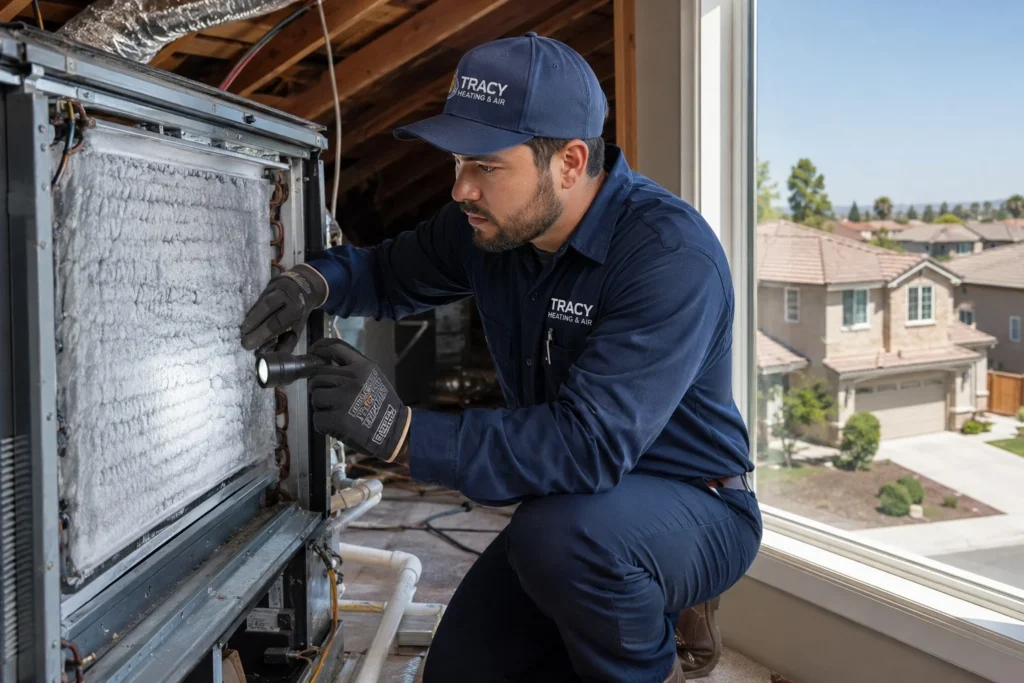
Nothing is more frustrating than turning on your air conditioner during a hot Tracy afternoon only to discover it’s blowing warm air or worse, it’s completely stopped working. After a closer look, you notice a layer of ice covering the indoor unit or refrigerant lines.
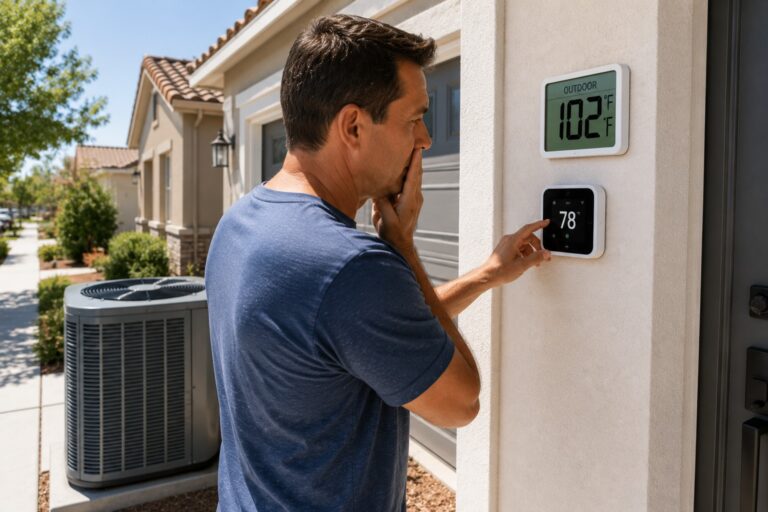
At first glance, it seems impossible. How can an air conditioner freeze when temperatures outside are well over 90°F?
The answer lies inside your HVAC system. A frozen AC is one of the most common cooling problems homeowners experience, and while the ice may seem harmless, it usually signals that something isn’t working correctly.
Understanding why your AC is freezing up can help you prevent expensive repairs, reduce energy waste, and restore comfort much faster.
Is a Frozen AC Normal?
No.
A properly operating air conditioner should never develop ice on its evaporator coil, refrigerant lines, or outdoor components.
Even though the system produces cold air, the evaporator coil is designed to remain just above freezing under normal operating conditions. When airflow decreases or refrigerant pressure changes, the coil temperature can drop below 32°F. Moisture from your home’s air then freezes on the coil.
As more ice forms, airflow becomes even more restricted. This creates a cycle where the ice continues building until the system struggles to cool your home or stops cooling altogether.
Ignoring the problem can eventually damage major components, including the compressor, one of the most expensive parts of an HVAC system.
How Your Air Conditioner Can Freeze in Hot Weather
This surprises many homeowners.
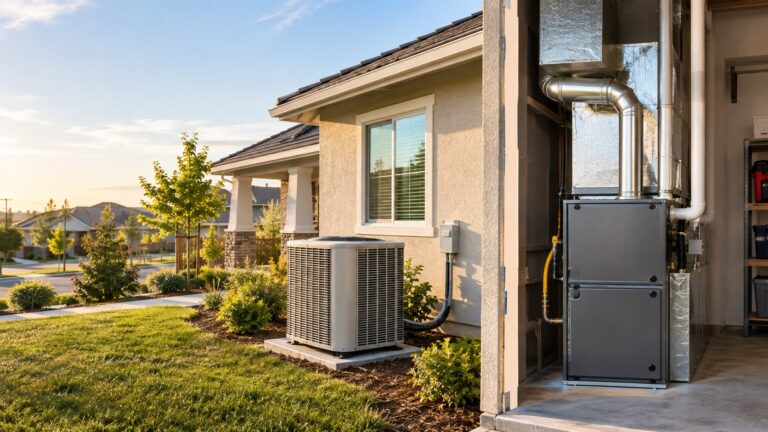
Your air conditioner removes heat from inside your home through a refrigeration cycle. The evaporator coil becomes cold enough to absorb indoor heat but not cold enough to freeze moisture under normal conditions.
Problems arise when:
- Air cannot move across the coil properly.
- Refrigerant pressure becomes too low.
- Mechanical components stop functioning efficiently.
Without enough warm air flowing across the evaporator coil, its temperature drops too low. Condensation turns into ice instead of draining away.
Ironically, the hotter it gets outside, the harder your AC works. If a hidden issue already exists, prolonged operation often makes freezing much worse.
Common Causes of an AC Freezing Up
1. Dirty Air Filters
The most common cause of a frozen air conditioner is a clogged air filter.
Your filter protects the HVAC system by trapping dust, pollen, pet hair, and debris.
As it fills with contaminants:
- Airflow decreases.
- The evaporator coil receives less warm air.
- Coil temperatures fall below freezing.
- Ice forms rapidly.
Fortunately, this is also one of the easiest problems to prevent.
Most homeowners should inspect filters every month and replace them every one to three months depending on:
- Pets
- Allergies
- Construction nearby
- Wildfire smoke seasons
- Overall system usage
2. Closed or Blocked Supply Vents
Many homeowners close vents in unused rooms hoping to reduce cooling costs.
Unfortunately, this often backfires.
Closing too many vents reduces airflow throughout the entire system.
Other airflow restrictions include:
- Furniture covering vents
- Curtains blocking airflow
- Rugs over floor registers
- Dirty return grilles
The evaporator coil depends on consistent airflow. Any restriction increases the likelihood of freezing.
3. Low Refrigerant Levels
Low refrigerant is another leading cause of AC coil freezing.
Contrary to popular belief, refrigerant is not something your AC “uses up.”
If levels are low, there is usually a leak somewhere in the system.
Signs include:
- Ice on refrigerant lines
- Warm air from vents
- Long cooling cycles
- Higher energy bills
- Hissing sounds
- Reduced cooling performance
Refrigerant leaks require professional diagnosis and repair.
4. Dirty Evaporator Coil
Even with a clean filter, dirt can accumulate on the evaporator coil over time.
Dust acts as insulation, preventing efficient heat transfer.
As efficiency drops:
- Coil temperatures decrease
- Moisture freezes
- Ice spreads rapidly
Professional coil cleaning during annual maintenance helps prevent this issue while improving overall efficiency.
5. Blower Fan Problems
Your blower motor pushes conditioned air throughout your home.
If it begins failing, airflow decreases dramatically.
Potential issues include:
- Worn motor bearings
- Electrical failures
- Damaged fan blades
- Loose belts (older systems)
- Failing capacitors
Because airflow is essential for proper cooling, blower issues frequently contribute to frozen evaporator coils.
6. Thermostat Problems
Sometimes the thermostat, not the air conditioner, is the problem.
Possible thermostat issues include:
- Incorrect calibration
- Faulty sensors
- Continuous cooling commands
- Programming errors
If your system runs almost nonstop, especially overnight, excessive runtime can contribute to icing under certain conditions.
7. Dirty Condensate Components
Moisture removed from indoor air must drain properly.
If condensate drains become clogged, excess moisture can create additional problems around the evaporator section.
Although drainage issues alone rarely cause freezing, they often accompany other maintenance concerns that increase the likelihood of ice buildup.
8. Extremely Dirty Outdoor Condenser
While indoor airflow causes most freezing issues, outdoor equipment matters too.
A condenser clogged with:
- Leaves
- Cottonwood
- Dirt
- Grass clippings
- Debris
cannot efficiently release heat.
This reduces system performance and places additional strain on the refrigeration cycle.
What Should You Do If Your AC Freezes?
If you discover ice on your air conditioner:
Step 1: Turn Off Cooling
Switch your thermostat from “Cool” to “Off.”
Do not continue running the AC while frozen.
Step 2: Turn the Fan On
Set the thermostat fan to “On.”
This circulates room-temperature air over the evaporator coil and speeds thawing.
Depending on ice buildup, thawing may take several hours.
Step 3: Check the Air Filter
Replace the filter if it appears dirty.
A clean filter may solve the problem if airflow restriction was the only issue.
Step 4: Inspect Air Vents
Verify that supply and return vents remain open and unobstructed.
Remove furniture or other objects restricting airflow.
Step 5: Watch for Water
As the ice melts, water may collect around the indoor unit.
Keep the surrounding area dry to avoid slip hazards and potential water damage.
DIY Checks You Can Safely Perform
Homeowners can safely inspect several items before scheduling professional service.
Check Air Filters
Replace dirty filters immediately.
Inspect Supply Registers
Ensure vents are fully open.
Verify Return Airflow
Keep return vents free from furniture or storage.
Examine Thermostat Settings
Confirm the cooling schedule and temperature settings are appropriate.
Look at the Outdoor Unit
Remove leaves, weeds, or debris around the condenser while avoiding any internal components.
Never attempt to:
- Add refrigerant
- Open sealed refrigerant lines
- Clean coils with harsh chemicals
- Disassemble electrical components
These repairs require specialized equipment and training.
When Should You Call an HVAC Professional?
Professional service is recommended if:
- Ice returns after replacing the filter.
- Cooling performance remains poor.
- The system frequently freezes.
- Refrigerant lines develop heavy frost.
- Water leaks persist after thawing.
- You hear unusual noises.
- Utility bills continue increasing without explanation.
A trained technician can identify whether the problem involves refrigerant levels, airflow restrictions, electrical components, blower performance, or mechanical failures.
How to Prevent Your AC from Freezing Again
Preventive maintenance is almost always less expensive than emergency repairs.
Here are proven ways to reduce the risk of future freeze-ups.
Replace Filters Regularly
Clean filters improve airflow, indoor air quality, and efficiency.
Schedule Annual HVAC Maintenance
Routine inspections allow technicians to identify small problems before they become expensive repairs.
Annual maintenance typically includes:
- Refrigerant checks
- Coil cleaning
- Electrical testing
- Drain inspection
- Airflow measurements
- Thermostat calibration
- Blower inspection
Keep Vents Open
Avoid closing multiple vents throughout the house.
Balanced airflow keeps your system operating efficiently.
Keep the Outdoor Unit Clean
Maintain at least two feet of clearance around the condenser.
Trim shrubs and remove debris regularly.
Address Small Problems Early
Strange sounds, reduced airflow, inconsistent temperatures, or longer cooling cycles are often early warning signs.
Prompt attention can prevent much larger repairs later.
Why Tracy Homeowners Experience Frozen AC Units
Homes in Tracy face unique cooling demands.
Long stretches of hot, dry summer weather often require air conditioners to run for extended periods each day. That continuous operation places additional stress on filters, blower motors, evaporator coils, and refrigerant systems.
Local conditions can also contribute to HVAC wear, including:
- Dust from dry summer conditions
- Pollen during seasonal changes
- Increased runtime during heat waves
- Greater demand during consecutive triple-digit days
Because systems work harder for longer periods, routine maintenance becomes even more important for homeowners in Tracy. Keeping filters clean, scheduling seasonal inspections, and addressing minor cooling issues early can significantly reduce the chances of an unexpected freeze-up in the middle of summer.
Final Thoughts
A frozen air conditioner is never something to ignore. While the visible ice may seem like the problem, it is actually a symptom of an underlying issue such as restricted airflow, low refrigerant, dirty coils, or a malfunctioning blower.
The good news is that many freeze-ups can be prevented with simple habits like replacing air filters on schedule, keeping vents unobstructed, and investing in routine HVAC maintenance. When ice continues to return or your system struggles to cool your home, professional diagnosis is the safest and most cost-effective next step.
By understanding the causes of an AC freezing up and acting early, Tracy homeowners can improve energy efficiency, extend the life of their cooling system, and enjoy reliable comfort throughout California’s hottest months.