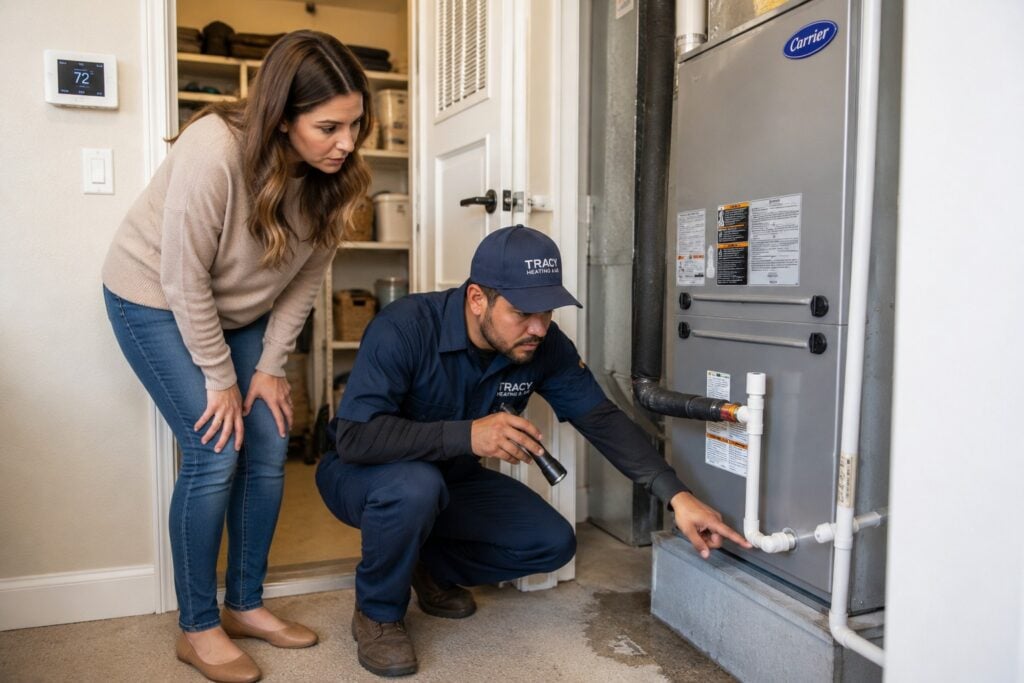
Few household problems are more frustrating during a hot Tracy summer than discovering a puddle of water beneath your air conditioner. Whether you notice water dripping from your indoor unit, damp spots around your vents, or moisture collecting near the furnace closet, it’s natural to wonder whether the issue is minor or a sign of an expensive repair.
The good news is that an air conditioner leaking water doesn’t always mean the system is failing. In many cases, the cause is relatively straightforward and can be addressed before it develops into a much larger problem. However, ignoring the leak can lead to water damage, mold growth, reduced cooling performance, and costly HVAC repairs.
This guide explains why your air conditioner may be leaking water, what you can safely inspect yourself, when it’s time to call an HVAC professional, and how regular maintenance helps prevent leaks from happening in the first place.
Is It Normal for an Air Conditioner to Produce Water?
Yes.
Your air conditioner naturally removes humidity from the air as it cools your home. Warm indoor air passes over the cold evaporator coil, causing moisture in the air to condense into water, similar to how condensation forms on a cold glass of ice water.
That water is supposed to flow through the condensate drain line and safely exit your home.
If everything is functioning properly, you’ll never notice the moisture because it drains away automatically.
Problems begin when something interrupts this drainage process or causes excessive condensation inside the system.
Why Is Your Air Conditioner Leaking Water?
Several different issues can cause water to leak from an indoor air conditioning unit. Some are relatively simple, while others require professional diagnosis.
1. A Clogged Condensate Drain Line
This is by far the most common reason homeowners discover water around their AC system.
Over time, algae, dirt, dust, pet hair, and debris can build up inside the condensate drain line. Eventually, the blockage prevents water from flowing outside.
Instead of draining properly, the water backs up into the drain pan until it overflows.
Common symptoms include:
- Water around the indoor unit
- Musty odors
- AC shuts off unexpectedly
- High indoor humidity
- Visible moisture near the furnace
Fortunately, this is one of the most preventable HVAC problems through routine maintenance.
2. Dirty Air Filter
Many homeowners don’t realize that a neglected air filter can eventually cause water leaks.
A clogged filter restricts airflow over the evaporator coil.
Without adequate airflow, the coil becomes much colder than intended and may freeze.
Once the ice melts, the resulting water can overwhelm the drainage system and spill onto your floor.
Other signs of a dirty air filter include:
- Weak airflow
- Higher utility bills
- Dusty indoor air
- Uneven cooling
- Longer cooling cycles
Replacing the air filter every one to three months is one of the easiest ways to protect your HVAC system.
3. Frozen Evaporator Coil
A frozen evaporator coil is another common culprit behind indoor water leaks.
The coil may freeze because of:
- Restricted airflow
- Dirty coils
- Low refrigerant
- Blocked vents
- Blower motor issues
Once the ice begins melting, it produces far more water than the condensate system is designed to handle.
As a result, water may overflow the drain pan or leak around the indoor unit.
If your evaporator coil repeatedly freezes, professional service is recommended because the underlying cause often requires specialized equipment to diagnose.
4. Damaged or Rusted Drain Pan
Older air conditioning systems often develop worn or corroded drain pans.
Years of moisture exposure can eventually create:
- Rust
- Cracks
- Small holes
- Warped metal
Instead of directing condensation toward the drain line, the damaged pan allows water to escape beneath the system.
While some minor damage can occasionally be repaired, older drain pans often require replacement.
5. Low Refrigerant Levels
Low refrigerant affects more than your cooling performance.
When refrigerant levels drop below manufacturer specifications, pressure inside the evaporator coil changes, causing temperatures to fall too low.
This leads to ice formation.
When the ice melts, water leaks often follow.
Additional warning signs include:
- Warm air from vents
- Hissing sounds
- Longer cooling cycles
- Poor humidity removal
- Higher electricity bills
Because refrigerant systems are sealed, low refrigerant usually indicates a leak that should be professionally repaired.
6. Improper Installation
If your AC system was recently installed and immediately began leaking water, installation errors could be responsible.
Examples include:
- Drain line installed at the wrong angle
- Improper unit leveling
- Loose drain connections
- Incorrect drain trap installation
- Poor condensate routing
Even a small installation mistake can prevent water from draining correctly.
Professional correction usually resolves the issue quickly.
7. Condensate Pump Failure
Some homes rely on a condensate pump to move water away from the indoor HVAC system.
If the pump stops working due to age, electrical failure, or mechanical wear, water has nowhere to go.
Signs of pump failure include:
- Water collecting rapidly
- Pump making unusual noises
- Pump never activating
- Indoor leaks during every cooling cycle
Fortunately, condensate pumps are typically straightforward for HVAC technicians to diagnose and replace.
DIY Checks You Can Safely Perform
While some air conditioning issues require professional service, homeowners can safely perform a few simple inspections before scheduling an appointment.
Replace the Air Filter
A clogged filter is inexpensive to fix and frequently contributes to airflow problems.
If your filter appears dirty, replace it with the correct size recommended by the manufacturer.
Check Around the Indoor Unit
Look for obvious signs of:
- Standing water
- Rust
- Ice buildup
- Water stains
- Mold growth
These observations can help narrow down the cause when speaking with an HVAC technician.
Inspect the Drain Line
If your condensate drain line is visible, look for obvious blockages or standing water near the outlet.
Avoid inserting sharp objects or attempting to dismantle the drainage system, as this can cause additional damage.
Ensure Supply Vents Are Open
Closed or blocked vents reduce airflow and may contribute to frozen coils.
Walk through your home and confirm furniture, rugs, or curtains are not obstructing airflow.
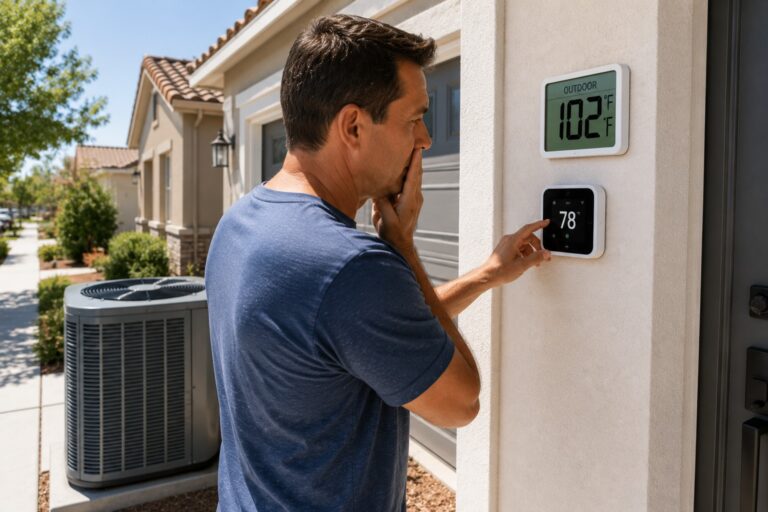
Monitor Your Thermostat
Pay attention to whether your system is:
- Running constantly
- Short cycling
- Struggling to reach the set temperature
- Producing inconsistent airflow
These symptoms may point toward underlying HVAC problems contributing to the water leak.
Warning Signs You Shouldn’t Ignore
Although a small amount of water may seem harmless, delaying repairs can create much larger problems.
Contact an HVAC professional promptly if you notice:
- Water leaking every day
- Ceiling stains near HVAC equipment
- Mold or mildew odors
- Electrical issues near the air handler
- Ice repeatedly forming on refrigerant lines
- Water damaging flooring or drywall
- Reduced cooling performance despite continuous operation
Addressing these warning signs early can help prevent extensive repairs and protect both your HVAC system and your home.
When Should You Call an HVAC Professional?
While replacing an air filter or checking for obvious obstructions are tasks many homeowners can handle, some problems require specialized tools and expertise. Continuing to operate an air conditioner that is leaking water can increase the risk of water damage and may allow a minor issue to become a much more expensive repair.
It’s time to schedule professional service if:
- Water continues leaking after replacing the air filter.
- The evaporator coil is frozen.
- You suspect low refrigerant.
- The condensate drain line repeatedly clogs.
- The drain pan is cracked or rusted through.
- The condensate pump has stopped working.
- Your system is making unusual noises in addition to leaking.
- Your air conditioner no longer cools your home effectively.
A trained HVAC technician can inspect the entire cooling system, identify the root cause of the leak, and recommend the most effective repair rather than simply addressing the visible symptom.
Final Thoughts
Finding water around your indoor air conditioner can be alarming, but it’s often an early warning that your cooling system needs attention rather than a sign that it must be replaced.
Common causes, including clogged condensate drain lines, dirty air filters, frozen evaporator coils, damaged drain pans, low refrigerant levels, and condensate pump failures, can usually be identified before they cause extensive damage when addressed promptly.
By performing simple homeowner inspections, replacing air filters regularly, and investing in routine professional maintenance, Tracy homeowners can reduce the likelihood of unexpected leaks while improving energy efficiency, protecting indoor comfort, and extending the life of their HVAC systems.
Taking action as soon as you notice a leak not only helps protect your home from water damage but also gives your air conditioning system the best opportunity to continue operating reliably throughout California’s hottest months.