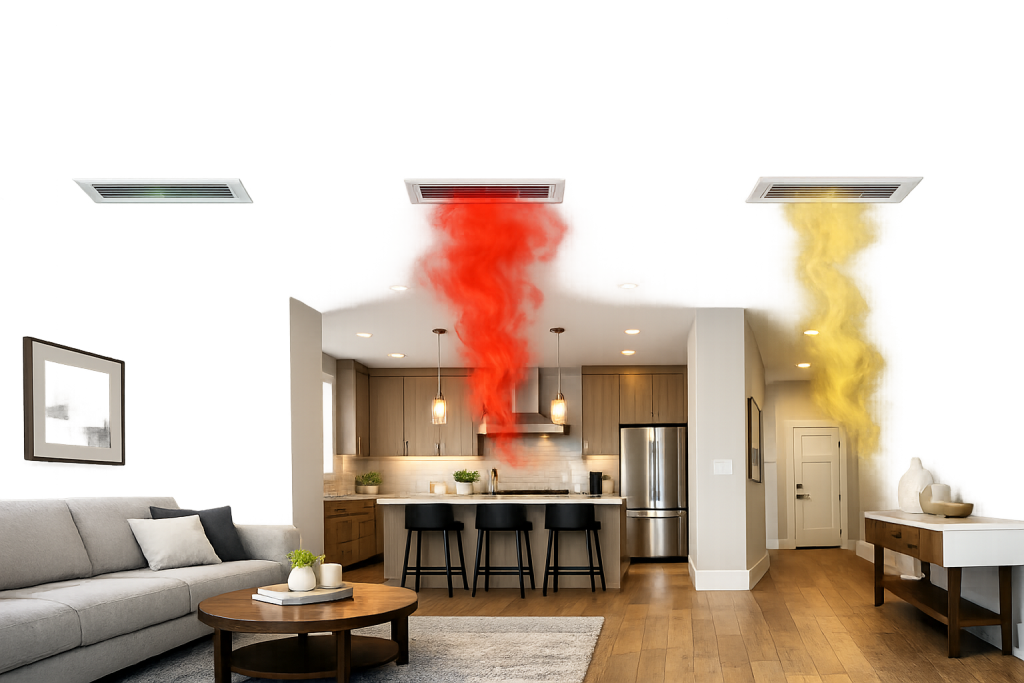
Your HVAC system is supposed to control temperature, not fill your home with strange, unpleasant odors.
So when you suddenly notice a musty, burning, or even rotten smell coming from your vents, it’s more than just annoying, it’s your system trying to tell you something.
Think of HVAC odors like warning lights on your car’s dashboard. Ignore them long enough, and what starts as a minor inconvenience can quickly turn into an expensive, or even dangerous, problem.
The good news? Most HVAC smells have identifiable causes, and many can be addressed before they escalate.
Let’s break down exactly what those smells mean and what you should do next.
The Science Behind HVAC Odors
Your HVAC system circulates air through filters, coils, ducts, and vents. Along the way, it can pick up:
- Moisture
- Dust and debris
- Bacteria and mold
- Electrical or mechanical byproducts
When these elements interact, they create odors.
For example:
- Moisture + darkness = mold growth
- Dust + heat = burning smell
- Gas leaks = sulfur-like odor
Understanding this helps you connect the smell to the source.
Musty or Moldy Smell: A Moisture Problem
A musty smell is one of the most common HVAC complaints.
It often indicates:
- Mold or mildew in ductwork
- A clogged condensate drain
- Moisture buildup on evaporator coils
This smell is especially noticeable when the AC first turns on.
Why it matters:
Mold spores can circulate through your home, triggering allergies, asthma, and respiratory issues.
What to do:
- Replace your air filter
- Check for visible moisture around your unit
- Schedule a professional duct inspection
Burning Smell: Dust or Something Dangerous?
A burning smell can mean two very different things.
Harmless cause:
If you just turned on your heater after months of inactivity, it’s likely dust burning off.
Dangerous causes:
- Overheating motor
- Electrical wiring issues
- Failing components
What to do:
If the smell disappears quickly, it’s likely harmless.
If it lingers or smells sharp/electrical, turn off your system immediately and call a professional.
Rotten Egg Smell: A Serious Safety Warning
This is one smell you should never ignore.
A rotten egg odor usually indicates a natural gas leak.
Utility companies add this sulfur-like smell to gas specifically so you can detect it.
What to do immediately:
- Turn off your HVAC system
- Leave your home
- Contact your gas company or emergency services
Do NOT attempt to troubleshoot this yourself.
Chemical or Sweet Smell: Refrigerant Issues
If your AC smells sweet or chemical-like, it could be a refrigerant leak.
Refrigerant is essential for cooling, but leaks can:
- Reduce system efficiency
- Damage components
- Pose health risks with prolonged exposure
Signs that confirm it:
- AC not cooling properly
- Hissing sounds
- Increased energy bills
Action:
Call an HVAC professional immediately. Refrigerant handling requires certification.
Dirty Sock Syndrome: The Strange but Common Culprit
Yes, it’s a real thing.
Dirty sock syndrome produces a foul, gym-sock-like smell when your system runs.
Cause:
Bacteria buildup on the evaporator coil.
Why it happens:
- Moisture + organic material
- Poor filtration
- Lack of maintenance
Fix:
- Coil cleaning
- UV light installation
- Regular maintenance
Exhaust or Smoky Smell: Carbon Monoxide Risks
If your HVAC smells like exhaust fumes, this is a major red flag.
It could indicate:
- Cracked heat exchanger
- Improper combustion
- Carbon monoxide leakage
Carbon monoxide is odorless, but system malfunctions can produce related smells.
Symptoms to watch:
- Headaches
- Dizziness
- Nausea
Action:
- Turn off system
- Ventilate your home
- Call a professional immediately
Pet or Dirty Smell: Airflow Contamination
Sometimes the smell isn’t mechanical, it’s environmental.
Your HVAC system may be circulating:
- Pet dander
- Dust buildup
- Debris in ducts
Solution:
- Deep duct cleaning
- Filter upgrades
- Air purification systems
When HVAC Smells Become Health Hazards
Not all smells are just unpleasant, some are dangerous.
Prolonged exposure to:
- Mold
- Gas leaks
- Refrigerants
Can lead to serious health problems.
Your HVAC system directly affects the air you breathe, so odors should always be taken seriously.
DIY Fixes vs Professional Solutions
DIY:
- Replace filters
- Clean vents
- Check for visible issues
Professional:
- Electrical repairs
- Refrigerant handling
- Deep system cleaning
When in doubt, always choose safety over guesswork.
Preventing HVAC Odors Before They Start
The best fix is prevention.
Key habits:
- Change filters every 1–3 months
- Schedule annual maintenance
- Keep ducts clean
- Control indoor humidity
Think of maintenance as insurance against costly breakdowns.
Why HVAC Smells Often Get Worse Over Time
One of the biggest mistakes homeowners make is assuming a smell will “go away on its own.”
In reality, HVAC odors almost always intensify over time because the root cause continues to develop inside your system.
For example, a small patch of mold in your ductwork doesn’t stay small. With constant airflow and moisture, it spreads, turning a faint musty odor into a persistent, whole-home issue.
Similarly, electrical issues that cause a light burning smell can escalate into component failure or even fire hazards if ignored.
Think of HVAC smells like a slow leak under your sink. At first, it’s barely noticeable. But over time, it leads to structural damage, mold, and expensive repairs.
The key takeaway:
Odors are early warning signs, not temporary annoyances.
Addressing them early almost always results in:
- Lower repair costs
- Faster fixes
- Less disruption to your home
Seasonal HVAC Smells: What’s Normal vs Not
Not every HVAC smell is a cause for panic, some are seasonal and expected.
Common seasonal smells:
- Burning dust (fall/winter): First time turning on heat
- Slight mustiness (spring): System reactivating after inactivity
These typically fade within a few hours.
Not normal:
- Persistent burning smell
- Strong musty odor that doesn’t go away
- Chemical or gas-like smells
Seasonal transitions put stress on your HVAC system. Components sit unused for months, allowing dust and moisture to accumulate.
That’s why many odor issues appear right when you switch modes.
The best way to handle this?
Schedule maintenance before the season starts, not after problems appear.
How Air Filters Play a Bigger Role Than You Think
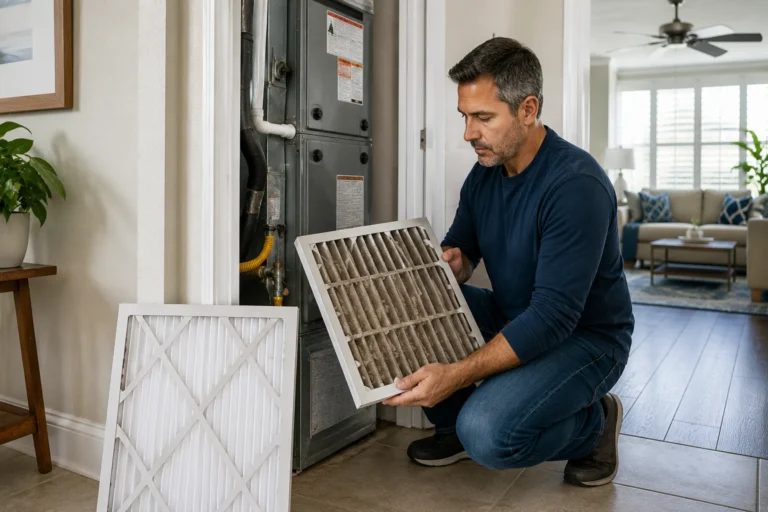
Your air filter is your HVAC system’s first line of defense and one of the most overlooked causes of odors.
A clogged or dirty filter can:
- Trap moisture and create musty smells
- Circulate stale, contaminated air
- Force your system to work harder
Over time, filters become breeding grounds for bacteria and mold.
This leads to odors that seem like major system issues, but are actually simple fixes.
Pro tip:
Upgrade to high-quality filters with better filtration ratings if:
- You have pets
- You notice recurring odors
- You suffer from allergies
Changing your filter regularly is one of the easiest and most effective ways to eliminate HVAC smells.
The Role of Humidity in HVAC Odors
Humidity is one of the biggest hidden contributors to HVAC smells.
When indoor humidity levels are too high, your system becomes the perfect environment for:
Even if your HVAC system is functioning properly, excess moisture can lead to persistent odors.
Ideal indoor humidity:
Between 30% and 50%
Anything above that increases the risk of odor-causing growth.
Solutions:
- Install a whole-home dehumidifier
- Ensure proper drainage in your HVAC system
- Use exhaust fans in kitchens and bathrooms
Controlling humidity doesn’t just improve comfort, it directly impacts the air you breathe.
Why Ductwork Is Often the Hidden Source
Many homeowners focus on the HVAC unit itself, but the real culprit is often hidden in the ductwork.
Over time, ducts can accumulate:
- Dust and debris
- Mold growth
- Pest contamination
Since ducts distribute air throughout your home, any odor inside them gets amplified and spread everywhere.
Signs your ducts are the problem:
- Odor is stronger in certain rooms
- Smell returns quickly after cleaning
- Visible dust buildup around vents
Professional duct cleaning can remove deep-seated contaminants and dramatically improve air quality.
Smart Home Technology and Odor Detection
Modern HVAC systems are getting smarter and that includes detecting potential odor-related issues.
Smart thermostats and sensors can now:
- Monitor air quality
- Detect unusual system behavior
- Alert you to performance issues early
While they may not “smell” odors directly, they can identify the conditions that cause them.
For example:
- Sudden humidity spikes
- Reduced airflow
- Inefficient cooling cycles
These early warnings allow you to act before odors even develop.
It’s like having a preventative maintenance system running 24/7.
Long-Term Benefits of Eliminating HVAC Odors
Fixing HVAC odors isn’t just about comfort, it has long-term benefits for your entire home.
Benefits include:
- Improved indoor air quality
- Better system efficiency
- Lower energy bills
- Longer HVAC lifespan
- Reduced health risks
When your HVAC system runs cleanly, it performs better in every way.
Think of it like maintaining a car. A clean, well-maintained engine doesn’t just run smoother, it lasts longer and costs less over time.
The Cost of Waiting Too Long to Fix HVAC Smells
Delaying action on HVAC odors can lead to significantly higher costs.
What starts as:
Can turn into:
- A $500 repair
- Or even a $5,000 system replacement
Here’s how costs escalate:
- Mold spreads → duct cleaning required
- Electrical issues worsen → component failure
- Refrigerant leaks expand → compressor damage
The longer you wait, the more complex, and expensive, the fix becomes.
Final Thoughts: Trust Your Nose
Your HVAC system communicates through sound, performance and smell.
When something smells off, it usually is.
By identifying odors early, you can:
- Save money
- Protect your health
- Extend your system’s lifespan
So the next time you notice a strange smell, don’t ignore it, investigate it.