When most homeowners think about air pollution, they picture freeway traffic or smoky skies during wildfire season. What many don’t realize is that the air inside their home can be significantly more polluted than the air outside, especially in Tracy, California.
According to environmental research, indoor air can be two to five times more contaminated than outdoor air. During wildfire season in the Central Valley, that number can climb even higher.
You spend nearly 90% of your time indoors. That means the air circulating through your HVAC system directly impacts your health, your sleep, and even your energy levels.
Indoor air quality in Tracy, CA isn’t just a comfort issue. It’s a year-round health priority.
Why Tracy’s Location Impacts Your Home’s Air
Tracy sits at a unique crossroads of environmental factors:
- Agricultural operations throughout the Central Valley
- Seasonal pollen cycles from grass, trees, and weeds
- Dry summer winds that stir soil and dust
- Wildfire smoke drifting from Northern and Central California
Unlike coastal regions where marine air helps disperse pollutants, the Central Valley often traps airborne particles due to atmospheric inversion layers.
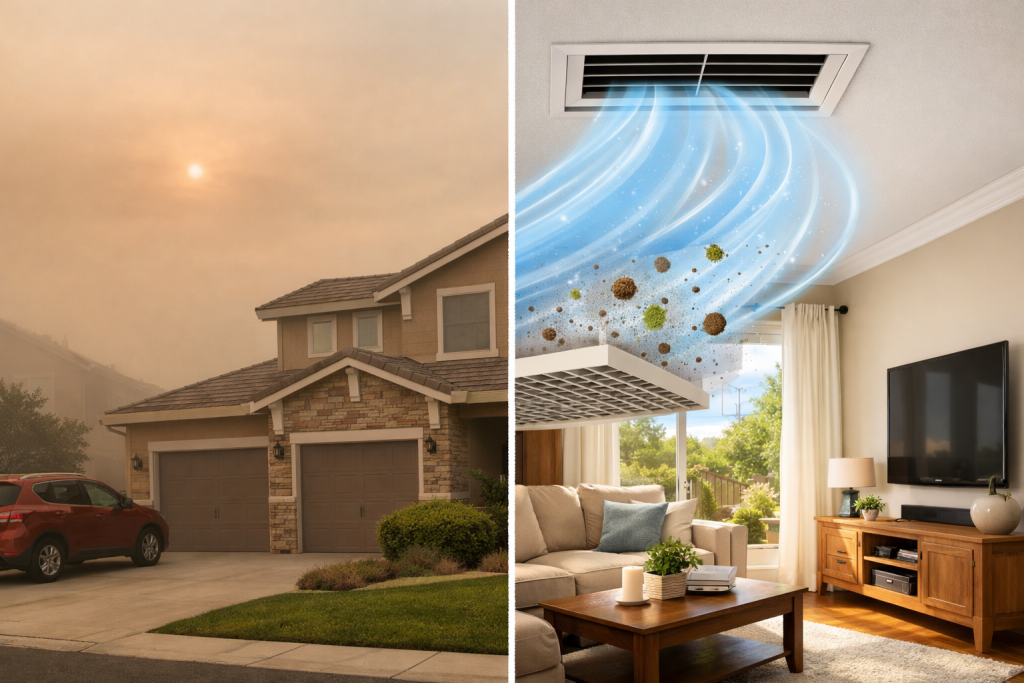
When smoke or dust settles over the Valley, it lingers. And when it lingers outside, it eventually finds its way inside.
Wildfire Smoke and PM2.5: What You’re Really Breathing
Wildfire smoke contains a dangerous mixture of gases and microscopic particles called PM2.5, particulate matter measuring 2.5 microns or smaller.
To put that into perspective:
A human hair is about 70 microns thick.
PM2.5 particles are roughly 30 times smaller.
These particles are small enough to travel deep into the lungs and even enter the bloodstream.
During wildfire season in California, these particles can:
- Trigger asthma attacks
- Worsen respiratory conditions
- Cause headaches and fatigue
- Irritate eyes and sinuses
- Reduce overall air quality for weeks
Without proper HVAC filtration, your system may circulate these particles throughout your home.
How Smoke Enters Even Well-Sealed Homes
Many homeowners assume that closing windows is enough. Unfortunately, smoke infiltration is more complicated.
Smoke can enter through:
- Attic ventilation
- Tiny gaps around doors and windows
- Recessed lighting
- HVAC return air intakes
- Duct leaks in attics or crawlspaces
Even modern homes are not completely airtight.
Once smoke particles enter, your HVAC system either filters them out or redistributes them room to room.
That’s why filtration and system design matter so much during wildfire season in Tracy.
Central Valley Allergens and Agricultural Dust
Wildfires are only part of the equation.
Tracy homeowners also deal with:
- Grass pollen in spring
- Tree pollen in early seasons
- Weed pollen in late summer
- Agricultural soil dust year-round
- Mold spores after damp winter conditions
Agricultural activity sends fine particles into the air that can travel for miles. You don’t need to live next to farmland to be affected.
Over time, these particles accumulate in:
- Carpets
- Upholstery
- Ductwork
- HVAC filters
If your allergies worsen at home but improve elsewhere, your indoor air quality may be contributing to the problem.
Health Effects of Poor Indoor Air Quality
Indoor air contamination doesn’t always produce dramatic symptoms. Often, it’s subtle and persistent.
Common effects include:
- Chronic congestion
- Frequent headaches
- Poor sleep quality
- Dry throat
- Skin irritation
- Increased allergy medication use
Children, elderly individuals, and anyone with asthma are particularly sensitive.
Over time, poor indoor air quality can impact overall well-being more than many homeowners realize.
Warning Signs Your Indoor Air Needs Attention
Look for these indicators:
- Dust reappears quickly after cleaning
- Persistent musty smells
- Visible haze during smoky days
- Uneven airflow in rooms
- Increased static shocks (low humidity)
- Worsening allergy symptoms indoors
These are signals your HVAC system may not be filtering or balancing air effectively.
MERV Ratings vs. HEPA Filters: What Tracy Homeowners Must Know
Choosing the right air filter is not as simple as grabbing one off a store shelf.
Understanding MERV Ratings
MERV (Minimum Efficiency Reporting Value) measures a filter’s ability to capture particles.
- MERV 1–4: Basic dust
- MERV 5–8: Pollen, mold spores
- MERV 9–12: Fine dust and pet dander
- MERV 13–16: Smoke particles and bacteria
For wildfire smoke in Tracy, MERV 13 is often recommended — if your system can support it.
What About HEPA?
HEPA filters capture 99.97% of particles at 0.3 microns.
However, most residential HVAC systems cannot handle true HEPA filtration without modification. HEPA filters create higher resistance, which can strain systems not designed for them.
The key is matching filtration efficiency with airflow capacity.
Can Your HVAC System Handle Higher Filtration?
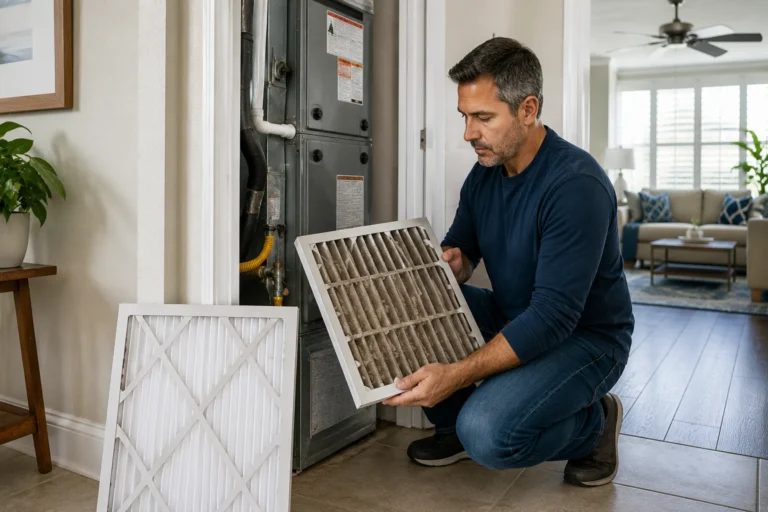
Installing a high-MERV filter in a system not designed for it can:
- Restrict airflow
- Increase energy consumption
- Overheat components
- Shorten system lifespan
That’s why professional evaluation matters.
Upgraded filtration cabinets are often installed to support higher-efficiency filters without compromising airflow.
Whole-Home Air Purifiers vs. Portable Units
Portable air purifiers:
- Clean one room at a time
- Require multiple units for full coverage
- Need frequent maintenance
Whole-home purification systems:
- Integrate directly into HVAC
- Clean all circulated air
- Provide consistent protection
- Require less hands-on management
For families in Tracy dealing with wildfire smoke and seasonal allergens, whole-home systems offer broader, more reliable coverage.
UV Lights, Air Scrubbers, and Advanced Purification Systems
Beyond filtration, advanced solutions include:
UV Germicidal Lights
Installed within HVAC systems to neutralize bacteria and mold spores.
Air Scrubbers
Use ionization technology to reduce airborne particles and contaminants.
Media Air Cleaners
High-capacity filtration systems that capture smaller particles than standard filters.
These technologies add another protective layer during heavy smoke or allergy seasons.
The Role of Ductwork in Air Quality
Even the best filter can’t compensate for leaky ductwork.
Duct leaks can:
- Pull dusty attic air into circulation
- Reduce filtration efficiency
- Lower system performance
Sealing and insulating ductwork improves both air quality and energy efficiency.
Humidity Control in California’s Central Valley Climate
Humidity impacts how pollutants behave indoors.
Low humidity (common in summer):
- Increases airborne particle suspension
- Causes sinus irritation
High humidity (winter months):
- Encourages mold growth
- Promotes dust mites
Maintaining 30–50% humidity creates a healthier indoor environment.
Whole-home humidifiers and dehumidifiers help stabilize these levels year-round.
A Seasonal Indoor Air Quality Plan for Tracy Homes
Spring
Replace filters before pollen peaks.
Summer
Upgrade to MERV 13 during wildfire season. Monitor air quality index reports.
Fall
Inspect ductwork and check seals.
Winter
Balance humidity and schedule system inspection.
Proactive care reduces emergency reactions.
When to Schedule Professional Indoor Air Quality Testing
Consider testing if:
- Allergy symptoms persist
- You’ve remodeled recently
- You suspect mold
- Wildfire season has been severe
- You purchased an older home
Professional testing and professional cleaning identify and remove specific pollutants and guides targeted improvements.
Long-Term Benefits of Cleaner Indoor Air
Improved indoor air quality can lead to:
- Better sleep
- Fewer respiratory flare-ups
- Reduced cleaning frequency
- Lower strain on HVAC equipment
- Improved overall comfort
Think of your HVAC system as your home’s lungs. When it filters effectively, everything functions more smoothly.
How Energy Efficiency and Indoor Air Quality Work Together
Many homeowners don’t realize that indoor air quality and energy efficiency are closely connected. When your HVAC system struggles with clogged filters, leaky ductwork, or improper airflow, it must work harder to maintain comfortable temperatures. That extra strain increases energy usage and reduces filtration performance at the same time.
High-efficiency systems with properly sealed ducts and balanced airflow not only reduce utility bills, they also improve how effectively air is filtered and circulated. Variable-speed blowers, for example, allow air to move more consistently through high-efficiency filters without overwhelming the system.
In Tracy’s climate, where both extreme heat and wildfire smoke are concerns, optimizing energy performance directly supports cleaner, healthier indoor air.
Final Thoughts
Indoor air quality in Tracy, CA is shaped by wildfire smoke, agricultural dust, Valley allergens, and seasonal humidity shifts.
Your home should be your refuge, especially when outdoor air conditions decline.
With proper filtration, humidity control, duct sealing, and professional evaluation, you can significantly reduce airborne contaminants and create a healthier indoor environment year-round.
Clean air isn’t visible. But you feel the difference every day.