Most homeowners rarely think about their HVAC air filter until something goes wrong.
The AC starts struggling during a Tracy heat wave. Certain rooms suddenly feel warmer than others. Energy bills quietly climb month after month. The system runs longer, sounds louder, and somehow the house never feels fully comfortable anymore.
In many cases, the problem starts with something surprisingly small: a dirty HVAC filter.
It’s easy to underestimate the importance of this thin rectangular component tucked inside your HVAC system. But that filter plays a major role in your home’s comfort, air quality, energy efficiency, and even the lifespan of your heating and cooling equipment.
A neglected air filter can slowly choke airflow throughout the system like a clogged artery restricting blood flow. At first, the symptoms seem minor. Then they compound into expensive repairs, rising utility bills, poor indoor air quality, and premature system wear.
For homeowners in Tracy, CA, where HVAC systems work hard during long hot summers and fluctuating seasonal conditions, keeping filters clean is one of the simplest and most important maintenance habits possible.
Yet many homeowners wait too long.
The hidden costs add up quietly until comfort and performance noticeably decline.
What an HVAC Filter Actually Does
Your HVAC filter has one primary job: protecting airflow.
As air circulates through your heating and cooling system, the filter captures airborne particles before they enter sensitive HVAC components or recirculate through your home.
These particles may include:
- Dust
- Pet dander
- Pollen
- Mold spores
- Dirt
- Lint
- Smoke particles
- Hair
- Debris
Without a filter, these contaminants would accumulate inside your blower motor, evaporator coil, ductwork, and other critical components.
But here’s the important detail many homeowners miss:
An HVAC filter must balance filtration with airflow.
A clean filter allows air to move smoothly through the system while trapping contaminants. A dirty filter, however, restricts airflow and forces the HVAC system to work harder to push conditioned air throughout the home.
That’s where problems begin.
Think of it like breathing through a pillow. The harder it becomes for air to pass through, the more strain gets placed on the system doing the work.
The Real Cost of a Dirty HVAC Filter
Dirty HVAC filters rarely cause immediate catastrophic failures.
Instead, they create slow, compounding inefficiencies.
That’s why homeowners often overlook them.
The financial impact usually appears in indirect ways:
- Higher utility bills
- Reduced cooling performance
- Increased HVAC repairs
- Shorter equipment lifespan
- Poor indoor air quality
- Uneven temperatures
- More system breakdowns
A clogged air filter essentially forces your HVAC system into overdrive every day it operates.
Your system must:
- Run longer
- Consume more electricity
- Cycle more frequently
- Endure additional wear and tear
- Fight against airflow resistance constantly
Over time, this stress spreads across the entire HVAC system.
What started as a neglected $15-$30 filter replacement can eventually contribute to repairs costing hundreds or even thousands of dollars.
That’s the hidden cost many homeowners never see coming.
How Dirty Filters Increase Your Energy Bills
One of the first places homeowners notice the impact of a dirty HVAC filter is on their monthly energy bill.
When airflow becomes restricted, your heating and cooling system loses efficiency.
The HVAC system now needs:
- Longer runtime cycles
- More energy consumption
- Higher blower workload
- Increased compressor strain
Imagine trying to cool your home while someone partially blocks every vent in the house. That’s effectively what a clogged filter does internally.
The system still attempts to reach the thermostat setting, but it takes much longer to do so.
This prolonged runtime directly increases electricity usage.
In Tracy, CA, summer cooling demands can already place significant strain on HVAC systems. Add poor airflow into the equation, and homeowners may see energy bills spike dramatically during peak cooling months.
Even worse, many homeowners mistakenly assume rising energy costs are simply due to utility rate increases or extreme weather, when the real culprit is hidden inside the HVAC return vent.
A clean filter helps maintain efficient airflow so your system can cool or heat the home with less effort.
That translates directly into:
- Lower utility costs
- Faster cooling cycles
- Better comfort consistency
- Reduced equipment stress
Why Some Rooms Suddenly Feel Hotter or Colder
Have you ever noticed one room feels freezing while another stays stubbornly warm?
Many Tracy homeowners assume the issue is insulation, ductwork, or even thermostat placement.
Sometimes those factors matter. But restricted airflow from a dirty filter is also a very common cause.
HVAC systems rely on balanced airflow distribution throughout the home.
When airflow becomes restricted:
- Certain vents receive weaker airflow
- Air circulation becomes uneven
- Cooling performance drops in distant rooms
- Temperature balancing becomes inconsistent
Second-story rooms often reveal this problem first because they naturally retain more heat.
Homeowners may crank the thermostat lower trying to compensate, which only forces the HVAC system to run even longer.
This creates a frustrating cycle:
- Dirty filter reduces airflow
- Home feels unevenly cooled
- Thermostat gets lowered
- System works harder
- Energy bills rise
- Comfort still suffers
The root problem remains unresolved until airflow improves.
The Connection Between Dirty Filters and Indoor Air Quality
Indoor air quality is becoming a growing concern for homeowners across California.
People spend most of their time indoors, yet many underestimate how HVAC filters affect the air they breathe daily.
A dirty or overloaded filter cannot effectively capture airborne contaminants anymore.
As filtration performance declines, pollutants may circulate more freely throughout the home.
This can contribute to:
- Increased dust accumulation
- Allergy irritation
- Respiratory discomfort
- Poor indoor freshness
- Airborne particle buildup
Homes with pets, smokers, children, or allergy-sensitive occupants often experience these effects more noticeably.
In Tracy’s dry seasonal conditions, airborne dust and allergens can become especially problematic during certain times of the year.
A clean HVAC filter helps:
- Reduce circulating debris
- Improve indoor comfort
- Support cleaner breathing conditions
- Minimize dust buildup on furniture and surfaces
How Dirty Filters Damage Your HVAC System Over Time
Restricted airflow doesn’t just reduce comfort.
It places physical strain on critical HVAC components.
Over time, dirty filters may contribute to:
- Frozen evaporator coils
- Blower motor strain
- Overheating
- Compressor damage
- Short cycling
- Reduced system lifespan
One of the most common problems occurs when insufficient airflow passes over the evaporator coil.
Without proper airflow, the coil may become too cold and freeze.
Once ice forms:
- Cooling efficiency drops sharply
- Airflow weakens further
- Water leakage may occur
- System shutdowns become possible
Meanwhile, blower motors work harder attempting to compensate for airflow restrictions.
This continuous strain accelerates wear on moving components.
Your HVAC system is designed for a specific airflow range. Dirty filters disrupt that balance.
Over months or years, these stresses can shorten the operational lifespan of the entire system.
Replacing HVAC equipment is one of the largest home maintenance expenses homeowners face.
Protecting that investment starts with simple preventive maintenance.
Warning Signs Your HVAC Filter Needs Replacement
Many homeowners simply forget to check their filters.
Fortunately, HVAC systems often provide warning signs before airflow problems become severe.
Watch for these common symptoms:
Increased Dust Around the Home
If furniture becomes dusty shortly after cleaning, your filter may no longer capture airborne particles effectively.
Weak Airflow From Vents
Reduced airflow often signals a clogged filter restricting circulation.
Rising Energy Bills
Unexpected increases in utility costs can indicate declining HVAC efficiency.
Longer Cooling Cycles
If your AC runs constantly without reaching the desired temperature, airflow restrictions may be contributing.
Allergy Symptoms Indoors
Sneezing, coughing, or respiratory irritation indoors may worsen with poor filtration.
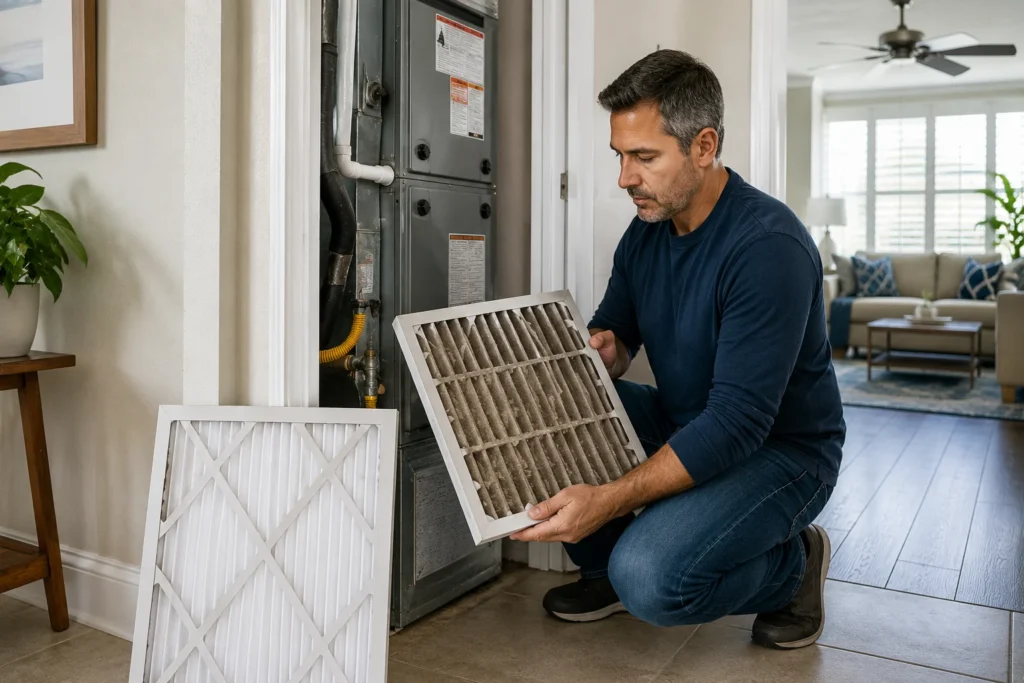
Visible Dirt on the Filter
A quick inspection often tells the story immediately. If the filter appears gray, clogged, or packed with debris, replacement is overdue.
Unusual HVAC Noises
Strained systems may produce louder airflow sounds, rattling, or operational noise.
How Often Should Tracy Homeowners Change HVAC Filters?
There’s no universal answer because every household is different.
However, most homeowners should inspect filters every 30 to 90 days.
Several factors affect replacement frequency:
- Pets
- Allergies
- Number of occupants
- Smoking indoors
- Construction nearby
- Wildfire smoke exposure
- HVAC usage intensity
For many Tracy homeowners, summer cooling seasons place especially heavy demand on HVAC systems.
Homes with pets or allergy concerns may benefit from monthly filter checks during peak usage periods.
General replacement guidelines:
- Standard homes: every 60–90 days
- Homes with pets: every 30–60 days
- Allergy-sensitive households: every 20–45 days
- Vacation homes: every 6–12 months depending on use
A simple monthly reminder on your phone can prevent costly HVAC neglect.
Choosing the Right HVAC Filter for Your Home
Not all HVAC filters are the same.
Homeowners often assume the thickest or most expensive filter is automatically better. That’s not always true.
Filters are rated using a MERV scale (Minimum Efficiency Reporting Value), which measures filtration effectiveness.
Higher MERV ratings capture smaller particles but may also reduce airflow if your HVAC system isn’t designed for them.
Common filter ranges include:
MERV 1–4
Basic protection against large particles like dust and lint.
MERV 5–8
Common residential choice balancing airflow and filtration.
MERV 9–12
Improved filtration for allergy concerns and finer particles.
MERV 13+
High-efficiency filtration often used in specialized environments.
Using an overly restrictive filter in the wrong system can unintentionally worsen airflow problems.
That’s why professional HVAC guidance matters.
Simple Habits That Protect Your HVAC System Year-Round
The good news is that preventing airflow problems is relatively easy.
Small habits can dramatically improve HVAC efficiency and longevity.
Check Filters Monthly
Even if replacement isn’t necessary yet, regular inspections help catch problems early.
Keep Vents Open and Clear
Blocked vents disrupt airflow balance throughout the home.
Schedule Preventive HVAC Maintenance
Professional inspections identify airflow issues before major breakdowns occur.
Monitor Utility Bills
Sudden increases may signal declining system performance.
Keep Return Air Areas Clean
Dust buildup near return vents can accelerate filter contamination.
Use the Correct Filter Size
Improperly sized filters reduce effectiveness and may allow air bypass.
Avoid Ignoring Early Warning Signs
Minor airflow issues often become expensive repair problems if neglected.
Preventive maintenance consistently costs less than emergency HVAC repairs.
When a Dirty Filter Turns Into a Bigger HVAC Problem
Sometimes replacing the filter solves the issue immediately.
Other times, prolonged airflow restriction may have already caused secondary HVAC problems.
Professional inspection may be necessary if:
- Airflow remains weak after replacement
- Cooling performance still struggles
- Ice forms on the system
- Energy bills remain unusually high
- The HVAC system short cycles frequently
- Strange noises continue
In some cases, dirty filters mask larger problems like:
- Duct leaks
- Blower motor wear
- Refrigerant issues
- Thermostat malfunctions
- Coil contamination
The longer airflow restrictions persist, the greater the risk of system-wide strain.
That’s why early maintenance matters so much.
For Tracy homeowners facing long summer cooling seasons, proactive HVAC care helps avoid costly emergency breakdowns during peak heat.
Final Thoughts
Dirty HVAC filters are one of the most overlooked causes of poor home comfort and rising energy costs.
Because the damage happens gradually, many homeowners never connect the dots until their HVAC system begins struggling noticeably.
But the hidden costs are real:
- Higher utility bills
- Reduced airflow
- Uneven temperatures
- Poor indoor air quality
- Increased system wear
- Shortened equipment lifespan
The good news is that this is also one of the easiest HVAC problems to prevent.
Routine filter inspections and timely replacements help your system operate more efficiently, maintain better comfort, and avoid unnecessary strain year-round.
For homeowners in Tracy, CA, where heating and cooling systems work hard through seasonal extremes, simple HVAC maintenance habits can protect both comfort and long-term equipment performance.
A clean filter may seem small, but its impact on your home is enormous.