Most homeowners think of their thermostat as a simple temperature dial. Set it colder when it feels hot, warmer when it feels chilly, and move on with the day.
But your thermostat does far more than control temperature.
It directly affects:
- Your monthly utility bill
- Indoor comfort
- HVAC system lifespan
- Airflow consistency
- Indoor humidity levels
- Sleep quality
- Energy efficiency
In Tracy, California, where summers can become intensely hot and dry, thermostat settings have an even greater impact. During triple-digit heat waves, many homeowners unknowingly overwork their HVAC systems trying to achieve unrealistic indoor temperatures.
The result?
Higher energy bills, uneven cooling, unnecessary wear and tear, and expensive repairs.
Choosing the right thermostat settings is not about making your house feel freezing cold in summer or overly warm in winter. It is about creating a balanced environment that keeps your family comfortable while helping your HVAC system operate efficiently.
For homeowners in Tracy, learning how to optimize thermostat settings can make a noticeable difference in both comfort and long-term HVAC costs.
Understanding Tracy, CA Weather and HVAC Demands
Tracy experiences a unique climate compared to many other parts of California.
Summers are typically hot, dry, and sunny. Temperatures often climb into the high 90s and can exceed 100 degrees during peak heat waves. Winters are cooler but generally mild, especially compared to colder northern states.
Because of these conditions, Tracy homeowners rely heavily on air conditioning for a significant portion of the year.
That creates several challenges:
- Long cooling cycles during summer
- Increased electrical demand
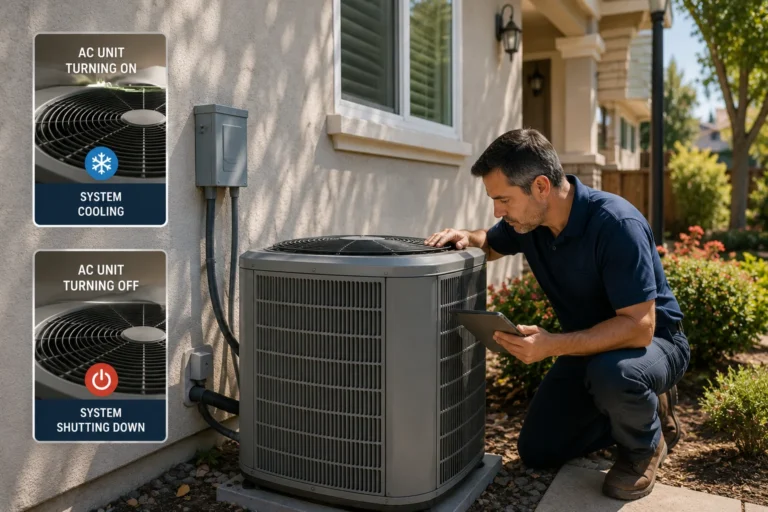
- Higher wear on compressors and blower motors
- Rising utility costs
- Indoor temperature fluctuations
Many people assume lowering the thermostat dramatically cools the home faster. Unfortunately, HVAC systems do not work that way.
Your AC system cools at the same rate regardless of how low you set the thermostat. Setting the temperature extremely low simply forces the system to run longer.
Think of it like driving a car.
Pressing the gas pedal all the way down in stop-and-go traffic does not magically get you home faster. It only burns more fuel and puts additional strain on the engine.
The same principle applies to your HVAC system.
That is why understanding the ideal thermostat range for Tracy weather is essential.
The Ideal Thermostat Settings for Summer in Tracy
For most homes in Tracy, the recommended thermostat setting during summer is:
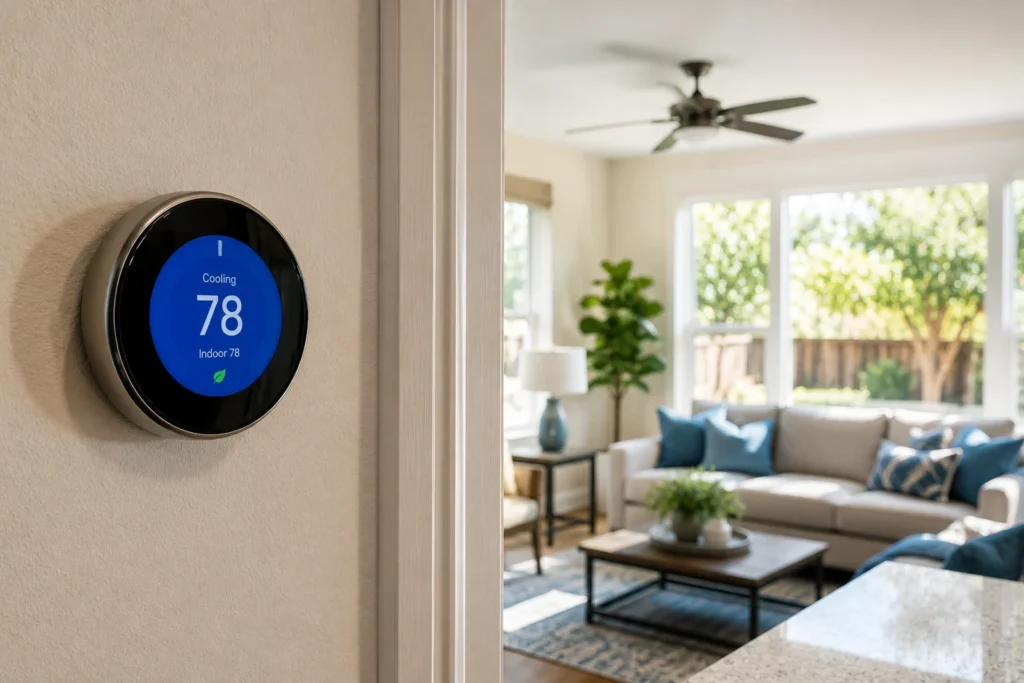
78°F When You Are Home
The U.S. Department of Energy consistently recommends 78°F as the ideal balance between comfort and efficiency.
While some homeowners initially think 78°F sounds too warm, several factors influence how comfortable that temperature feels:
- Ceiling fan usage
- Humidity levels
- Airflow quality
- Insulation performance
- Sun exposure
- Air filter cleanliness
A properly functioning HVAC system with good airflow can make 78°F feel surprisingly comfortable, even during intense Tracy heat.
85°F When You Are Away
If no one is home during the day, raising the thermostat helps reduce unnecessary cooling costs.
A programmable or smart thermostat can automatically increase temperatures while the home is empty and cool the house again before you return.
This simple adjustment can reduce energy usage significantly throughout the summer.
72°F–75°F for Sleeping
Many people sleep better in cooler conditions.
At night, outdoor temperatures in Tracy often drop enough that your HVAC system does not need to work as aggressively. Setting your thermostat between 72°F and 75°F during sleeping hours can improve comfort without dramatically increasing utility costs.
If you prefer cooler nighttime temperatures, combining moderate thermostat settings with ceiling fans is usually more efficient than drastically lowering the AC.
Best Winter Thermostat Settings for Comfort and Savings
While Tracy winters are relatively mild, heating costs can still rise quickly if thermostat settings are too high.
68°F When You Are Home
The recommended winter setting for energy efficiency is generally 68°F while awake and home.
This temperature keeps most households comfortable while reducing unnecessary furnace operation.
Layered clothing, insulated windows, and proper airflow can make 68°F feel warmer than many homeowners expect.
Lower Temperatures While Sleeping or Away
Dropping the thermostat by 7–10 degrees overnight or during work hours can significantly lower heating costs.
Smart thermostats make these adjustments automatic, helping homeowners save energy without constantly adjusting settings manually.
Even small temperature changes can create meaningful long-term savings during the heating season.
Recommended Daytime vs Nighttime Temperature Settings
One of the biggest misconceptions homeowners have is that a single thermostat setting works best 24 hours a day.
In reality, ideal settings change depending on:
- Outdoor temperatures
- Occupancy
- Sunlight exposure
- Sleep schedules
- Indoor activity levels
Here is a practical thermostat schedule many Tracy homeowners find effective:
Summer Schedule Example
Morning (6 AM–9 AM)
76°F–78°F
Daytime Away Hours
82°F–85°F
Evening (5 PM–10 PM)
76°F–78°F
Overnight
72°F–75°F
Winter Schedule Example
Morning
68°F–70°F
Away Hours
60°F–63°F
Evening
68°F–70°F
Overnight
62°F–66°F
The goal is consistency and efficiency rather than extreme temperature swings.
Large fluctuations force HVAC systems to work harder and may increase wear over time.
Smart Thermostats vs Traditional Thermostats
Many Tracy homeowners are upgrading to smart thermostats for one major reason: automation.
Traditional thermostats require constant manual adjustments.
Smart thermostats learn your habits, optimize schedules, and improve efficiency automatically.
Benefits include:
- Lower utility bills
- Remote control through mobile apps
- Energy usage reports
- Automatic scheduling
- Vacation modes
- Temperature zoning support
- Better HVAC runtime management
Some smart thermostats can even detect when the home is empty and adjust temperatures automatically.
This prevents unnecessary cooling during long workdays.
Additionally, many utility companies offer rebates for qualifying smart thermostat installations.
How Incorrect Thermostat Settings Increase Energy Bills
Improper thermostat use is one of the most common reasons homeowners experience high cooling costs.
Here are several examples:
Setting Temperatures Too Low
Some homeowners set the thermostat to 65°F hoping the home cools faster.
Instead, the AC simply runs continuously, consuming more electricity while increasing system wear.
Constant Manual Adjustments
Frequently changing thermostat settings throughout the day disrupts HVAC efficiency.
Modern systems operate best with stable programmed schedules.
Ignoring Maintenance Problems
Even perfect thermostat settings cannot compensate for:
- Dirty filters
- Refrigerant issues
- Leaky ductwork
- Weak airflow
- Dirty coils
- Aging HVAC systems
If your system struggles to maintain temperature settings, it may require professional service.
Thermostat Settings for Families, Pets, and Seniors
Comfort needs vary between households.
A thermostat setting that feels comfortable for one person may feel too warm or cold for another.
Families with Young Children
Children often sleep more comfortably in slightly cooler environments.
Maintaining temperatures between 72°F and 75°F overnight may improve sleep quality while remaining energy efficient.
Homes with Pets
Pets are sensitive to heat, especially during Tracy summers.
If pets remain home during the day, avoid setting temperatures excessively high while away.
Most veterinarians recommend maintaining indoor temperatures below 85°F for pet safety.
Seniors
Older adults may be more sensitive to temperature fluctuations.
Consistent indoor temperatures and stable humidity levels become especially important for comfort and health.
Smart thermostats with easy scheduling features can help maintain stable indoor conditions.
Common Thermostat Mistakes Tracy Homeowners Make
Many HVAC efficiency problems are caused by simple thermostat mistakes.
Closing Too Many Vents
Some homeowners close vents in unused rooms hoping to save energy.
Unfortunately, this can increase air pressure in ductwork and reduce HVAC efficiency.
Placing Lamps Near the Thermostat
Heat-generating appliances near thermostats can create false temperature readings.
This causes the AC system to run unnecessarily.
Ignoring Air Filter Changes
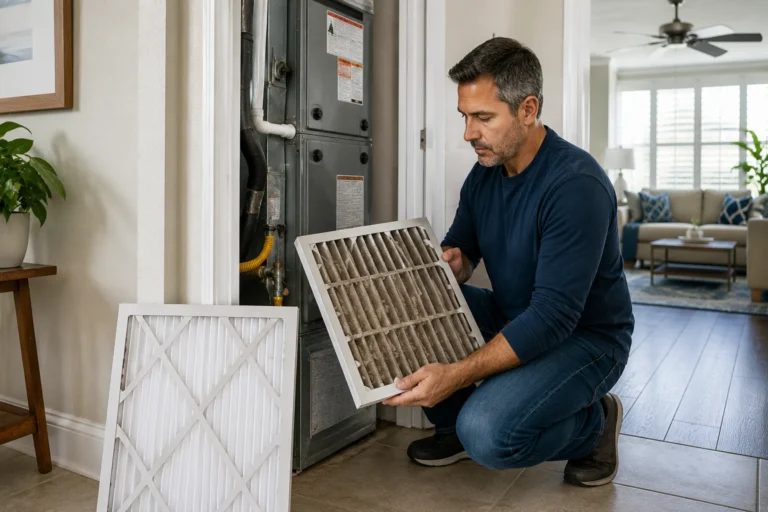
Dirty filters restrict airflow and force HVAC systems to work harder.
Changing filters regularly helps thermostat settings remain accurate and effective.
Using Extreme Temperature Swings
Setting temperatures dramatically lower during hot afternoons can overload HVAC systems.
Gradual adjustments are more efficient and more comfortable.
Installing Thermostats in Poor Locations
Thermostats installed near windows, direct sunlight, kitchens, or drafty areas may read temperatures incorrectly.
This can cause uneven cooling throughout the home.
How Humidity and Airflow Affect Comfort
Many homeowners focus entirely on temperature while ignoring two major comfort factors:
Even though Tracy generally has dry summers, indoor humidity can still fluctuate depending on:
- Ventilation
- Duct performance
- HVAC sizing
- Insulation
- Window sealing
A home with poor airflow may feel hot even when the thermostat reading appears normal.
That is why airflow balance matters.
If some rooms remain hotter than others, your HVAC system may have:
- Blocked vents
- Leaky ducts
- Dirty filters
- Improper zoning
- Blower motor issues
Proper airflow allows thermostat settings to perform effectively across the entire home.
Final Thoughts on Finding the Perfect Temperature Balance
The best thermostat settings for Tracy, CA weather are not about making your home as cold or warm as possible.
They are about balance.
A well-optimized thermostat schedule can:
- Improve comfort
- Lower utility costs
- Reduce HVAC wear and tear
- Improve airflow consistency
- Extend equipment lifespan
- Help your home handle extreme summer temperatures more efficiently
For most Tracy homeowners, maintaining summer temperatures around 78°F while home and using programmed adjustments during away hours offers the best combination of comfort and savings.
Pairing smart thermostat strategies with regular HVAC maintenance, proper airflow, and insulation improvements can make a dramatic difference in overall home efficiency.
If your HVAC system struggles to maintain comfortable temperatures despite proper thermostat settings, professional inspection may help identify hidden efficiency problems before they lead to costly breakdowns.
Understanding how thermostat settings interact with your HVAC system is one of the smartest ways to stay comfortable year-round without sacrificing energy efficiency.