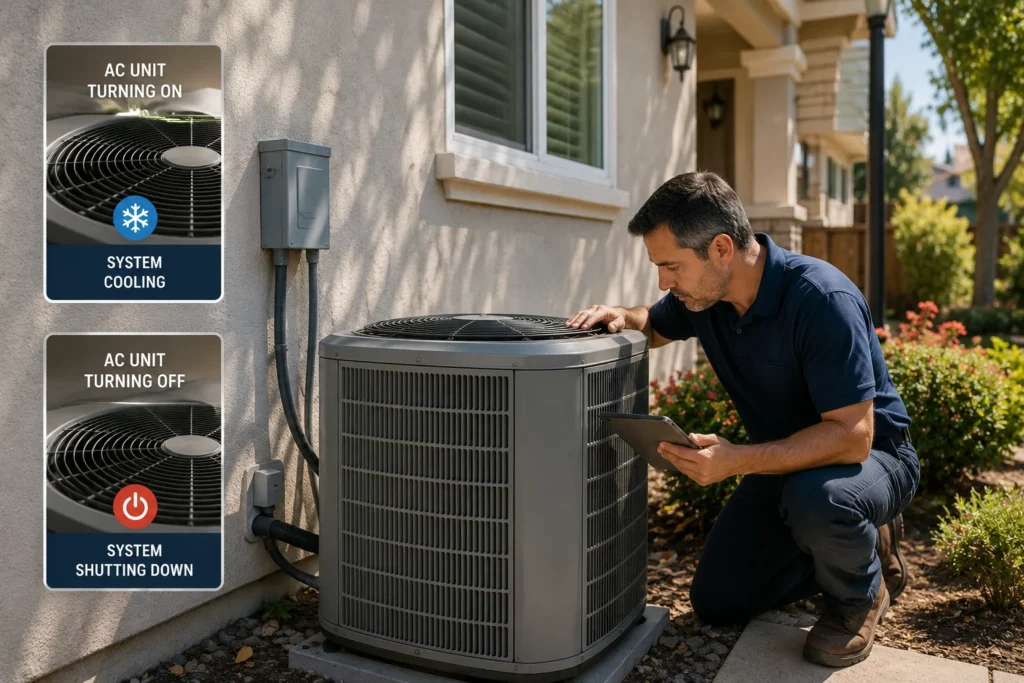
You turn on your air conditioner expecting cool relief from a hot Tracy afternoon. The system powers on, runs for a minute or two, then suddenly shuts off. A few moments later, it starts again. Then stops. Then starts.
At first, it may seem harmless.
But this pattern, called HVAC short cycling, is one of the most common warning signs homeowners overlook until it becomes an expensive repair.
Short cycling doesn’t just make your home uncomfortable. It forces your HVAC system to work harder than necessary, drives up energy bills, increases wear and tear, and can shorten the life of your equipment dramatically.
In a climate like Tracy, California, where summers routinely push HVAC systems to their limits, short cycling can quickly escalate from a small inconvenience into a major system failure if ignored.
This guide explains:
- What HVAC short cycling actually means
- The most common causes
- How to identify the warning signs
- Why it’s dangerous
- What Tracy homeowners should do next
What Is HVAC Short Cycling?
HVAC short cycling happens when your heating or cooling system turns on and off too frequently without completing a normal heating or cooling cycle.
A properly functioning HVAC system typically runs for about 10 to 20 minutes per cycle, depending on outdoor temperatures and indoor conditions.
When short cycling occurs, the system may:
- Run for only a few minutes
- Shut off prematurely
- Restart repeatedly
- Struggle to maintain indoor temperature
Think of it like driving a car in stop-and-go traffic all day long instead of cruising steadily on the highway. Constant starting and stopping creates extra stress on every component.
Over time, that stress adds up.
Why Short Cycling Is a Serious Problem
Many homeowners assume short cycling is merely annoying. In reality, it can create several costly problems simultaneously.
Higher Energy Bills
Every time your HVAC system starts up, it consumes a large burst of electricity.
Frequent cycling means your system repeatedly uses that high-energy startup phase instead of running efficiently in steady operation.
That translates directly into:
- Higher cooling costs
- Increased electricity consumption
- Reduced system efficiency
This is especially noticeable during Tracy’s hot summer months when AC demand is already high.
Increased Wear and Tear
The startup process places the greatest strain on HVAC components.
Short cycling accelerates wear on:
- Compressors
- Capacitors
- Fan motors
- Electrical relays
- Blower assemblies
What could have been a minor repair may eventually lead to complete system failure.
Uneven Indoor Temperatures
Short cycling prevents your HVAC system from fully conditioning the air.
As a result, homeowners often notice:
- Hot and cold spots
- Humidity issues
- Poor airflow
- Inconsistent comfort
Some rooms may feel freezing while others remain warm and uncomfortable.
Reduced Equipment Lifespan
A properly maintained HVAC system can last 10 to 15 years or longer.
But frequent short cycling may significantly reduce that lifespan because components are constantly under stress.
Replacing an HVAC system years earlier than expected can become a major financial burden.
Common Signs Your HVAC System Is Short Cycling
Not every homeowner immediately recognizes short cycling.
Here are some common warning signs to watch for:
Your AC Turns Off Quickly
If your air conditioner shuts down after only 2–5 minutes, something is likely wrong.
Your System Restarts Constantly
Frequent restarting throughout the day often indicates improper cycling behavior.
Your Home Never Feels Comfortable
The thermostat setting may never match how the house actually feels.
Energy Bills Suddenly Increase
Unexpected spikes in utility costs can point toward HVAC inefficiency caused by short cycling.
Strange HVAC Noises
Repeated clicking, buzzing, or startup sounds may signal electrical or mechanical issues tied to cycling problems.
10 Common Causes of HVAC Short Cycling
There are many potential reasons an HVAC system may short cycle. Some are simple fixes. Others require professional diagnosis.
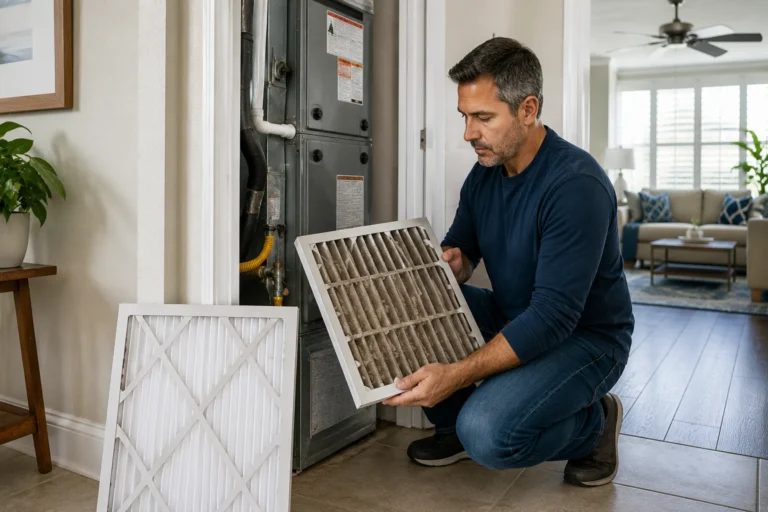
1. Dirty Air Filters
One of the most common causes is also one of the easiest to overlook.
A clogged air filter restricts airflow, causing the system to overheat or struggle to circulate air properly.
When airflow becomes too limited:
- The system overheats
- Safety mechanisms activate
- The unit shuts down prematurely
Then the process repeats.
Replacing air filters regularly is one of the simplest ways to reduce HVAC strain.
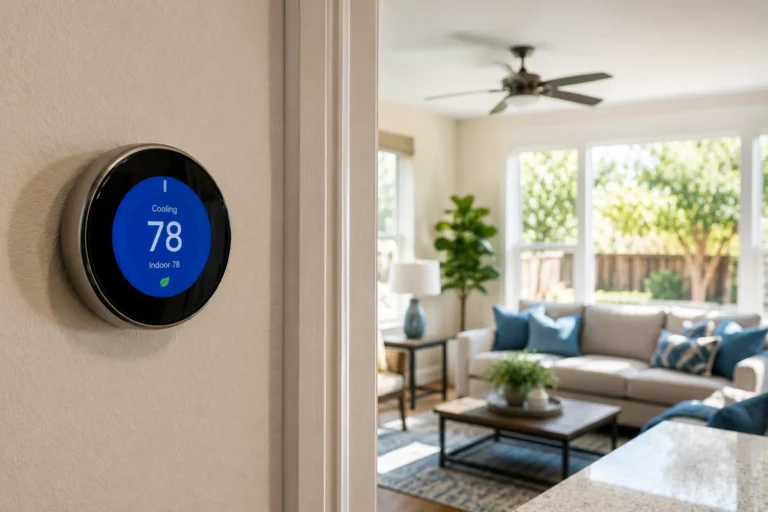
2. Thermostat Problems
Your thermostat acts as the communication center for the HVAC system.
If it malfunctions, it may:
- Read temperatures incorrectly
- Trigger unnecessary cycling
- Shut the system off too early
Improper thermostat placement can also create problems.
For example, if the thermostat sits near:
- Direct sunlight
- Windows
- Kitchen appliances
- Heat-producing electronics
…it may think the house is warmer than it actually is.
3. Oversized HVAC System
Bigger is not always better.
An oversized air conditioner cools the home too quickly, reaching the thermostat target temperature before completing a full cycle.
This causes repeated rapid shutdowns and restarts.
Ironically, oversized systems often:
- Waste more energy
- Control humidity poorly
- Wear out faster
Proper HVAC sizing is critical for Tracy homes because cooling demands vary significantly based on:
- Home size
- Insulation quality
- Sun exposure
- Window efficiency
- Ceiling height
4. Refrigerant Leaks
Low refrigerant levels can disrupt pressure inside the cooling system.
This may cause:
- Compressor overheating
- Poor cooling performance
- System shutdowns
Signs of refrigerant issues may include:
- Ice buildup
- Hissing noises
- Weak airflow
- Warm air from vents
Refrigerant problems should always be handled by licensed HVAC professionals.
5. Frozen Evaporator Coils
Evaporator coils absorb heat from indoor air.
When airflow becomes restricted or refrigerant levels drop, those coils can freeze.
Frozen coils often trigger short cycling because the system cannot operate normally.
Common causes include:
- Dirty filters
- Blocked vents
- Refrigerant problems
- Blower motor issues
6. Electrical Problems
HVAC systems rely on numerous electrical components working together precisely.
Faulty:
- Capacitors
- Relays
- Circuit boards
- Wiring connections
…can all create irregular startup and shutdown behavior.
Electrical problems may also become fire hazards if ignored.
7. Dirty Condenser Coils
Your outdoor unit releases heat collected from inside the home.
When condenser coils become coated with:
- Dirt
- Dust
- Grass clippings
- Debris
…the system struggles to release heat effectively.
This may cause overheating and repeated shutdowns.
Tracy’s dry climate and seasonal dust can accelerate outdoor coil buildup.
8. Low Airflow From Closed Vents
Some homeowners unknowingly create airflow restrictions by closing too many vents.
Modern HVAC systems are designed for balanced airflow.
Closing vents can increase pressure inside ductwork and contribute to:
- Overheating
- Frozen coils
- Cycling issues
9. Faulty Flame Sensors (Heating Systems)
For furnaces, a dirty or malfunctioning flame sensor may shut the system down shortly after ignition.
This safety feature prevents dangerous gas buildup, but sensor problems can create repeated short cycling during winter months.
10. Compressor Problems
The compressor is essentially the heart of your air conditioning system.
If it begins failing, short cycling often becomes one of the first major warning signs.
Compressor issues may stem from:
- Electrical failures
- Refrigerant problems
- Age-related wear
- Overheating
Unfortunately, compressor repairs can become expensive if problems progress too far.
Why Tracy, CA Weather Makes HVAC Short Cycling Worse
Tracy homeowners place heavy demands on cooling systems during long, hot summers.
Extended heat waves can:
- Stress aging systems
- Expose airflow weaknesses
- Increase overheating risks
- Push refrigerant systems harder
Dust and dry outdoor conditions may also contribute to:
- Dirty condenser coils
- Clogged filters
- Reduced efficiency
Homes with poor insulation or older ductwork often experience even greater HVAC strain.
That’s why preventive maintenance becomes especially important in Central California climates.
How Homeowners Can Troubleshoot Short Cycling
Some causes of short cycling are simple enough for homeowners to investigate safely.
Check the Air Filter
If the filter appears dirty, replace it immediately.
Many HVAC problems begin with airflow restrictions.
Inspect Vents and Registers
Make sure vents are:
- Open
- Unblocked
- Free of furniture obstructions
Balanced airflow matters more than many homeowners realize.
Verify Thermostat Settings
Check for:
- Incorrect temperature settings
- Dead batteries
- Programming errors
Also ensure the thermostat is not exposed to direct heat sources.
Look for Ice Buildup
Frozen refrigerant lines or coils often indicate airflow or refrigerant problems.
If you see ice:
- Turn the system off
- Allow it to thaw
- Contact an HVAC professional
Listen for Unusual Sounds
Buzzing, clicking, rattling, or humming noises may indicate electrical or mechanical issues.
When to Call an HVAC Professional in Tracy, CA
While basic troubleshooting can help, some HVAC problems require professional diagnosis.
You should contact an HVAC technician if:
- Short cycling continues after changing the filter
- Your system struggles to cool the home
- Ice forms repeatedly
- Electrical smells appear
- Energy bills spike dramatically
- The unit is older than 10 years
Professional HVAC inspections can identify:
- Refrigerant leaks
- Electrical failures
- Sizing problems
- Compressor issues
- Airflow restrictions
Early repairs are often significantly less expensive than emergency replacements.
Final Thoughts
HVAC short cycling is more than a small annoyance. It’s often an early warning sign that your heating or cooling system is struggling.
Ignoring the issue can lead to:
- Higher energy bills
- Poor comfort
- Major component failure
- Reduced system lifespan
For Tracy, CA homeowners dealing with long summers and heavy AC use, identifying short cycling early can save substantial money and frustration.
Whether the issue stems from a dirty filter, thermostat malfunction, refrigerant leak, or oversized system, timely diagnosis matters.
A healthy HVAC system should provide steady, reliable comfort and not constant starts and stops.