Should Your HVAC Fan Be Set to AUTO or ON? A Practical Guide for Tracy, CA Homeowners
October 22, 2026
Tracy & San Joaquin County
Your thermostat does more than tell your heating and cooling system what temperature to maintain. It also controls when air circulates through your home, and that seemingly small setting can influence everything from household comfort to electricity consumption.
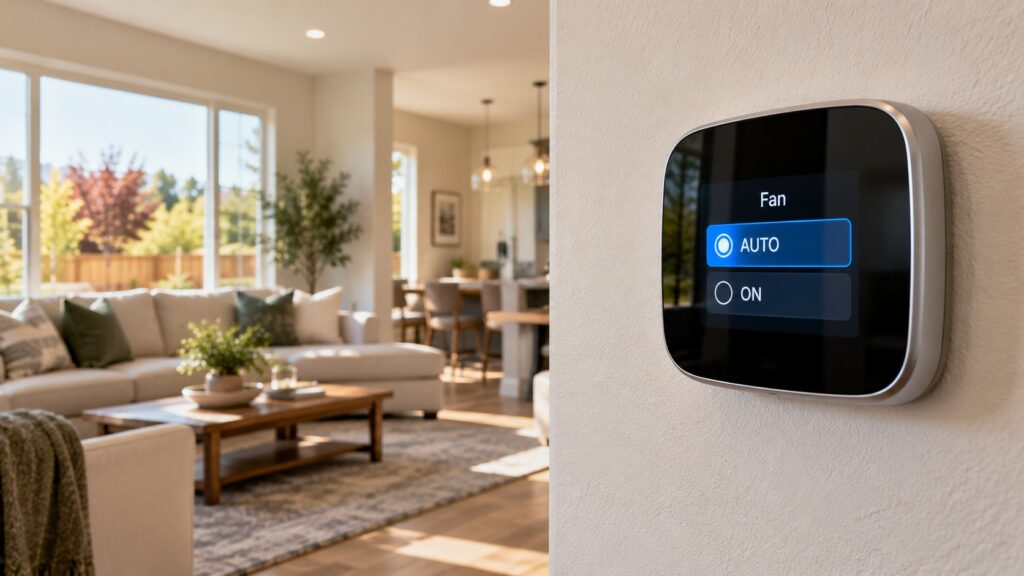
Many homeowners in Tracy, California, notice two familiar options on their thermostat: AUTO and ON. Although these settings might appear interchangeable, they control your HVAC system’s indoor blower in noticeably different ways.
Choosing the appropriate setting becomes especially important during Tracy’s hot summer months, when air conditioners work harder to maintain comfortable indoor temperatures. Understanding how your fan operates can help you make informed decisions without unnecessarily increasing your home’s energy consumption.
What Does the HVAC Fan Actually Do?
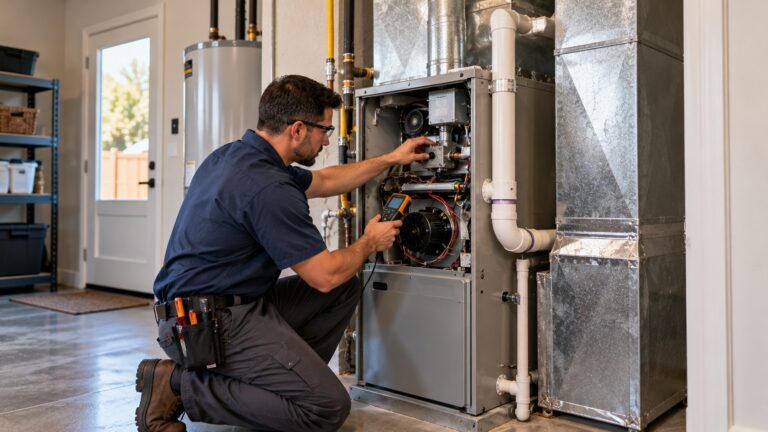
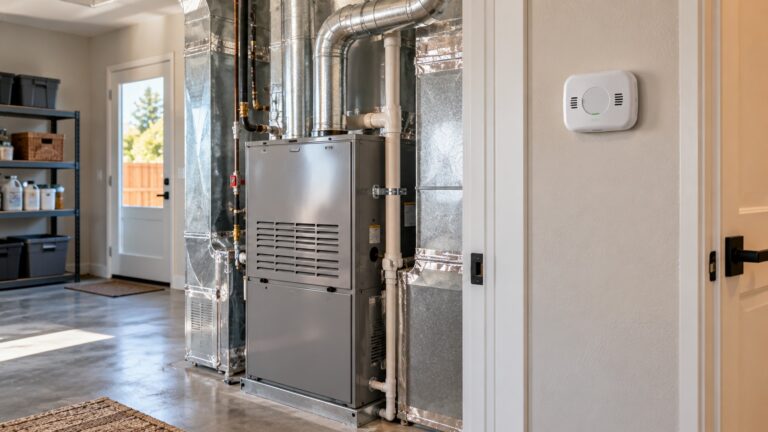
The indoor blower fan moves air through your HVAC system’s ductwork and distributes conditioned air throughout your living spaces. During cooling, it pushes household air across the indoor cooling coil before delivering cooled air through your supply vents.
During heating, the same blower typically moves warmed air through the ductwork and into your rooms. The precise sequence depends on whether your home uses a furnace, heat pump, or another compatible forced-air heating system.
Think of your HVAC equipment as a kitchen preparing meals and the blower fan as the person delivering those meals to the table. Your heating and cooling equipment changes the air’s temperature, while the blower distributes that air where it is needed.
The thermostat’s fan setting determines when this distribution process takes place. Understanding that distinction is the foundation for deciding whether AUTO or ON makes sense for your home.
What Does AUTO Mean on Your Thermostat?
When your thermostat fan is set to AUTO, the blower generally operates when your heating or cooling system needs to move conditioned air. Once the system completes its heating or cooling cycle, the fan usually stops after any programmed delay.
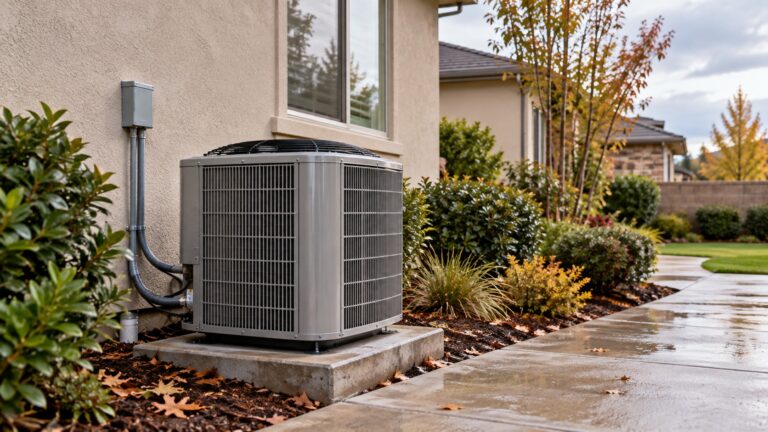
For example, imagine your Tracy home reaches 80 degrees on a warm afternoon while your thermostat is set to 74 degrees. The air conditioner starts cooling, and the blower circulates cooled air throughout the house until the thermostat’s temperature demand has been satisfied.
When the cooling cycle ends, the blower normally shuts down rather than continuing to move air unnecessarily. Depending on the equipment, it may run briefly afterward to complete its programmed operating sequence.
Why AUTO Is Commonly the Default Setting
AUTO is the standard fan setting on many residential thermostats because it coordinates blower operation with heating and cooling demand. It avoids continuous electrical consumption from the blower when the home does not require additional conditioning.
This makes AUTO a practical starting point for homeowners whose rooms already maintain relatively consistent temperatures. It also reduces unnecessary airflow and fan noise during periods when the heating or cooling equipment is idle.
However, AUTO does not mean that the blower operates independently of every other feature in your HVAC system. Some thermostats and equipment controls include special ventilation, circulation, filtration, or humidity programs that can override the ordinary operating pattern.
Benefits of Using AUTO
One advantage of AUTO is that the blower runs fewer hours when heating and cooling demand is low. This can reduce fan-related electricity consumption compared with operating the blower continuously.
Another benefit is that air circulation naturally pauses between most heating and cooling cycles. For homeowners who prefer quieter indoor environments, these breaks can make bedrooms, living rooms, and home offices feel more peaceful.
AUTO can also support cooling-season humidity management by allowing moisture collected on the indoor cooling coil to drain away. This becomes particularly relevant when indoor moisture levels rise, even in regions where outdoor summers are typically dry.
What Happens When You Set Your HVAC Fan to ON?
Selecting ON tells your thermostat to keep the indoor blower operating continuously, including when the heating or cooling equipment is not actively changing the air’s temperature. The fan continues circulating household air rather than waiting for the next heating or cooling cycle.
Imagine your air conditioner finishes cooling your home at 3 p.m., but the thermostat remains set to ON. Instead of shutting down with the cooling equipment, the blower continues moving air through the home’s ductwork.
This continuous movement can make the house feel more evenly ventilated, particularly when certain rooms experience different temperatures. However, circulating air does not automatically mean the system is actively cooling or heating it.
Continuous Airflow Is Not Continuous Cooling
A common misconception is that selecting ON forces an air conditioner to produce cold air around the clock. In reality, the blower and the cooling equipment perform different jobs, even though they normally work together.
When the compressor is not operating, the blower generally circulates air at approximately the temperature available within the return-air system and ductwork. It cannot independently remove heat from your home simply by running continuously.
On a hot Tracy afternoon, that distinction can explain why airflow from the vents occasionally feels warmer than expected. Moving air may improve the sensation of circulation, but it does not replace an actual cooling cycle.
Why Some Homeowners Prefer ON
Some households appreciate continuous circulation because it helps mix air between rooms. Homes with multiple floors, significant sun exposure, or areas with inconsistent temperatures may notice a difference when the blower operates more frequently.
Continuous fan operation can also move more household air through an installed filtration system. That benefit depends on the filter’s efficiency, the HVAC system’s airflow, and whether air is actually passing through the filter rather than bypassing it.
The trade-off is that the blower consumes electricity whenever it operates. Whether this additional energy use is worthwhile depends on the homeowner’s comfort needs and the characteristics of the installed equipment.
HVAC Fan AUTO vs ON: Key Differences
Although AUTO and ON control the same component, they create different patterns of operation throughout the day. Understanding these differences helps homeowners avoid confusing increased air movement with increased heating or cooling capacity.
Feature
AUTO
ON
Blower operation
Primarily during heating or cooling
Continuously
Electricity use
Generally lower
Generally higher
Air circulation
Intermittent
Continuous
Air filtration
Primarily during system operation
More frequent
Fan noise
Periodic
Ongoing
Temperature mixing
Occasional
More consistent
Cooling-season moisture control
Often more favorable
May cause moisture re-evaporation
Fan operating hours
Usually fewer
Greater
Neither setting changes your air conditioner’s rated cooling capacity or your furnace’s rated heating output. Instead, the difference comes from how often the blower distributes air and how that operation interacts with the rest of your equipment.
Which Setting Uses Less Electricity?
For most conventional residential forced-air HVAC systems, AUTO uses less blower electricity than ON. The reason is straightforward: a fan that operates fewer hours generally consumes less energy than one that runs continuously.
However, the size of the difference depends on your blower motor, operating speed, thermostat programming, and heating or cooling demand. An older fixed-speed blower may consume substantially more electricity during continuous operation than a modern variable-speed blower operating at a lower circulation speed.
Understanding Fan Electricity Consumption
Consider a hypothetical blower that consumes 400 watts while operating continuously. If it runs for 24 hours, it uses approximately 9.6 kilowatt-hours of electricity in one day.
Over a 30-day period, continuous operation at that power level would consume approximately 288 kilowatt-hours. At an illustrative electricity rate of $0.30 per kilowatt-hour, that represents about $86.40 in monthly blower electricity.
These figures are examples rather than estimates for any particular Tracy home. Actual blower consumption, utility rates, and operating hours vary considerably, and the additional cost of ON must be compared with the electricity the fan would already consume in AUTO.
Why Modern Blower Motors Matter
Older HVAC systems frequently use permanent split capacitor motors, commonly called PSC motors. Their electrical consumption can be relatively high, particularly when compared with newer electronically commutated motors operating at reduced speeds.
Many modern variable-speed systems can circulate air at lower blower speeds between heating and cooling cycles. These systems may use substantially less electricity during continuous low-speed operation than older equipment running at a fixed, higher speed.
Still, a more efficient motor does not make continuous operation completely free. The appropriate comparison is the additional electricity required by your specific system, not a universal cost estimate copied from another household.
Does ON Make Your Air Conditioner Work Harder?
The blower itself operates longer when the thermostat is set to ON, but that does not necessarily mean the compressor runs continuously. The thermostat continues controlling cooling demand based on its temperature readings and programmed settings.
Nevertheless, continuous circulation can influence how heat moves through your home and how moisture behaves around the cooling coil. Ductwork located in a hot attic may also pick up unwanted heat while circulating air between active cooling cycles.
For Tracy homeowners with attic ductwork, this interaction deserves consideration during extreme summer conditions. Poor duct insulation or air leakage can reduce the comfort benefits of continuous circulation and increase the importance of correcting underlying duct problems.
How Fan Settings Affect Indoor Comfort
Temperature consistency is one of the most common reasons homeowners consider leaving their HVAC fan running. A house can reach the thermostat’s desired temperature while certain rooms remain noticeably warmer or cooler than others.
This happens because the thermostat typically measures temperature at one location rather than throughout every room. Sun exposure, insulation differences, air leakage, duct design, and the home’s layout can all produce uneven conditions.
Can ON Help With Hot and Cold Spots?
Continuous circulation can help mix air from different parts of the house, reducing some temperature differences. The effect may be noticeable in homes where upper-floor rooms become warmer than downstairs living areas.
However, moving air cannot correct every underlying cause of uneven temperatures. A bedroom with inadequate supply airflow or substantial afternoon solar heat gain may remain uncomfortable even while the blower runs continuously.
This is why fan settings should not be treated as a replacement for diagnosing airflow restrictions, duct leakage, or inadequate insulation. They can influence circulation without necessarily addressing the condition responsible for the temperature difference.
Can Continuous Airflow Make a Room Feel Cooler?
Moving air can make occupants feel more comfortable under certain conditions, especially when air movement reaches their skin. However, airflow from distant supply vents may not create the same noticeable cooling sensation as a ceiling fan or portable room fan.
The indoor blower primarily circulates air through ductwork rather than creating a strong breeze across occupied spaces. Consequently, leaving the thermostat fan ON should not be confused with using a dedicated room fan for personal cooling.
If your goal is to feel cooler without lowering the thermostat, a ceiling fan may provide a more direct effect. Remember that fans cool people through air movement rather than lowering the room’s actual temperature.
Does Running Your HVAC Fan Improve Indoor Air Quality?
Indoor air quality depends on several interconnected factors, including ventilation, filtration, pollutant sources, and outdoor conditions. The thermostat fan setting influences how often household air passes through the central HVAC filter.
When AUTO is selected, filtration generally occurs while the system circulates air during heating and cooling cycles. With ON, air can pass through the filter more frequently, including periods when the temperature is already comfortable.
Why More Circulation Can Improve Filtration
A properly installed HVAC filter captures certain airborne particles as air passes through it. Running the blower more frequently can increase the amount of air moving through that filter over time.
However, continuous circulation does not guarantee that every pollutant will disappear from your home. Filter efficiency, particle size, air leakage, and the location of pollution sources all affect the results.
The U.S. Environmental Protection Agency explains that increased HVAC filtration can involve trade-offs, including additional electricity use and potentially less reliable humidity control. The agency also recommends choosing filtration that is compatible with the system’s airflow capabilities.
What About Dust and Allergens?
Household dust can include fibers, outdoor particles, pet dander, and other materials that enter or originate inside the home. Effective filtration can remove a portion of airborne particles that pass through the filter.
Nevertheless, particles that have already settled on furniture and floors may remain there until disturbed or physically removed. Running the blower continuously is therefore not a substitute for ordinary cleaning, appropriate ventilation, or addressing the sources of excessive dust.
Homeowners should also remember that a clogged filter can restrict airflow regardless of the selected fan setting. More fan operation may require more frequent filter inspections, especially in households with pets or substantial airborne dust.
Special Considerations During Wildfire Smoke Events
California homeowners may encounter periods when outdoor smoke affects regional air quality. During these events, indoor filtration can become an especially important part of reducing exposure to airborne particles.
The EPA recommends using an appropriately rated high-efficiency HVAC filter and running the system fan frequently during wildfire smoke conditions, provided the equipment can accommodate the filter. A MERV 13 filter, or the highest compatible efficiency, may improve fine-particle capture compared with a less efficient filter.
Before upgrading to a higher-efficiency filter, confirm that the blower and duct system can accommodate the additional airflow resistance. An incompatible filter can restrict circulation and potentially interfere with heating or cooling performance.
Can Continuous Fan Operation Affect Humidity?
Humidity is another important difference between AUTO and ON, particularly during air conditioning season. Although Tracy typically experiences dry summer weather, moisture can still accumulate indoors from cooking, bathing, laundry, and other household activities.
Air conditioners remove some indoor humidity when warm air passes over a sufficiently cold evaporator coil. The resulting condensation collects on the coil and normally drains through the system’s condensate drainage components.
Why AUTO Can Support Moisture Removal
When the cooling cycle ends and the blower shuts off, water remaining on the evaporator coil has an opportunity to drain away. This reduces the amount of moisture that may be carried back into household air.
With continuous fan operation, air can continue passing over the wet coil after active cooling stops. Under certain conditions, some collected moisture can evaporate back into the circulating air.
This effect does not mean that ON always creates uncomfortable humidity or that AUTO automatically solves moisture problems. The results depend on indoor conditions, coil design, blower programming, and equipment-specific humidity controls.
Is Humidity a Major Concern in Tracy?
Tracy’s hot, relatively dry summers often create different cooling challenges from those experienced in humid coastal or southeastern climates. However, indoor humidity can still vary considerably from outdoor conditions.
A tightly sealed home with several occupants may develop moisture from ordinary daily activities. Likewise, a home with ventilation problems or plumbing leaks can experience humidity issues regardless of the regional climate.
If indoor humidity becomes consistently uncomfortable, the correct response involves identifying its source rather than automatically changing fan settings. A thermostat adjustment may influence moisture behavior, but it cannot repair a leak or eliminate persistent moisture generation.
Should You Leave Your HVAC Fan ON During Summer in Tracy?
Summer is when understanding HVAC fan AUTO vs ON becomes especially valuable for Tracy homeowners. Outdoor temperatures can climb into the 90s and occasionally reach triple digits, placing significant demand on residential cooling equipment.
During these conditions, the air conditioner may already operate for extended periods to maintain the desired temperature. This means the blower may run frequently even when the thermostat fan remains on AUTO.
Why AUTO Often Makes Sense During Hot Weather
When cooling demand is high, AUTO coordinates blower operation with the air conditioner’s active cycles. The fan distributes cooled air when needed and normally stops after cooling demand has been satisfied.
This operating pattern avoids unnecessary blower runtime during intervals when the compressor is not cooling. It can also help prevent continuous airflow from moving heat gained in poorly insulated attic ductwork back into occupied rooms.
For homeowners concerned about electricity consumption during long summer days, AUTO is a sensible default to evaluate. The actual savings depend on how frequently the cooling system cycles and the characteristics of the blower motor.
When ON Might Be Useful in Summer
Some homeowners notice that particular rooms become uncomfortable between cooling cycles. Briefly operating the fan continuously may help redistribute air and improve temperature consistency in those spaces.
For example, an upstairs bedroom may feel warmer than the hallway where the thermostat is installed. Additional circulation may help mix the air, although the improvement depends on the home’s duct layout and available return-air pathways.
If continuous operation produces little improvement, the home may need a closer evaluation of insulation, airflow balance, or ductwork. Raising the blower’s operating hours cannot compensate for every deficiency in the air distribution system.
Why Attic Ductwork Matters
Many California homes contain portions of their HVAC ductwork in attic spaces. During summer, an attic can become considerably hotter than the conditioned living areas below it.
Air moving through poorly insulated ducts may absorb heat before returning to the rooms. Continuous circulation can increase the time air spends traveling through these warm pathways, potentially offsetting some benefits of additional mixing.
Well-sealed and properly insulated ductwork helps reduce this problem. Homeowners should consider the condition of their duct system before assuming that continuous fan operation will improve summertime comfort.
What About Winter and Cooler Weather?
Tracy’s cooler months bring a different set of heating and airflow considerations. While winter temperatures are generally milder than in many colder regions, residential heating systems still play an important role in maintaining comfortable indoor conditions.
With AUTO selected, the blower operates according to the heating equipment’s control sequence. Depending on the system, the fan may start after the furnace warms up or operate according to a heat pump’s programmed cycle.
Why Air May Feel Cool Between Heating Cycles
When the thermostat is set to ON, the blower can continue circulating air after the furnace or heat pump stops producing heat. The air coming from the vents may therefore feel cooler than it did during active heating.
This does not necessarily indicate that your furnace is malfunctioning. The blower may simply be distributing room-temperature air rather than actively heated air.
However, a heating system that consistently fails to produce warm air during an actual heating cycle may have a separate problem. The fan setting alone cannot explain every instance of inadequate heating.
Does Continuous Circulation Help During Winter?
Continuous circulation may help distribute warmth more evenly in homes with noticeable temperature differences. This can be useful when certain rooms retain heat while others cool more quickly.
However, the same energy and ductwork considerations that apply during summer remain relevant. Air circulating through cold or poorly insulated duct spaces can lose heat before reaching occupied rooms.
In many homes, AUTO offers a reasonable balance between comfort and electricity consumption during colder weather. Homeowners experiencing persistent cold spots should investigate their causes rather than rely exclusively on continuous blower operation.
Understanding the CIRCULATE Fan Setting
Some modern thermostats offer a third option labeled CIRCULATE, CIRC, or a similar name. This setting provides periodic airflow between heating and cooling cycles without requiring the blower to operate continuously.
The purpose is to improve household air movement while limiting unnecessary fan runtime. Depending on the thermostat and equipment configuration, homeowners may be able to customize how frequently the blower operates.
How CIRCULATE Works
Under a typical circulation program, the blower operates for a minimum amount of time during each hour. Any airflow already provided during heating or cooling cycles may count toward that programmed minimum.
For example, some Honeywell Home thermostats use a circulation setting that runs the fan for approximately 35% of each hour. Other manufacturers offer different schedules or allow homeowners to customize the circulation time.
This arrangement provides additional opportunities to mix household air without keeping the blower active throughout the entire day. However, the electricity consumption still depends on the selected circulation schedule and the system’s motor characteristics.
When CIRCULATE Might Be Helpful
CIRCULATE can be especially useful during spring and fall when outdoor temperatures are mild. During these periods, your heating and cooling equipment may operate infrequently, leaving limited opportunities for air movement under AUTO.
A circulation program can help distribute air between rooms without requiring continuous fan operation. This may also increase filtration opportunities in homes where the central filter captures particles effectively.
However, CIRCULATE does not eliminate the need for properly functioning ductwork or adequate room airflow. It simply offers another method of controlling when the blower operates.
Do All Thermostats Have This Feature?
Not every thermostat includes CIRCULATE, and some systems use different terminology for similar functions. Certain smart thermostats provide minimum fan-runtime settings rather than a dedicated circulation button.
Before changing an unfamiliar thermostat setting, consult the manufacturer’s instructions. Some advanced systems coordinate blower operation with humidity management, ventilation equipment, or other features that affect how the setting behaves.
If your thermostat does not offer CIRCULATE, AUTO and ON may still provide sufficient control for your household. The absence of a circulation feature does not automatically mean your thermostat needs replacement.
Does Running Your HVAC Fan Continuously Cause Wear?
Homeowners sometimes assume that operating a fan continuously will inevitably damage their HVAC equipment. The actual effect depends on the motor design, system condition, operating speed, and maintenance history.
Many modern blower motors are designed to accommodate extended operating periods when installed and maintained appropriately. However, increased operating hours can contribute to wear on components, including bearings and other moving parts.
Continuous Operation and Motor Lifespan
A blower motor experiences mechanical and electrical demands whenever it operates. Continuous use increases total operating hours, although it may reduce the frequency of some starting and stopping events.
These competing effects make it difficult to predict motor lifespan from thermostat settings alone. Motor quality, temperature, airflow resistance, and maintenance often matter more than a simple comparison between AUTO and ON.
For an older HVAC system, unexpected blower noises or changes in airflow deserve attention. Such symptoms can indicate developing mechanical or electrical problems that should not be ignored.
Why Filter Maintenance Becomes More Important
When the blower runs more frequently, it can move a larger volume of air through the filtration system. Depending on household conditions, this may cause the filter to accumulate captured particles more quickly.
A heavily loaded filter increases resistance to airflow and can affect system performance. Inspecting filters regularly helps identify excessive buildup before it contributes to comfort problems or equipment stress.
The appropriate replacement interval depends on filter type, household conditions, and manufacturer recommendations. Homes with pets, recent construction activity, or significant airborne dust may require more frequent inspections.
Does ON Extend the Life of Your Air Conditioner?
There is no universal rule stating that continuous fan operation extends the lifespan of residential air conditioning equipment. Some systems are specifically designed for extended low-speed circulation, while others may operate less efficiently under constant fan demand.
An HVAC system’s longevity depends on many factors, including installation quality, maintenance, electrical conditions, operating temperatures, and overall usage. A thermostat fan setting cannot compensate for inadequate maintenance or existing mechanical problems.
Homeowners should therefore avoid treating ON as a guaranteed equipment-protection strategy. The better approach is to understand the manufacturer’s intended operating conditions and maintain the system accordingly.
Final Thoughts
The choice between HVAC fan AUTO vs ON comes down to how your home uses airflow and what you want the system to accomplish. AUTO generally limits blower electricity consumption by coordinating operation with heating and cooling cycles, while ON provides continuous circulation that may support temperature mixing and additional filtration.
For Tracy homeowners, the local climate, ductwork conditions, blower motor design, and household comfort needs all deserve consideration. The CIRCULATE option, when available, offers another way to provide periodic airflow without necessarily operating the blower continuously.
Understanding these differences can help you use your thermostat more effectively while recognizing when a comfort problem requires more than a setting change. A properly maintained heating and cooling system remains essential for comfortable indoor conditions, regardless of whether the blower operates intermittently or continuously.
With a clearer understanding of your thermostat’s controls, you can make informed choices about airflow, electricity consumption, and everyday comfort. For homeowners in Tracy, California, these practical considerations reflect the same focus on reliable heating, cooling, and indoor comfort associated with AC Heating & Cooling Services.
When temperatures begin dropping in Tracy, California, many homeowners start preparing their homes for the cooler months ahead. While checking the heating system and…
Yes, a gas- or oil-burning furnace can contribute to carbon monoxide poisoning if combustion gases enter occupied areas instead of being safely vented outside.…