Most homeowners in Tracy spend a significant portion of their time indoors, but few stop to consider the quality of the air they’re breathing every day.
Indoor air can often be 2 to 5 times more polluted than outdoor air, according to environmental studies. That means even if the air outside seems clean, your home could still be circulating dust, allergens, and unseen pollutants through your HVAC system.
Poor indoor air quality doesn’t just cause discomfort, it can affect your health, energy levels, sleep quality, and even your HVAC system’s efficiency.
Common Indoor Air Pollutants Found in Tracy Homes
Tracy’s mix of suburban living, agriculture, and seasonal weather patterns creates a unique set of indoor air challenges.
Here are some of the most common pollutants found in local homes:
- Dust and dust mites
- Pet dander
- Mold spores (especially during humid periods)
- Pollen from nearby vegetation
- Volatile organic compounds (VOCs) from cleaning products and furniture
- Smoke particles (from cooking or wildfires)
These pollutants don’t just sit in the air, they get pulled into your HVAC system and recirculated throughout your home.
Signs Your Indoor Air Quality May Be Poor
Many homeowners don’t realize their air quality is suffering until symptoms appear.
Watch for these warning signs:
- Frequent sneezing, coughing, or allergies indoors
- Musty or stale odors
- Uneven airflow or stuffy rooms
- Excess dust buildup shortly after cleaning
- Headaches or fatigue at home
- Worsening asthma or respiratory issues
If these symptoms seem familiar, your home’s air quality may need immediate attention.
How Tracy’s Climate Impacts Your Home’s Air
Tracy, CA experiences hot, dry summers and cooler, damp winters. These seasonal shifts play a major role in indoor air quality.
- Summer: Increased dust, dry air, and wildfire smoke infiltration
- Winter: Higher humidity levels, which can encourage mold growth
- Year-round: HVAC systems working harder, potentially spreading pollutants
Because your HVAC system runs frequently throughout the year, it becomes the central hub for your home’s air quality.
7 Proven Ways to Improve Indoor Air Quality
1. Upgrade Your HVAC Air Filter
Your HVAC filter is your first line of defense against airborne particles.
Standard filters capture large debris, but upgrading to a high-efficiency (HEPA or MERV-rated) filter can significantly reduce:
- Dust
- Pollen
- Pet dander
- Airborne bacteria
Changing your filter regularly, every 1 to 3 months, is essential for maintaining clean airflow.
2. Install a Whole-Home Air Purifier
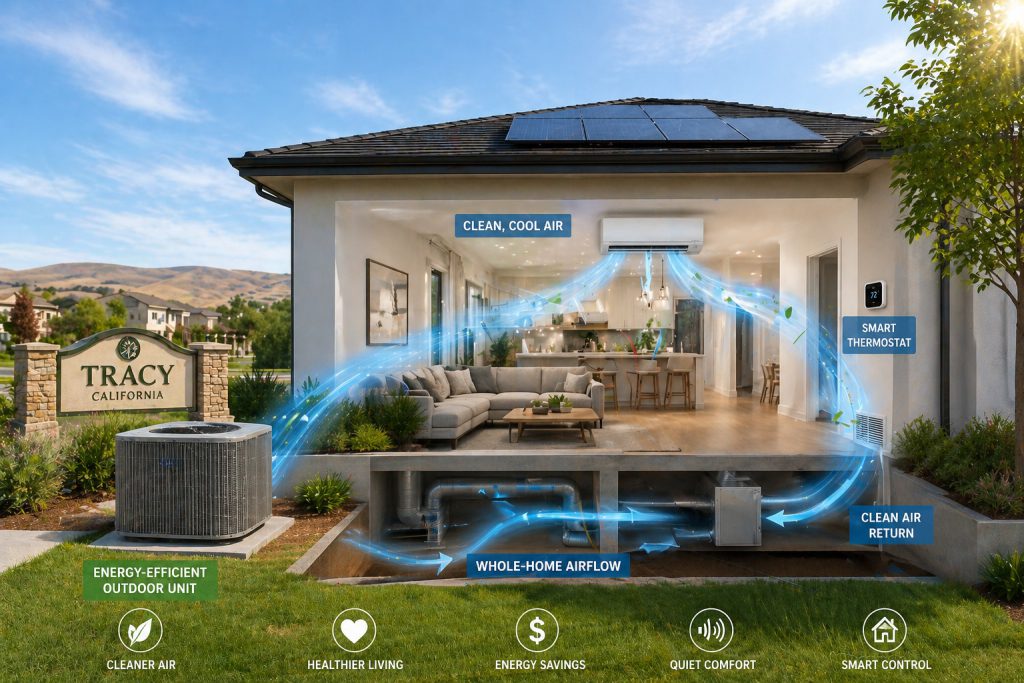
Unlike portable units, whole-home air purifiers integrate directly into your HVAC system.
They work continuously to remove microscopic pollutants, including:
- Viruses and bacteria
- Smoke particles
- VOCs
This is one of the most effective ways to achieve consistent, whole-house air purification.
3. Maintain Proper Humidity Levels
Humidity plays a major role in air quality.
- Too much humidity → mold and mildew growth
- Too little humidity → dry skin, irritation, and airborne particles
The ideal indoor humidity level is between 30% and 50%.
Installing a humidifier or dehumidifier can help maintain balance year-round.
4. Schedule Routine HVAC Maintenance
Regular HVAC maintenance ensures your system is:
- Clean
- Efficient
- Free of buildup
During a professional tune-up, technicians clean internal components, check airflow, and ensure your system isn’t spreading contaminants.
This simple step can dramatically improve both air quality and system lifespan.
5. Improve Ventilation Throughout Your Home
Proper ventilation helps bring in fresh outdoor air while removing stale indoor air.
Simple ways to improve ventilation include:
Better airflow reduces pollutant concentration and keeps your home feeling fresh.
6. Seal and Clean Your Ductwork
Leaky or dirty ducts can circulate dust, debris, and allergens throughout your home.
Professional duct services can:
- Remove accumulated contaminants
- Seal leaks that pull in unfiltered air
- Improve overall airflow efficiency
This is especially important in older homes or systems that haven’t been inspected in years.
7. Reduce Indoor Pollutant Sources
Sometimes, the biggest air quality problems come from inside your home.
You can reduce pollutants by:
- Using natural or low-VOC cleaning products
- Avoiding indoor smoking
- Keeping pets groomed
- Regularly vacuuming with HEPA filters
- Limiting candles and synthetic fragrances
Small changes can have a big impact over time.
The Long-Term Benefits of Better Indoor Air Quality
Improving your indoor air quality isn’t just about comfort, it’s an investment in your home and your health.
Benefits include:
- Fewer allergy and asthma symptoms
- Better sleep quality
- Increased HVAC efficiency
- Lower energy bills
- Extended system lifespan
- A cleaner, fresher living environment
For homeowners in Tracy, where seasonal changes can impact air conditions, maintaining good air quality is essential year-round.
How Wildfire Smoke Affects Indoor Air Quality in Tracy, CA
In recent years, wildfire smoke has become a serious concern across California, including Tracy. Even if fires are miles away, microscopic particles can travel long distances and infiltrate homes.
These particles, known as PM2.5, are small enough to bypass standard HVAC filters and enter your lungs.
During wildfire season, indoor air quality can deteriorate quickly without proper protection.
To reduce exposure:
- Keep windows and doors closed
- Use high-efficiency HVAC filters (MERV 13 or higher)
- Run air purifiers continuously
- Avoid activities that worsen indoor air (like burning candles)
This is one of the strongest reasons Tracy homeowners should invest in advanced HVAC air quality solutions.
The Role of HVAC Systems in Indoor Air Quality Control
Your HVAC system does more than regulate temperature, it actively controls the air you breathe.
Every time your system runs, it:
- Circulates air through filters
- Removes or redistributes airborne particles
- Impacts humidity levels
- Influences ventilation efficiency
A poorly maintained system can spread contaminants, while a well-optimized system becomes your home’s primary air purification tool.
That’s why indoor air quality and HVAC performance are directly connected and not separate issues.
Portable Air Purifiers vs Whole-Home Systems: Which Is Better?
Many homeowners start with portable air purifiers, but these only treat individual rooms.
Here’s the key difference:
Portable Units:
- Good for small spaces
- Limited coverage
- Require multiple units for full-home protection
Whole-Home Systems:
- Integrated with HVAC
- Treat every room simultaneously
- Require less maintenance overall
If your goal is consistent indoor air quality throughout your home, whole-home solutions are far more effective.
How Pets Impact Indoor Air Quality
Pets bring joy but they also introduce airborne particles into your home.
Common pet-related pollutants include:
- Dander
- Hair and fur
- Outdoor allergens carried inside
Even homes that feel clean can have elevated allergen levels due to pets.
To minimize impact:
- Groom pets regularly
- Vacuum frequently with HEPA filtration
- Change HVAC filters more often
For pet owners in Tracy, improving indoor air quality often starts with better filtration systems.
Why New Homes Can Still Have Poor Air Quality
Many assume newer homes automatically have better air quality but that’s not always true.
In fact, modern homes are built to be more airtight, which can trap pollutants inside.
Common issues in newer homes include:
- VOCs from new materials (paint, flooring, furniture)
- Limited natural ventilation
- Off-gassing from construction products
Without proper ventilation and filtration, these pollutants can accumulate quickly.
This makes mechanical air quality solutions even more important in newer properties.
The Connection Between Indoor Air Quality and Sleep Quality
Air quality doesn’t just affect your health, it directly impacts how well you sleep.
Poor indoor air can lead to:
- Congestion
- Dry throat
- Irritated airways
- Restless sleep
Cleaner air supports:
- Deeper breathing
- Reduced allergens
- More consistent sleep cycles
Many homeowners notice improved sleep within days of upgrading their air filtration or humidity control.
How Indoor Air Quality Affects Children and Seniors
Some groups are more sensitive to air quality than others, especially children and older adults.
Why?
- Children’s lungs are still developing
- Seniors often have weaker respiratory systems
- Both groups are more vulnerable to allergens and pollutants
Poor indoor air quality can worsen:
- Asthma
- Allergies
- Respiratory infections
For families in Tracy, improving indoor air quality is not just about comfort, it’s about protecting those most at risk.
Smart Home Technology for Monitoring Air Quality
Modern technology makes it easier than ever to track your indoor air quality in real time.
Smart air quality monitors can detect:
- Particulate matter (PM2.5)
- Humidity levels
- VOC concentrations
- Temperature fluctuations
Some systems even integrate with HVAC units to automatically adjust settings based on air conditions.
This allows homeowners to move from reactive fixes to proactive air quality management.
Final Thoughts
Indoor air quality is one of the most overlooked aspects of home comfort, but it’s also one of the most important.
By taking a proactive approach and leveraging your HVAC system properly, you can create a healthier, more comfortable home environment for your family.
Whether it’s upgrading your filtration, improving ventilation, or addressing humidity issues, each step you take brings you closer to cleaner, safer air.