If your summer energy bills feel out of control, you’re not imagining things.
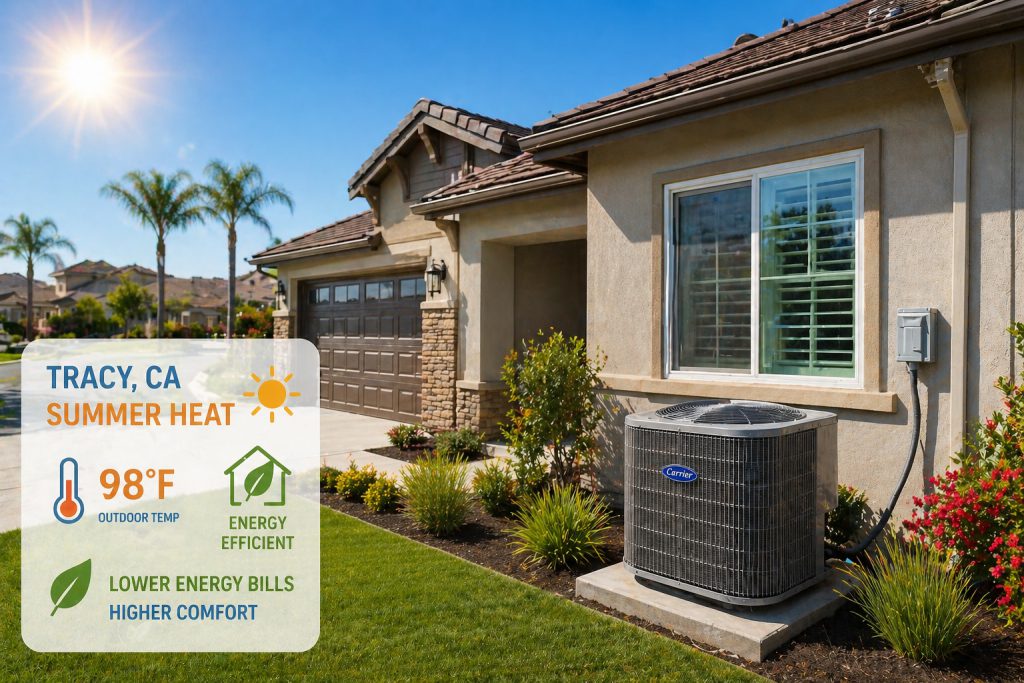
Tracy’s climate brings long, dry, and intensely hot summers, often pushing HVAC systems to run for hours without a break. When your AC works overtime, even small inefficiencies turn into major energy waste.
But here’s the key insight:
Most high cooling costs aren’t caused by one big problem, they’re the result of multiple small inefficiencies stacking together.
How Your HVAC System Really Uses Energy
Your air conditioner doesn’t just “cool air.” It:
- Pulls warm air from your home
- Removes heat and humidity
- Circulates cooled air back through ducts
Every step consumes energy and if any part is inefficient, your system works harder than it should.
Think of it like driving a car with low tire pressure. You’ll still move but you’ll burn way more fuel getting there.
Hack #1: Set Your Thermostat Strategically
One of the simplest ways to reduce cooling costs is adjusting your thermostat.
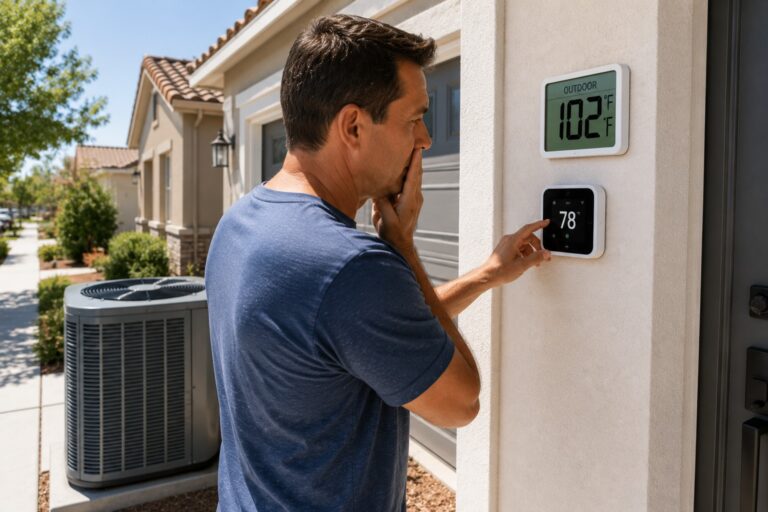
- Set it to 78°F when you’re home
- Raise it by 5–8 degrees when you’re away
Even a small adjustment can reduce energy use by up to 10%.
Consider pairing this with a programmable thermostat upgrade for better automation.
Hack #2: Replace Your Air Filter Regularly
A clogged air filter restricts airflow, forcing your system to work harder.
- Replace every 1–3 months
- Check more often during peak summer use
Dirty filters are one of the most overlooked causes of high energy bills.
Hack #3: Seal Air Leaks Around Your Home
Cool air escaping = money wasted.
Check for leaks around:
- Windows
- Doors
- Attics
- Electrical outlets
Use weather stripping or caulk to seal gaps. This alone can reduce cooling costs significantly.
Hack #4: Use Ceiling Fans the Right Way
Fans don’t cool air, they move it.
But that movement creates a wind-chill effect, making you feel cooler so you can raise the thermostat.
- Set fans to spin counterclockwise in summer
- Turn them off when leaving the room
Hack #5: Upgrade to a Smart Thermostat
Smart thermostats learn your habits and optimize cooling automatically.
Benefits include:
- Reduced unnecessary runtime
- Remote control via smartphone
- Energy usage tracking
Many utility providers offer rebates for upgrades.
Hack #6: Block Heat Before It Enters
The less heat that enters your home, the less your AC has to remove.
Effective strategies:
- Close blinds during peak sunlight hours
- Use blackout curtains
- Install reflective window films
This is especially important for west-facing windows common in Tracy homes.
Hack #7: Schedule Preventative HVAC Maintenance
Routine maintenance ensures your system runs efficiently.
A professional tune-up includes:
- Coil cleaning
- Refrigerant checks
- Electrical inspection
- Airflow testing
Regular maintenance can improve efficiency by up to 15%.
Hack #8: Clean Around Your Outdoor Unit
Your condenser unit needs proper airflow to function efficiently.
Make sure:
- There’s at least 2 feet of clearance
- No debris, leaves, or dirt buildup
- The unit is level and unobstructed
Hack #9: Upgrade Insulation in Key Areas
Poor insulation allows cool air to escape and heat to enter.
Focus on:
- Attics
- Walls
- Crawl spaces
This is a long-term investment that pays off in both comfort and savings.
Hack #10: Adjust Your Daily Cooling Habits
Small behavior changes can make a big difference.
Examples:
- Avoid using ovens during peak heat
- Run appliances at night
- Take shorter, cooler showers
Hack #11: Know When It’s Time to Upgrade Your System
If your system is:
- Over 10–15 years old
- Frequently breaking down
- Struggling to cool evenly
…it may be costing you more than it’s worth.
Modern systems are significantly more energy-efficient and can dramatically lower your monthly bills.
How Tracy’s Climate Directly Impacts Your Cooling Costs
Tracy isn’t just “hot”, it’s uniquely challenging for HVAC systems.
During peak summer months, temperatures regularly climb into the high 90s and beyond. But what really drives up your cooling costs isn’t just the heat, it’s the duration and intensity of that heat over time.
Unlike coastal areas that cool down in the evening, Tracy often experiences heat retention well into the night, forcing your AC to:
- Run longer cycles
- Struggle to reach set temperatures
- Consume significantly more electricity
This creates a compounding effect. Your system doesn’t just work harder during the day, it never fully recovers overnight.
Additionally, Tracy’s dry climate introduces another factor: dust accumulation. Dust buildup affects:
- Air filters (clogging faster)
- Coils (reducing heat transfer efficiency)
- Ductwork (restricting airflow)
Over time, these issues silently increase your energy usage without obvious warning signs.
Understanding your local climate is critical because it explains why “generic energy-saving tips” often fall short. What works in mild climates won’t deliver the same results in Tracy unless adapted properly.
The Hidden Energy Wasters Most Homeowners Never Notice
Many homeowners focus on obvious issues like thermostat settings or system age. But the real culprits behind high cooling costs are often hidden in plain sight.
Here are some of the most common, and costly, energy leaks:
Leaky Ductwork
Up to 30% of cooled air can be lost through duct leaks before it ever reaches your living space.
That means your system is working 30% harder than necessary just to maintain comfort.
Improper Thermostat Placement
If your thermostat is installed near:
- Windows
- Direct sunlight
- Kitchens
…it may read temperatures inaccurately, causing your AC to overrun.
Closed or Blocked Vents
Many homeowners close vents in unused rooms thinking it saves energy.
In reality, this disrupts system pressure balance, forcing your HVAC system to work harder.
Aging Electrical Components
Worn capacitors or motors reduce system efficiency gradually and not enough to trigger a breakdown, but enough to increase energy consumption month after month.
These hidden issues are exactly why some homes have consistently high energy bills despite “doing everything right.”
Rebates and Energy Programs Available in Tracy, CA
If you’re trying to lower cooling costs, you don’t have to do it alone, there are financial incentives available that many homeowners never take advantage of.
Programs in California often include:
- Rebates for high-efficiency HVAC systems
- Incentives for smart thermostat installation
- Credits for home insulation upgrades
- Energy audits that identify inefficiencies
Utility providers and statewide programs frequently update these offers, making it worthwhile to check regularly.
The key advantage here isn’t just savings, it’s acceleration.
Instead of delaying upgrades due to cost, rebates allow you to improve efficiency immediately, reducing both upfront expenses and long-term energy bills.
DIY vs Professional HVAC Fixes: What Actually Saves You More Money?
Not all HVAC improvements require professional service, but knowing where to draw the line is crucial.
DIY Tasks That Save Money
- Replacing air filters
- Cleaning vents and registers
- Clearing debris around outdoor units
- Sealing minor air leaks
These are low-risk, high-impact actions every homeowner should handle.
- Refrigerant level adjustments
- Electrical diagnostics
- Duct sealing and airflow balancing
- Full system tune-ups
Attempting these without proper training can lead to higher repair costs or system damage.
The smartest approach is hybrid:
Handle the basics yourself, and rely on professionals for technical optimization.
How Your Home’s Layout Affects Cooling Efficiency
Your HVAC system doesn’t operate in a vacuum, it interacts with your home’s design.
Certain layouts are naturally harder to cool:
- Multi-story homes (heat rises, creating uneven temperatures)
- Open floor plans (harder to control airflow distribution)
- Rooms with large windows (higher heat gain)
If some rooms are consistently hotter than others, your system compensates by running longer, increasing energy usage across the entire home.
Solutions may include:
- Zoning systems
- Strategic vent adjustments
- Supplemental cooling (like mini-splits)
Understanding airflow dynamics helps you move from reactive fixes to proactive optimization.
The True Cost of Ignoring Small HVAC Problems
A slightly higher energy bill may not seem urgent, but small inefficiencies rarely stay small.
Here’s how minor issues escalate:
- Dirty coils → reduced efficiency → longer run times
- Weak airflow → uneven cooling → thermostat overcompensation
- Low refrigerant → poor cooling → compressor strain
Each step increases both energy consumption and wear on your system.
What starts as a minor issue can eventually lead to:
- Major component failure
- Emergency repairs
- Full system replacement
Addressing inefficiencies early is one of the most effective ways to control long-term cooling costs.
Final Thoughts: Small Changes, Big Savings
Lowering your cooling costs isn’t about one big fix, it’s about stacking smart, efficient habits.
Start with easy wins like filters and thermostat adjustments, then move toward larger improvements like insulation and system upgrades.
The result?
A cooler home, lower bills, and a system that actually works with you, not against you.