If you are replacing an aging HVAC system, you may find yourself facing a choice that was much less common a decade ago: Should you install another furnace, or switch to a heat pump?
For homeowners comparing a heat pump vs. furnace in Tracy, CA, there is no universal winner.
A heat pump can be an excellent match for Tracy’s relatively mild winters because it transfers heat rather than creating it through combustion. It also doubles as an air conditioner, giving homeowners heating and cooling from one system.
A gas furnace, meanwhile, can deliver powerful, fast heating and may make practical sense for homes that already have natural gas infrastructure and a relatively new or efficient central air conditioner.
The decision becomes especially interesting in Tracy because heating is only part of the equation. Homeowners here also need HVAC equipment capable of handling intense summer heat. Choosing a heating system without considering its cooling role would be like buying a vehicle based only on how it performs downhill.
Your existing equipment, ductwork, electrical service, insulation, energy rates, comfort preferences, and replacement plans all matter.
Let’s break those factors down.
How Does a Heat Pump Work?
Despite its name, a heat pump can both heat and cool your home.
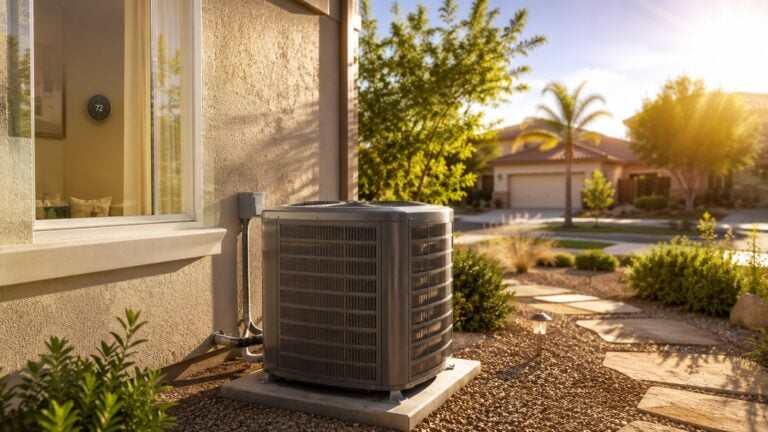
During summer, an air-source heat pump operates much like a conventional central air conditioner. It removes heat from indoor air and transfers that heat outdoors.
During winter, the process reverses.
Instead of generating heat by burning natural gas, the system extracts available thermal energy from outdoor air and moves it inside your home.
That may sound strange on a cold morning. How can outdoor air contain usable heat when it feels cold?
The answer is that “cold” air still contains thermal energy. Modern heat pumps use refrigerant, a compressor, coils, and a reversing valve to capture and transfer that energy.
Think of your refrigerator. It does not manufacture cold. It moves heat from inside the refrigerator into the surrounding room.
A heat pump works on a similar principle, except it can move heat in either direction.
How Does a Furnace Work?
A furnace takes a fundamentally different approach.
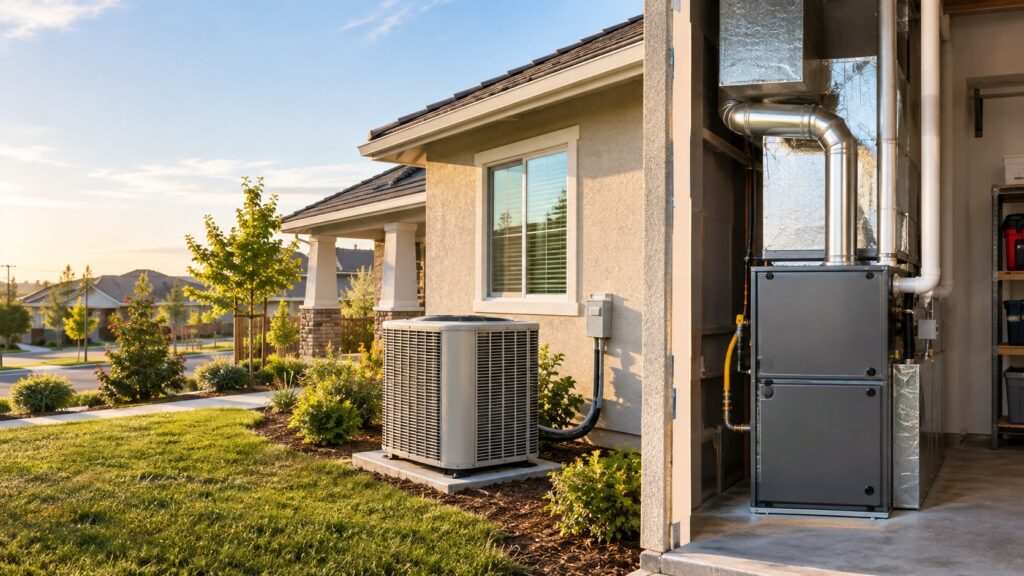
A typical gas furnace burns natural gas to create heat. A heat exchanger absorbs that heat, and the HVAC blower moves warmed air through your home’s duct system.
Unlike a heat pump, a furnace is designed specifically for heating.
It cannot cool your house.
Homes with gas furnaces therefore usually have a separate central air-conditioning system that shares the furnace’s blower and ductwork.
That distinction becomes important when comparing replacement options.
If your furnace fails but your air conditioner has many years of useful life remaining, replacing only the furnace may be reasonable.
If both systems are nearing the end of their service lives, however, a heat pump may give you an opportunity to replace the heating and cooling functions together.
Heat Pump vs. Furnace: Key Differences at a Glance
The simplest way to understand the comparison is this:
A furnace creates heat. A heat pump moves heat.
That difference affects nearly everything else.
A gas furnace typically:
- Uses natural gas for heating
- Produces relatively hot supply air
- Provides heating only
- Requires separate cooling equipment
- Can heat a home rapidly
- Uses combustion and therefore requires proper venting
An air-source heat pump typically:
- Uses electricity
- Provides both heating and cooling
- Transfers rather than creates heat
- Often operates for longer, steadier cycles
- Produces supply air that may feel less intensely hot than furnace air
- Does not burn natural gas inside the unit to produce heat
Neither list automatically makes one system better.
The real question is how those characteristics match your home.
Which System Is Better Suited to Tracy’s Climate?
Climate is one of the most important factors in the heat pump vs. furnace debate.
Heat pumps historically earned a reputation for struggling in very cold climates. Older equipment could lose substantial heating capacity as outdoor temperatures dropped, making supplemental heating necessary.
Modern heat-pump technology has changed considerably.
More importantly, Tracy does not experience the prolonged subzero winters found in places such as Minnesota, North Dakota, or northern New England.
Nearby long-term climate observations from Stockton Metropolitan Airport show January average temperatures around 48°F, with average January lows around 39°F. Those conditions are quite different from climates where extreme winter cold dominates HVAC decisions.
That makes the Tracy area fundamentally interesting for heat pumps.
A heat pump can operate effectively through the kind of relatively mild winter weather typical of this part of California. At the same time, the same equipment functions as an air conditioner during Tracy’s much more demanding summer season.
That doesn’t mean every Tracy house should automatically switch to a heat pump.
System sizing, insulation, duct condition, equipment quality, electrical capacity, and installation quality remain critical.
Energy Efficiency: Heat Pump vs. Furnace
Efficiency is where heat pumps become particularly interesting.
A furnace converts fuel into heat. Even a highly efficient furnace cannot deliver multiple units of heat for every equivalent unit of fuel energy consumed.
A heat pump works differently because it is moving existing heat instead of creating all of its heat from an energy source.
That allows a properly operating heat pump to deliver substantially more heat energy than the electrical energy it consumes under favorable conditions.
Furnace efficiency is commonly expressed as AFUE, or Annual Fuel Utilization Efficiency.
For example, a 95% AFUE furnace is designed to convert approximately 95% of the fuel’s energy into usable heat over its rated operating conditions, with the remainder lost through the combustion and venting process.
Heat-pump heating efficiency uses different measurements, including HSPF2, and real-world performance changes with outdoor temperature.
This is why comparing “95% efficient” with a heat-pump efficiency rating isn’t an apples-to-apples calculation.
A heat pump’s ability to transfer heat can make it extremely energy efficient in moderate winter conditions.
California’s energy policy increasingly recognizes this potential. The California Energy Commission notes that heat-pump technology provides greater heating efficiency than gas furnaces, and the state’s 2025 Energy Code, which applies to qualifying permit applications beginning January 1, 2026, expands heat-pump use in newly constructed residential buildings.
Efficiency, however, should not be confused automatically with lower utility bills.
That brings us to one of the most important nuances for California homeowners.
Heating Comfort: Do Heat Pumps and Furnaces Feel Different?
Yes.
A furnace typically delivers hotter air through the registers during a heating cycle. When the furnace starts, homeowners often notice an immediate blast of warm air.
Heat pumps tend to work differently.
Instead of repeatedly producing short bursts of very hot air, many modern heat-pump systems operate for longer periods and deliver gentler, more consistent heat.
Some homeowners prefer the steady temperature.
Others are accustomed to the hotter air produced by a gas furnace and initially perceive heat-pump supply air as “cool,” even though the system is actively heating the house.
Think of the difference between warming your hands near a fireplace and sitting in a room maintained at a stable comfortable temperature. Both can keep you warm, but the sensation is different.
Variable-speed heat pumps can further improve temperature consistency by adjusting output rather than constantly operating at full capacity.
The right choice therefore isn’t just about numbers on an efficiency label. Comfort preferences matter too.
Cooling Capability: A Major Difference Tracy Homeowners Should Consider
This is arguably one of the most important sections for a Tracy homeowner.
A furnace cannot cool your house.
A heat pump can.
That means a heat pump is not merely competing with your furnace. In many replacement situations, it is potentially competing with the combination of a furnace and air conditioner.
That changes the economics.
Imagine your 18-year-old furnace and 17-year-old AC are both approaching replacement. Comparing the price of a new furnace alone with the price of a heat pump would tell only half the story.
You need to compare complete solutions.
A new furnace still requires an air-conditioning system for Tracy summers.
A properly selected heat pump provides both functions.
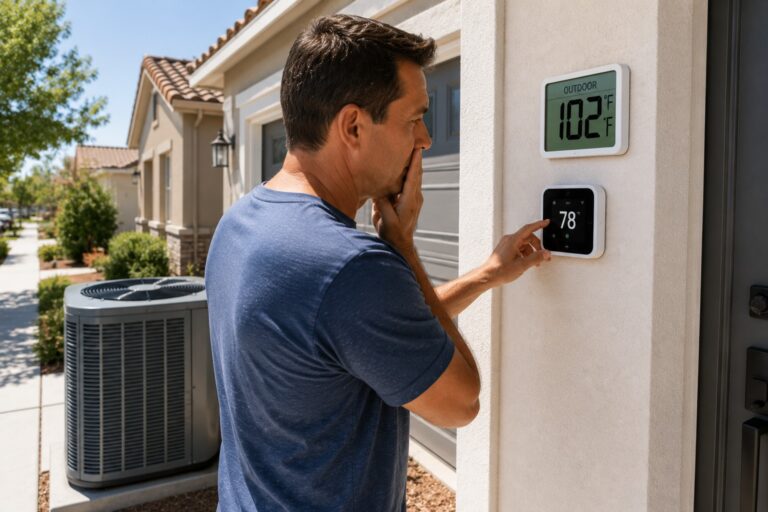
This is particularly important in a community where cooling performance is not optional. Tracy summers can place heavy demands on residential HVAC equipment, so homeowners considering a heat pump should evaluate its cooling efficiency and capacity just as carefully as its heating performance.
Upfront Installation Costs
Which costs more to install: a heat pump or a furnace?
Usually, the answer depends on what is actually being replaced.
A straightforward furnace-for-furnace replacement may cost less upfront than converting an existing gas-heated home to a heat pump.
But that comparison can become misleading when the air conditioner also needs replacement.
Homeowners should consider several possible scenarios:
Scenario 1: Only the furnace needs replacement
If your AC is relatively new and performing well, replacing only an aging furnace may offer the simplest path.
Scenario 2: Furnace and AC both need replacement
A heat pump becomes much more compelling because one system can perform both functions.
Scenario 3: Your home needs electrical upgrades
Switching from gas heating to an electric heat pump may require electrical work depending on your existing panel, available capacity, equipment selection, and other electrical loads.
Scenario 4: Existing ductwork needs improvement
Neither a premium furnace nor a high-efficiency heat pump can overcome severely undersized, damaged, disconnected, or poorly designed ductwork.
The installation quote therefore needs to reflect the whole house and whole HVAC system, not just the equipment sitting outside or in the mechanical closet.
Indoor Air Quality and Safety Considerations
Both heat pumps and furnaces rely on good airflow and filtration when connected to a forced-air duct system.
The main safety distinction involves combustion.
An all-electric heat pump does not burn natural gas to produce heat inside the HVAC unit. That removes combustion-related concerns associated specifically with gas heating equipment, such as problems caused by damaged heat exchangers or improper venting.
A properly installed and maintained gas furnace is designed with multiple safety controls, but professional inspection remains important.
Regardless of heating type, indoor air quality also depends on factors beyond the equipment itself.
Filters, duct condition, ventilation, humidity, household pollutants, pets, dust, and air leakage all affect what you breathe.
Heat Pump vs. Furnace: Pros and Cons
Heat Pump Advantages
A heat pump can provide:
- Heating and cooling from one system
- High heating efficiency in moderate climates
- No on-site gas combustion for heating
- Consistent indoor temperatures
- Compatibility with modern variable-speed technology
- A strong climate fit for many California homes
Heat Pump Disadvantages
Potential drawbacks include:
- Higher conversion costs in some existing homes
- Possible electrical upgrades
- Different heating feel compared with a gas furnace
- Greater sensitivity of operating-cost calculations to electricity rates
- Year-round equipment usage
- More complicated comparisons when an existing AC is still relatively new
Furnace Advantages
A furnace can provide:
- Strong, fast heating
- Familiar comfort for homeowners accustomed to hot supply air
- Straightforward replacement when gas infrastructure already exists
- Potentially lower initial cost when replacing only a furnace
- A practical option when the existing AC still has significant useful life
Furnace Disadvantages
Potential drawbacks include:
- Heating only
- Need for separate air-conditioning equipment
- On-site fuel combustion
- Lower heating efficiency compared with the heat-transfer potential of modern heat pumps
- Continued reliance on natural gas where a gas furnace is used
When a Heat Pump Makes More Sense
A heat pump may deserve serious consideration when:
Your furnace and AC are both aging
Replacing two old systems creates a natural opportunity to consider one heating-and-cooling solution.
You want one system for year-round comfort
A central heat pump can handle both jobs.
Energy efficiency is a major priority
Heat pumps can deliver excellent heating efficiency under Tracy’s relatively mild winter conditions.
You are reducing natural gas use
A heat pump provides electric space heating without burning natural gas in the heating unit.
You are already planning HVAC replacement
Switching technologies is often easier to evaluate during a planned replacement than during an emergency failure.
Your home’s electrical system can support the equipment
A qualified assessment can determine what electrical work, if any, is required.
When a Furnace May Make More Sense
A furnace may remain a sensible choice when:
Your air conditioner is relatively new
Replacing a good AC solely to consolidate equipment may not make financial sense.
Your home already has suitable gas infrastructure
A direct furnace replacement can sometimes be simpler.
You strongly prefer furnace-style heat
Some homeowners genuinely prefer the hotter supply air and faster temperature recovery of a furnace.
Conversion would require substantial additional work
Electrical, duct, structural, or other installation requirements can change the economics.
Your specific energy-cost comparison favors gas
Efficiency percentages alone do not pay utility bills. Actual rates and household usage matter.
What About a Dual-Fuel HVAC System?
There is another option between “all heat pump” and “all furnace.”
A dual-fuel system combines a heat pump with a gas furnace.
During moderate weather, the heat pump can provide efficient heating. When conditions reach a predetermined point, the system can switch to the furnace.
This approach offers flexibility, although it also means owning and maintaining more equipment.
For Tracy’s relatively mild winters, homeowners should evaluate whether the added complexity is justified for their particular house rather than assuming dual fuel is automatically better.
The important point is that HVAC decisions are not always binary.
Questions to Ask Before Choosing
Before deciding between a heat pump and furnace, ask:
How old is my existing furnace?
How old is my air conditioner?
Will both systems need replacement soon?
What condition is my ductwork in?
Has my home had a proper heating and cooling load calculation?
Can my electrical system support the proposed heat pump?
What efficiency ratings does each proposed system have?
What would each option cost to operate using my actual utility rates?
How does each option perform during Tracy’s hottest summer conditions?
What maintenance will each system require?
What warranties are included?
Are any current local, state, utility, or income-qualified incentives actually available for my project?
Does the contractor have experience installing and commissioning the specific type of system being recommended?
That last question matters more than many homeowners realize.
HVAC equipment is not a plug-and-play appliance.
Correct sizing, airflow, refrigerant charging, duct design, electrical setup, controls, and commissioning all influence performance.
The Bottom Line: Heat Pump or Furnace for a Tracy Home?
For many homeowners comparing a heat pump vs. furnace in Tracy, CA, a modern heat pump deserves serious consideration.
Tracy’s relatively mild winter conditions are well suited to heat-pump technology, and the ability to provide both heating and cooling makes a heat pump particularly relevant in a city where summer air conditioning is such an important part of home comfort.
But that does not make furnaces obsolete.
A furnace can still be a practical choice when a homeowner already has a newer central air conditioner, wants a straightforward replacement, prefers furnace-style heating, has existing natural gas infrastructure, or faces significant costs to convert the home.
The smartest comparison is therefore not:
“Which piece of equipment is better?”
It is:
“Which complete HVAC solution makes the most sense for this particular home?”
A homeowner with an aging furnace and aging AC is making a very different decision from someone whose furnace failed while their air conditioner is only three years old.
Likewise, a well-insulated home with suitable electrical capacity presents a different heat-pump opportunity than a house with significant duct leakage, poor insulation, or electrical limitations.
Start with the house.
Look at the heating load, cooling load, ductwork, equipment condition, electrical infrastructure, energy rates, and comfort expectations.
Then compare the options.
When those factors are evaluated together, the heat-pump-versus-furnace question becomes much easier to answer—and the result is far more useful than choosing a system based on a generic national recommendation.
For Tracy homeowners, that whole-home perspective is especially important. Winters may be moderate, but summers can push HVAC systems hard. The best heating decision is therefore also a cooling decision, an efficiency decision, an infrastructure decision, and a long-term comfort decision.
Choose the system that solves all of those problems together.