Yes, a gas- or oil-burning furnace can contribute to carbon monoxide poisoning if combustion gases enter occupied areas instead of being safely vented outside. A properly installed and maintained furnace is designed to keep those gases separate from the air your family breathes, but damaged components or venting failures can undermine that protection.
That distinction matters for homeowners in Tracy, California, who may switch from months of cooling to using a gas furnace during chilly evenings and winter mornings. A furnace that produced comfortable heat last season still needs appropriate inspection, because hidden defects may not announce themselves through a noticeable change in room temperature.
Carbon monoxide, commonly abbreviated CO, is a toxic gas produced when fuels burn, particularly when combustion is incomplete. The Centers for Disease Control and Prevention identifies fuel-burning furnaces among household sources, alongside water heaters, vehicles, generators, and other combustion equipment.
Why Carbon Monoxide Is So Difficult to Detect
Unlike smoke, carbon monoxide has no color, smell, or taste that a person can reliably detect. You can stand in a room containing dangerous CO without seeing a haze, noticing an unusual odor, or realizing the air has changed.
This makes a carbon monoxide alarm fundamentally different from a simple comfort accessory. An appropriately installed and functioning alarm provides a warning that human senses cannot, although it does not replace professional maintenance or guarantee that every possible exposure will be detected instantly.
Exposure can also resemble everyday illnesses, which complicates recognition when someone is tired, nauseated, or fighting what seems like a seasonal virus. If multiple household members develop similar symptoms around the same time, especially while a fuel-burning appliance operates, possible carbon monoxide exposure deserves immediate attention rather than guesswork.
How a Gas Furnace Can Allow Carbon Monoxide Into a Home
A Damaged Heat Exchanger
The heat exchanger transfers heat from combustion gases to circulating household air while keeping the two air streams separated. When that metal component develops damage, corrosion, failed seams, or openings, combustion byproducts may reach places they should never enter.
A crack does not automatically prove that carbon monoxide is entering living spaces, and not every dangerous venting problem involves a cracked exchanger. Nevertheless, a suspected heat exchanger defect requires a qualified technician to evaluate the appliance before it is used again.
Heat exchangers experience repeated heating and cooling as a furnace cycles, and age or operating problems can contribute to deterioration. A homeowner should not remove furnace panels, insert tools into combustion areas, or attempt to seal a suspect exchanger with household products.
Blocked or Disconnected Exhaust Venting
A gas furnace needs a reliable route for combustion products to leave the building. A blocked flue, disconnected vent, damaged connector, or incorrectly installed exhaust system can allow gases to spill or collect indoors.
Depending on the equipment, venting problems may involve debris, animal nests, corrosion, installation errors, or other restrictions. These issues are not always visible from the thermostat or supply registers, so a furnace that appears to heat normally can still warrant investigation.
If a vent looks visibly damaged from an accessible location, do not treat a quick visual repair as proof that the system is safe. Shut the equipment down when it is safe to do so, arrange professional evaluation, and follow emergency guidance if an alarm activates or anyone feels ill.
Combustion or Airflow Problems
Furnaces need the proper mixture of fuel and combustion air to operate as designed. Problems with burners, combustion-air supply, or system setup can increase carbon monoxide production, while certain airflow issues may also contribute to overheating and equipment damage.
A dirty household filter does not, by itself, establish that carbon monoxide is leaking into a room. However, sustained operating problems are a reason for service, because several conditions can occur together and a technician must assess their actual effect.
Treat the furnace as an integrated appliance rather than a collection of unrelated parts. The burner, heat exchanger, blower, safety controls, and venting system all play different roles in delivering heat safely.
Seven Potential Furnace Carbon Monoxide Warning Signs
1. Your Carbon Monoxide Alarm Activates
A sounding carbon monoxide alarm is the clearest actionable warning that requires immediate protective action. Do not spend time deciding whether the furnace, garage, or another appliance caused the alert while people remain inside.
Move everyone outdoors to fresh air and call 911 or the fire department from outside. Do not reenter until emergency responders say it is safe, even if the alarm stops sounding or someone believes they have identified a harmless explanation.
2. Several People Experience Unexplained Symptoms
A headache in one person can have many causes, but several people becoming dizzy, nauseated, or unusually weak in the same building is concerning. Symptoms that appear indoors and improve after leaving may increase suspicion, although improvement alone cannot confirm or exclude CO exposure.
Take symptoms seriously even if your alarm has not activated. Leave the building, contact emergency services when exposure is suspected, and obtain medical assessment rather than trying to test the theory by going back inside.
3. You Notice Soot or Scorching Near Combustion Equipment
Black soot, unusual scorching, or new discoloration around a furnace can point to a combustion or venting issue that needs investigation. These marks do not independently diagnose carbon monoxide poisoning, but they should not be dismissed as ordinary household dust.
Do not open a combustion chamber to search for additional evidence. A trained professional can evaluate burner operation, venting, and whether visible deposits are associated with unsafe conditions.
4. The Furnace Flame Looks Unusual
Some gas furnaces have an accessible viewing window through which the burner flame can be observed without removing a panel. A markedly irregular or unusually yellow flame may justify service, but flame appearance varies by equipment and cannot reliably measure indoor carbon monoxide.
Never remove a cover, defeat a safety switch, or move closer to a suspicious burner to inspect the flame. If you observe a change during normal use, arrange a qualified assessment and prioritize evacuation whenever an alarm or concerning symptoms are present.
5. You See Rust, Moisture, or Damaged Vent Connections
Visible corrosion, water staining, or a loose vent connector may indicate an equipment or exhaust-system problem. Such conditions can have several explanations, so they are clues to examine rather than proof that your home currently contains dangerous CO.
Pay particular attention to changes noticed during routine, nonintrusive observation around the furnace area. Leave dismantling, vent integrity testing, and decisions about safe operation to a qualified heating professional.
6. The Furnace Behaves Differently Than Usual
Unexpected shutdowns, repeated ignition failures, or unfamiliar operating noises can signal mechanical or control issues. These symptoms are not specific to carbon monoxide, yet they give homeowners a reasonable basis to stop relying on the system until its condition is understood.
A furnace can also have a serious combustion problem without showing any obvious performance change. Normal heating, therefore, should never be used as evidence that carbon monoxide alarms and inspections are unnecessary.
7. Someone Suspects a Combustion or Exhaust Problem
Sometimes the only clue is a damaged exterior vent terminal, a reported appliance defect, or a technician identifying unsafe operation. A concern like this deserves attention even when the house remains warm and everyone feels fine.
If a qualified professional shuts down a furnace for a safety defect, do not restart it before the problem has been corrected and the appliance cleared for use. A temporary loss of heat is inconvenient, but it should not be resolved by bypassing safety controls.
Symptoms of Carbon Monoxide Poisoning to Recognize
Common symptoms include headache, dizziness, weakness, upset stomach, vomiting, chest pain, and confusion, according to the CDC. More serious exposure can lead to collapse, loss of consciousness, permanent injury, or death, and people who are asleep may never recognize early symptoms.
Symptoms are sometimes described as flu-like, but that comparison is imperfect and should not be used as a home diagnostic test. A person can have carbon monoxide poisoning without the same combination of symptoms as another person, and illness from other causes can look similar.
Infants, older adults, and people with certain heart, blood, or breathing conditions may face greater risk of serious harm. If anyone develops possible symptoms alongside a CO alarm or suspected fuel-burning equipment problem, treat the situation as urgent regardless of the person’s age.
Medical professionals may assess exposure history, symptoms, and blood testing when clinically appropriate. A household carbon monoxide alarm cannot diagnose an individual’s condition, and an ordinary fingertip pulse oximeter cannot reliably rule out carbon monoxide poisoning.
What to Do If Your Carbon Monoxide Alarm Sounds
First, move everyone outdoors immediately, including children and anyone who may need assistance. Once outside, call 911 or the local fire department, tell responders that a carbon monoxide alarm activated, and report any symptoms.
Do not remain indoors to open windows, search for the source, shut down the furnace, collect belongings, or reset the alarm. The U.S. Consumer Product Safety Commission advises people not to reenter until emergency responders give permission.
If anyone is dizzy, confused, vomiting, faint, or experiencing chest pain, explain those symptoms to the dispatcher and follow emergency medical instructions. Do not assume feeling better in fresh air means medical evaluation is unnecessary.
After responders clear the property, a qualified professional should identify and correct any malfunctioning fuel-burning appliance before it operates again. If the source is uncertain, more than one appliance or venting route may need evaluation.
Carbon Monoxide Is Not the Same as a Natural Gas Leak
Homeowners sometimes assume carbon monoxide has the familiar rotten-egg smell associated with odorized natural gas. It does not: carbon monoxide is odorless, while gas suppliers add an odorant to natural gas to help people recognize a possible fuel leak.
A gas odor can signal an urgent hazard even when no carbon monoxide alarm sounds. If you suspect a natural gas leak, leave immediately and contact 911 or the gas utility from a safe location, avoiding switches, flames, and other potential ignition sources.
Conversely, an absence of gas odor does not show that a fuel-burning furnace is free from carbon monoxide problems. Each hazard requires its own precautions, and neither should be investigated by an untrained homeowner.
Where Tracy Homeowners Should Install Carbon Monoxide Alarms
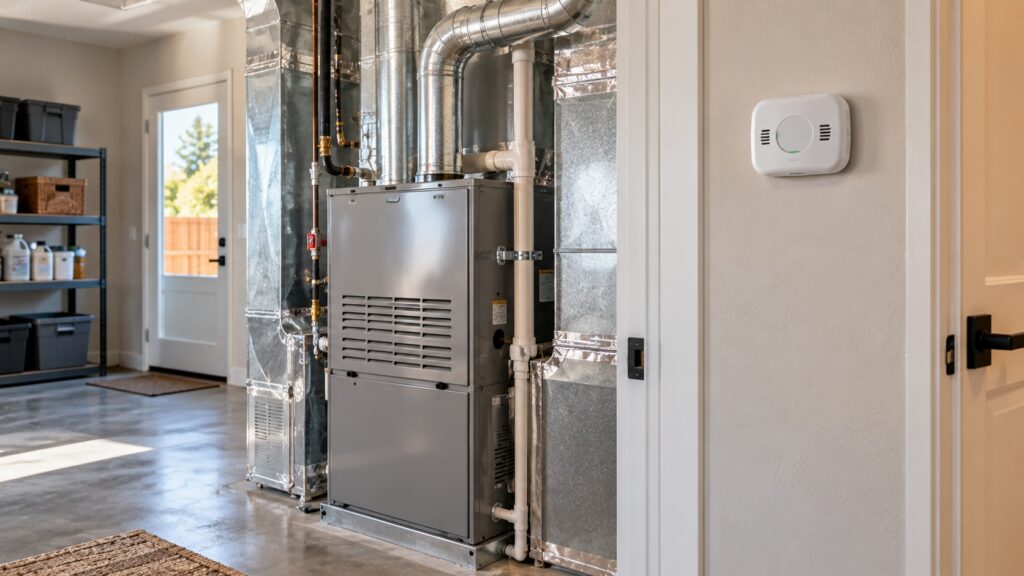
California residential requirements address homes containing fuel-burning appliances or fireplaces and certain homes with attached garages. Under the California Residential Code provisions reviewed for this article, CO alarms belong outside each separate sleeping area near bedrooms and on every occupiable level, including basements, with additional placement where a fuel-burning appliance is located in a bedroom or attached bathroom.
Follow the alarm manufacturer’s installation instructions for precise positioning and any additional applicable requirements. Use devices approved and listed for California, and remember that a combination smoke-and-CO alarm must satisfy requirements for both functions.
Homes with bedrooms in separate hallways may need more than a single alarm to cover every sleeping area. An alarm installed only beside the furnace is not a substitute for devices placed where occupants need to hear them, especially when they are asleep.
Test alarms following the manufacturer’s schedule, watch for low-battery or end-of-life signals, and replace the unit at the end of its specified service life. If a device chirps rather than sounding its emergency pattern, consult its instructions from a safe location; when you cannot distinguish the signals or suspect exposure, evacuate and seek emergency guidance.
An alarm is a last line of warning, not a way to certify that a poorly maintained furnace is safe. It is possible for an appliance to need repair even though no household alarm has sounded.
How Professional Furnace Inspections Help Reduce Risk
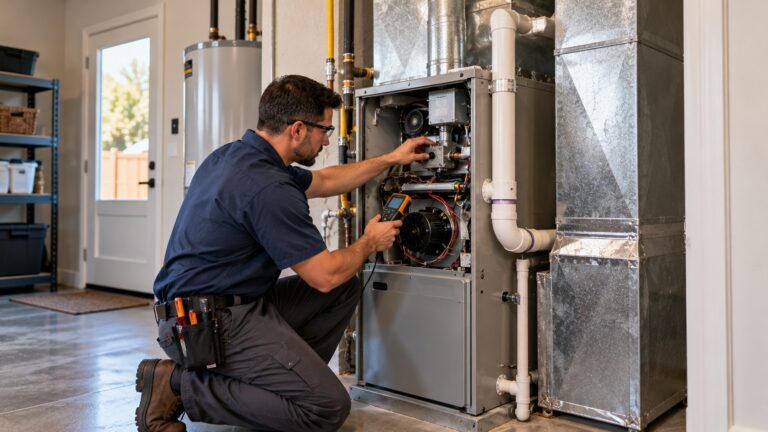
An annual heating inspection creates an opportunity to identify developing issues before the furnace is used heavily. The CPSC recommends that heating systems, including their chimneys and vents, be inspected and serviced annually by a trained technician.
A thorough evaluation may include examining accessible heat exchanger surfaces, inspecting vent connections and combustion-air pathways, assessing burner operation, and checking safety controls. The specific procedures depend on the furnace model, manufacturer instructions, access, and the condition observed.
Technicians may use specialized instruments to assess combustion performance and investigate potential carbon monoxide concerns. A measurement at one point in time is part of a broader diagnosis, not a lifetime guarantee against future defects.
Ask for clear explanations of any condition classified as unsafe and what needs to happen before the equipment can operate again. If a defect requires replacement parts or a new furnace, the safety finding should be documented rather than treated as a matter of comfort preference.
An annual visit is also an opportunity to address ordinary maintenance items that can shorten equipment life or interfere with performance. That broader care complements, but never replaces, working CO alarms throughout the home.
Practical Furnace Safety Habits for Tracy Households
Before the heating season, confirm that alarms operate correctly and that everyone at home knows what their emergency sound means. Discuss the outside meeting place so children and other household members have a simple plan rather than trying to make decisions during a frightening alert.
Keep areas around the furnace clear according to manufacturer instructions, and avoid storing flammable items near combustion equipment. Do not block combustion-air openings or obstruct accessible vent terminals, because appliances need the air and exhaust paths specified for their installation.
Replace or clean the HVAC air filter according to the system’s requirements and the filter manufacturer’s guidance. This helps maintain normal airflow, but filter changes alone cannot detect or resolve carbon monoxide production, vent defects, or heat exchanger damage.
If the furnace develops repeated faults, arrange a professional inspection instead of continually resetting it. Repeated restarts can obscure useful diagnostic information and may postpone attention to an underlying problem.
Never operate a portable generator in a house or garage, even with the door open, and keep it outdoors at least 20 feet from doors, windows, and vents as federal safety guidance advises. Likewise, do not use an oven, charcoal grill, or camp stove to heat indoor living spaces.
These precautions matter during outages as well as ordinary winter evenings. A home can contain multiple possible CO sources, so focusing on the furnace should not cause other fuel-burning equipment to be overlooked.
Why Tracy’s Seasonal Heating Pattern Matters
Tracy residents may spend long stretches thinking primarily about cooling, then return to heating when temperatures drop. That seasonal shift makes the first furnace run a useful reminder to review alarm status and schedule any overdue professional maintenance.
However, the first cold night is not a safe opportunity to experiment with suspicious equipment. If a furnace was previously tagged unsafe, has visible vent damage, or is associated with an alarm, leave it out of operation until the appropriate professionals have assessed the situation.
Households with attached garages should also recognize that vehicle exhaust can enter living spaces under some conditions. Never run a vehicle in an attached garage, including when the garage door is open, because carbon monoxide can accumulate or move into the home.
Renters should report missing or malfunctioning CO alarms and furnace safety concerns to their property manager or landlord promptly. In an active alarm situation, evacuation and emergency response come first; reporting and repairs can follow once everyone is safe.
What Happens After a Suspected Exposure?
Emergency responders may evaluate the environment and determine when occupants can safely return, but their assessment does not automatically authorize use of a malfunctioning furnace. If a heating appliance is suspected, keep it off until qualified personnel have identified and corrected the problem.
A medical evaluation may still be appropriate after exposure, even if symptoms ease outdoors. Tell the clinician when symptoms began, whether other people were affected, what appliances were running, and whether an alarm sounded, because that history can help guide care.
After the immediate event, review the household’s alarm placement, equipment maintenance records, and emergency plan. The goal is not simply to silence an alarm, but to understand and address the condition that caused concern.
If an alarm has expired or malfunctioned, replace it in accordance with its instructions and applicable requirements. Do not remove the only working warning device and resume normal occupancy without an appropriate safety assessment.
Final Thoughts: Safe Heat Requires More Than a Working Thermostat
A gas furnace can cause carbon monoxide exposure when combustion products enter the home, but there may be no smell, visible smoke, or obvious loss of heat. Working alarms, prompt evacuation when a warning occurs, and qualified furnace inspections each address a different part of that risk.
For Tracy homeowners, the most important distinction is between routine prevention and an active emergency. Maintenance is something to plan before the cold weather arrives; a sounding alarm or suspected poisoning calls for immediate fresh air, emergency services, and no reentry until responders approve.
Home heating should provide reliable comfort without requiring anyone to guess whether the air indoors is safe. Understanding these warning signs and keeping fuel-burning equipment professionally maintained helps households make informed safety decisions with AC Heating & Cooling Services.