You hear the air conditioner turn on, cool air begins flowing through the vents, and everything seems normal.
An hour later, it is still running.
Then another hour passes.
At some point, you start wondering: Why does my AC keep running, and is something wrong?
For homeowners in Tracy, California, the answer is not always straightforward. Long air-conditioning cycles can be completely normal during periods of extreme summer heat. When outdoor temperatures climb, your AC has to continuously remove heat entering your home through the roof, windows, walls, doors, and air leaks.
But there is an important difference between an air conditioner that is working hard and one that cannot shut off because something is wrong.
A constantly running AC can result from something as simple as a thermostat fan setting or dirty air filter. It can also indicate restricted airflow, dirty coils, duct leakage, refrigerant problems, incorrect system sizing, thermostat failure, or an electrical control problem.
The first step is figuring out exactly what your system is doing.
Is It Normal for an AC to Run for a Long Time in Tracy?
Sometimes, yes.
Tracy summers can place a substantial cooling load on residential HVAC systems. During the hottest part of an afternoon, your air conditioner may need to operate for much longer than it does on a mild spring day.
Think of your AC like a car climbing a steep hill.
On level ground, the engine does not have to work very hard. On a steep incline, it has to produce more power for longer. That does not automatically mean something is wrong with the engine.
Your air conditioner experiences something similar when outdoor temperatures rise.
If your home is maintaining a comfortable temperature near the thermostat setting during extreme heat, an extended cooling cycle may simply mean the system is keeping pace with the heat entering the house.
The situation becomes more concerning when:
- The AC runs continuously even during milder weather.
- Your home never reaches the thermostat setting.
- The house reaches the desired temperature, but the cooling equipment continues running.
- The indoor blower never turns off.
- Airflow has become noticeably weaker.
- The system runs longer than it used to under similar conditions.
- Your electricity usage suddenly increases without an obvious reason.
- The AC is running constantly while blowing air that does not feel adequately cool.
Those symptoms can point toward a problem that deserves closer attention.
First, Figure Out What Is Actually Running
One of the most useful troubleshooting steps is also one of the most overlooked.
When you say, “My AC won’t shut off,” what exactly won’t shut off?
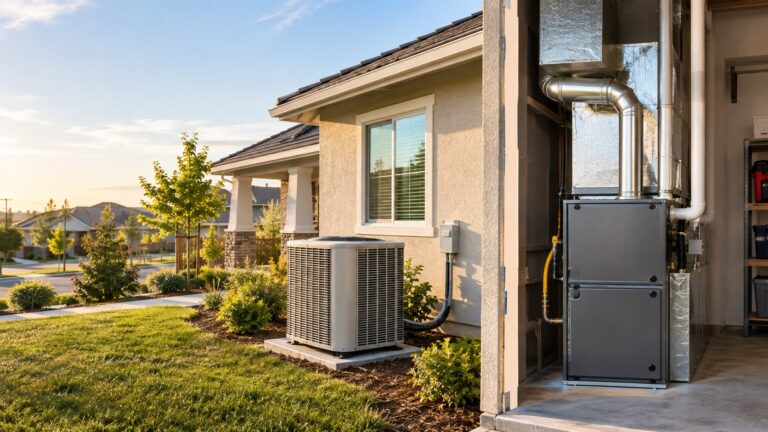
A central HVAC system contains several components that operate together. The indoor blower circulates air through the ductwork. The outdoor unit contains components involved in the actual cooling process.
Sometimes homeowners hear air coming from the vents and assume the entire air conditioner is continuously cooling.
That is not necessarily true.
If the thermostat fan setting is switched to ON, the indoor blower may continue circulating air even when the cooling cycle has ended.
In another situation, the blower and outdoor cooling equipment may both continue operating because the thermostat is still calling for cooling.
There is also a more serious possibility: the thermostat has stopped calling for cooling, but an electrical or control component is preventing the equipment from shutting down correctly.
These are very different problems.
Before assuming your AC is failing, check whether you are experiencing continuous fan operation, continuous cooling operation, or both.
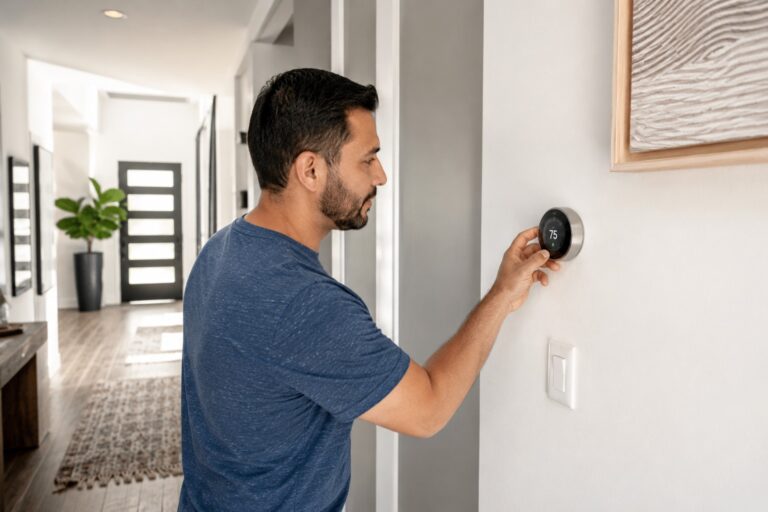
Thermostat Fan Set to “On” Instead of “Auto”
Start with one of the easiest explanations.
Look at your thermostat and find the fan setting.
Most thermostats provide options such as ON and AUTO.
When the fan is set to AUTO, the blower typically operates when the HVAC system needs to heat or cool the home.
When the fan is set to ON, the blower can continue circulating air even after the cooling cycle ends.
That can make it sound as though your air conditioner never shuts off.
If your home has already reached the desired temperature but you can still hear air moving through the vents, check this setting before assuming there is an equipment problem.
Switching the fan from ON to AUTO may solve the mystery immediately.
However, if the thermostat is already set correctly and the cooling system continues operating, further troubleshooting is appropriate.
Thermostat Problems Can Keep Your AC Running
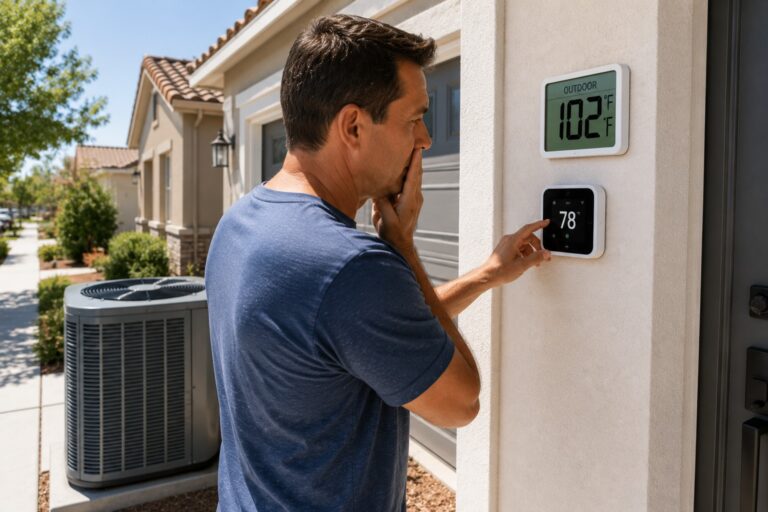
Your thermostat acts like the command center for your cooling system.
It monitors indoor temperature and tells the HVAC equipment when cooling is needed. When the thermostat detects that the home has reached the selected temperature, it should stop requesting cooling.
If that communication breaks down, your AC may run longer than necessary.
Possible thermostat-related problems include:
- Incorrect temperature settings
- Faulty temperature sensing
- Poor thermostat placement
- Wiring problems
- Low batteries on applicable models
- Calibration problems
- Aging or malfunctioning thermostat components
Location can matter, too.
For example, a thermostat exposed to unusual heat from direct sunlight or another heat source may sense a temperature that does not accurately represent the rest of the home. The system may continue cooling because the thermostat believes the house is warmer than it actually is.
Before changing equipment or assuming there is a major AC failure, verify the thermostat setting and compare the displayed temperature with how the home actually feels.
A Dirty Air Filter Can Extend Cooling Cycles
Your HVAC filter does much more than collect visible dust.
It also affects airflow through the system.
As a filter becomes clogged with dust and debris, it can become harder for the blower to move the required amount of air through the HVAC equipment.
Imagine trying to breathe through a clean piece of fabric versus several layers clogged with dust. The pathway still exists, but moving air through it requires much more effort.
Restricted airflow can reduce HVAC performance and contribute to longer cooling cycles.
Check your filter if your AC seems to be running unusually long, especially if you cannot remember when it was last inspected or replaced.
How frequently a filter needs attention depends on factors such as filter type, household conditions, pets, indoor dust levels, and system usage. The correct replacement schedule is therefore not identical for every home.
If the filter is visibly dirty, replacing it according to the equipment and filter manufacturer’s recommendations is a sensible first step.
Restricted Airflow Makes Your AC Work Harder
The filter is not the only place airflow can become restricted.
Your HVAC system depends on a continuous path: air enters through return vents, passes through the equipment, and travels through supply ducts before entering your rooms.
Problems anywhere along that path can interfere with performance.
Common airflow issues include blocked return grilles, closed or obstructed supply vents, duct problems, dirty components, and blower-related issues.
For example, pushing a large piece of furniture directly against a return grille can restrict airflow without the homeowner realizing it.
Likewise, closing numerous supply vents is not necessarily an effective way to save energy. Residential duct systems are designed around specific airflow requirements, and significantly changing that airflow can create unintended problems.
Walk through the home and make sure accessible supply and return vents are not covered by furniture, rugs, curtains, boxes, or other objects.
If certain rooms receive noticeably less air than others, the problem may extend beyond a simple obstruction.
Dirty Evaporator or Condenser Coils Can Reduce Cooling Performance
Your air conditioner does not create cold in the same way a furnace creates heat.
Instead, the cooling system transfers heat.
The indoor evaporator coil absorbs heat from indoor air, while the outdoor condenser side of the system releases heat outside.
When the heat-transfer surfaces become excessively dirty, the system may have difficulty performing as efficiently as intended.
That can contribute to longer run times.
Outdoor equipment deserves particular attention because it operates in an environment exposed to dirt, vegetation, leaves, and other debris.
Homeowners can visually check whether the area around the outdoor unit has become obstructed. Keep landscaping and stored objects from crowding the equipment, following manufacturer clearance requirements.
Cleaning internal HVAC components, however, can require professional techniques. Aggressive DIY cleaning can damage delicate components, so deeper maintenance is better left to a qualified technician.
The Bottom Line: A Constantly Running AC Is a Symptom, Not a Diagnosis
So, why does your AC keep running?
It could be something simple, such as the thermostat fan being set to ON.
It could be a dirty filter restricting airflow.
It could involve dirty coils, duct leakage, excessive heat entering the home, incorrect equipment sizing, thermostat problems, low refrigerant caused by a leak, or an electrical control issue.
Or your AC may simply be working through an exceptionally demanding Tracy summer afternoon.
The key is not to judge the system by runtime alone.
Instead, determine whether the house reaches the thermostat setting, whether the cooling equipment actually shuts down once that setting is reached, whether airflow and cooling performance have changed, and whether any unusual symptoms accompany the long runtime.
That approach helps separate normal summer operation from a developing HVAC problem and helps homeowners know when a simple check is enough and when professional diagnosis is the safer next step.