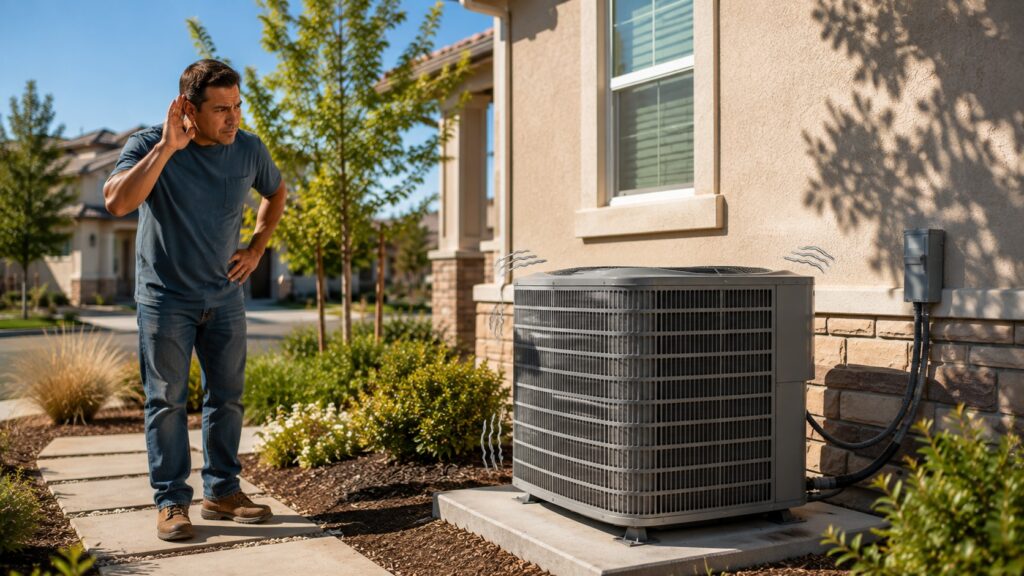
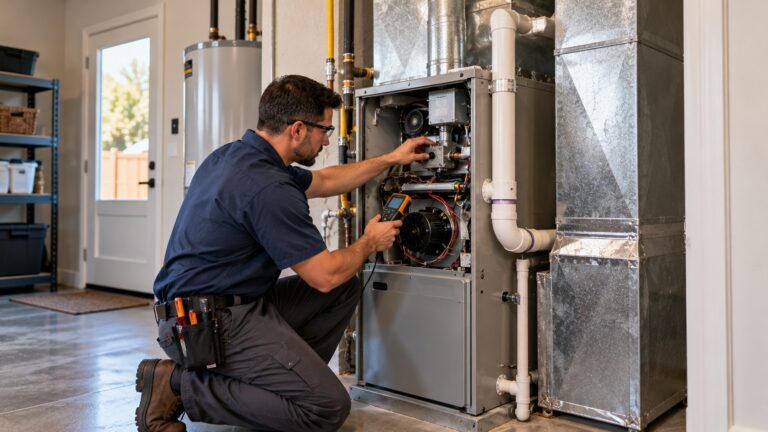
Your air conditioner does not have to be silent to be healthy.
You will normally hear the blower moving air through your home, the outdoor condenser fan running, and a brief sound when the system starts or stops. After living in a house for a while, most homeowners become so familiar with these sounds that they barely notice them.
That is exactly why a new sound tends to stand out.
Maybe the outdoor unit suddenly starts buzzing. Perhaps there is a metallic rattle every time the AC turns on. You might hear a high-pitched squeal from the indoor unit or a mysterious hissing noise that seems to come from a refrigerant line.
When an air conditioner is making noise that it did not make before, it is worth paying attention.
Think of unusual AC noises like warning lights on a car dashboard. The sound itself does not always tell you precisely which component has failed, but it can provide an important clue about where to begin looking.
Some noises come from relatively simple problems, such as a loose panel or debris around the outdoor unit. Others can point toward worn motors, electrical problems, damaged moving components, refrigerant-related issues, or other conditions that require professional diagnosis.
For homeowners in Tracy, CA, unusual AC sounds can become especially noticeable during the hottest parts of summer. When an air conditioner runs for long stretches to maintain indoor comfort, components that are loose, worn, or beginning to fail may finally make themselves heard.
Here are nine AC sounds homeowners should recognize and what each one may be trying to tell you.
What Does a Normal Air Conditioner Sound Like?
Before diagnosing an unusual sound, it helps to know what normal operation sounds like.
A central air conditioning system typically produces several predictable noises. You may hear a click as the system starts, a steady rush of air through the vents, a low hum from operating equipment, and the outdoor fan and compressor running.
The important word is consistent.
A healthy system generally develops a familiar sound pattern. A sudden change deserves more attention than a sound the system has produced consistently for years.
Volume also matters.
A quiet hum may be completely normal. A hum that suddenly becomes loud enough to hear across the yard is different. One click during startup may be expected, while repeated clicking that continues without the equipment starting could indicate a problem.
When evaluating a new AC noise, ask yourself three questions:
- Is this sound new?
- Is it becoming louder or more frequent?
- Has anything else changed, such as cooling performance, airflow, odors, or system cycling?
Those details can help distinguish ordinary operating noise from an early warning sign.
1. Buzzing: Possible Electrical or Component Problems
A buzzing air conditioner is one of the most common noises homeowners notice.
Unfortunately, “buzzing” can describe several different problems.
A buzz from the outdoor condenser could be associated with an electrical component, a struggling fan motor, vibration, loose parts, or debris. A failing capacitor or contactor may also be involved in certain situations.
The location and timing of the sound are important.
If the outdoor unit buzzes but the fan does not begin spinning, that is very different from a light vibration while everything appears to be operating normally.
Electrical components inside HVAC equipment can retain dangerous voltage even when a system appears to be off. Homeowners should not remove electrical covers or attempt capacitor, contactor, wiring, or compressor repairs themselves.
If the buzzing is loud, persistent, accompanied by a burning smell, or occurs while the system struggles to start, turn the air conditioner off and have the problem professionally inspected.
A new electrical buzz is particularly important to investigate because continuing to run a struggling component can sometimes turn a smaller repair into a larger failure.
2. Rattling: Loose Parts, Debris, or Developing Wear
Rattling can sound surprisingly dramatic, but not every rattle means your air conditioner is on the verge of breaking down.
Sometimes the cause is relatively simple.
Leaves, twigs, or other debris around an outdoor condenser can create noise. An exterior panel or fastener may also vibrate while the equipment operates.
However, rattling can also originate deeper inside the system.
A loose fan component, worn motor, blower assembly problem, or another moving part can create a repetitive rattling sound. The longer a loose mechanical component operates, the greater the possibility that vibration will affect surrounding parts.
Start by identifying whether the rattle comes from the indoor or outdoor equipment.
Without opening the cabinet, visually inspect the area surrounding the outdoor condenser. Make sure nothing obvious is touching the equipment. Landscaping, branches, yard debris, or an object leaning against the unit can sometimes create surprisingly loud vibration.
If the rattle clearly comes from inside the equipment, becomes worse, or sounds metallic, professional inspection is the safer choice.
Do not reach through the condenser grille or attempt to remove debris near moving components while the equipment has power.
3. Banging or Clanking: Something May Be Loose or Broken
A loud banging or clanking noise deserves more attention than a mild rattle.
These sounds often suggest that something is moving where it should not be.
Depending on where the sound originates, possible causes can involve a fan or blower component, loose hardware, motor-related parts, or compressor-related problems.
Imagine a washing machine with an unbalanced load. Once something begins moving out of its intended path, each rotation creates another impact. HVAC equipment can behave similarly when a rotating component becomes loose or damaged.
A repetitive metallic bang should not be treated as normal AC operation.
If the noise is loud and clearly coming from inside the indoor or outdoor unit, switch the system off rather than allowing it to continue running while you investigate.
Continuing operation could allow a loose component to damage other parts.
Homeowners can note when the banging happens, is it only at startup, continuously while the fan runs, or as the equipment shuts down? That information can be useful during professional diagnosis.
Avoid opening equipment panels and trying to locate the moving part yourself.
4. Hissing: Airflow or Refrigerant Problems
Hissing is one of the more complicated AC noises because it can have several explanations.
Sometimes moving air creates a hissing or whistling sound around a vent or duct connection. Restricted airflow can also change the sound of air moving through a system.
In other circumstances, persistent hissing around HVAC equipment or refrigerant lines may indicate a refrigerant-related problem.
Refrigerant is essential to the cooling process. If the system develops a leak, cooling performance can suffer, and the underlying leak requires professional diagnosis rather than simply adding refrigerant.
Pay particular attention if hissing occurs alongside other symptoms, such as:
- The home taking longer to cool
- Warm or insufficiently cool air
- Ice developing on HVAC components
- Longer-than-normal cooling cycles
- A noticeable decline in system performance
Do not attempt to locate or repair a refrigerant leak yourself.
A technician can determine whether the sound is related to refrigerant, airflow, ductwork, or another source.
5. Squealing or Screeching: Motor and Mechanical Warning Signs
Few AC noises get your attention as quickly as a high-pitched squeal or screech.
These sounds often involve moving components.
Depending on the equipment design and where the sound originates, possibilities can include motor bearings, fan components, blower components, or other mechanical problems.
An occasional brief sound at startup may have a different cause than a continuous, piercing screech while the equipment runs.
The safest approach is to focus on the pattern.
Does the sound begin when the indoor blower starts? Does it come from the outdoor condenser? Does it continue throughout the cooling cycle? Has it become progressively louder over several days?
Those clues can help a technician narrow the source.
If the sound resembles metal scraping or a loud mechanical screech, shut the system off.
A motor or fan assembly that is struggling mechanically can sometimes continue running temporarily, but that does not mean continued operation is harmless.
The sound is the symptom. The goal is to identify the underlying problem before another component is affected.
6. Grinding: A Sound You Should Take Seriously
Grinding is rarely a noise homeowners should ignore.
A grinding air conditioner may have a problem involving a motor, bearing, blower assembly, fan, or another mechanical component.
The reason grinding deserves prompt attention is simple: components inside an HVAC system are designed to rotate smoothly. Metal-on-metal or rough mechanical sounds suggest something may no longer be moving as intended.
Running the equipment can potentially worsen that condition.
If you hear a pronounced grinding noise from the indoor air handler or outdoor condenser, turn the air conditioner off and arrange for an inspection.
Do not repeatedly restart the system to see whether the sound disappears.
That is similar to hearing a severe grinding sound from your car and repeatedly starting the engine in hopes that it fixes itself.
Sometimes homeowners hesitate to turn off an AC system during a hot Tracy afternoon because indoor temperatures can climb quickly. That concern is understandable, but forcing damaged equipment to continue operating can create a much larger problem.
7. Repeated Clicking: Possible Electrical or Control Problems
A click is not automatically a problem.
Air conditioners contain electrical controls that can make a brief clicking sound when equipment starts or stops.
The warning sign is repeated clicking.
If you hear continuous or rapid clicking while the system struggles to start, the issue could involve a relay, contactor, thermostat signal, electrical connection, or another control component.
If your air conditioner does not start correctly, check the thermostat display and settings before assuming the worst.
If the breaker has tripped, do not repeatedly reset it.
A breaker that continues tripping may be protecting the electrical circuit from an underlying problem.
Persistent clicking combined with failed startup, breaker problems, burning odors, or electrical buzzing should be professionally diagnosed.
8. Humming: Normal Operation or a Developing Problem?
Humming is tricky because some humming is completely normal.
Motors, transformers, compressors, and other electrical equipment naturally produce sound while operating.
The question is whether the hum has changed.
A low, steady sound that has always been present is generally less concerning than a new, unusually loud hum.
Suppose you walk past your outdoor condenser every summer and barely notice it. Then one afternoon you hear a strong humming noise from across the yard. That change is meaningful even if the AC is still cooling.
Possible causes vary depending on where the noise originates. Vibration, electrical components, motors, or other equipment may be involved.
Avoid opening electrical compartments to investigate.
Instead, note whether the outdoor fan is running, whether cool air is coming from the vents, and whether the system starts and stops normally.
If the equipment hums but does not successfully start, turn it off and have it inspected.
9. Whistling: Restricted Airflow or Duct Problems
A whistling AC often points homeowners toward the air-distribution side of the system.
Air forced through a narrow opening behaves much like someone blowing across a small gap—it can whistle.
Possible sources can include airflow restrictions, vents, registers, duct connections, or filter-related problems.
Start with the simplest check: your HVAC filter.
A heavily restricted filter can interfere with airflow and make the system work harder.
Make sure the filter is the correct type and size for the system and is installed in the proper direction.
Next, check visible supply and return vents. Furniture, rugs, curtains, or other objects should not obstruct airflow.
Do not assume closing multiple supply vents is a good way to save energy. HVAC systems are designed around airflow requirements, and dramatically changing airflow can create comfort and performance problems.
If the whistle seems to originate inside walls, ceilings, or ductwork, there may be a duct-related issue that requires further inspection.
How to Tell Where an AC Noise Is Coming From
Identifying the general source of a noise can make troubleshooting much easier.
You do not need to dismantle anything.
Start by listening from a safe distance while the system operates normally.
First, stand near the indoor return and supply vents. Does the sound become louder around one particular register?
Next, listen near the indoor HVAC equipment without removing panels.
Finally, move outside and listen to the condenser.
You are trying to answer three basic questions:
Where does the sound originate?
Indoor equipment, outdoor equipment, vents, ductwork, or refrigerant lines?
When does it happen?
At startup, during the entire cycle, just before shutdown, or randomly?
What else happens at the same time?
Does airflow become weak? Does the system stop cooling? Does the outdoor fan stop? Does the thermostat behave unusually?
If the noise is intermittent, recording it on your phone can also be useful. A system may behave perfectly by the time a technician arrives, and an audio or video recording can preserve an important diagnostic clue.
Never put yourself close to moving equipment simply to capture the sound.
The Bottom Line: Your AC’s New Noise Is Worth Listening To
An air conditioner making noise is not automatically experiencing a major failure.
But a new noise is information.
Buzzing can point toward electrical or mechanical issues. Rattling may come from loose components or debris. Banging can indicate something moving where it should not. Hissing may involve airflow or refrigerant-related concerns. Squealing and grinding can signal mechanical wear. Repeated clicking can point toward controls or electrical components. Humming may be normal until it suddenly becomes louder, while whistling frequently sends attention toward airflow.
The most useful thing a Tracy homeowner can do is recognize when the sound has changed.
Listen to where it comes from. Notice when it occurs. Pay attention to accompanying symptoms. Perform only safe, external checks, and avoid opening electrical or refrigerant components.
Your air conditioner does not need to be silent.
It does, however, have a normal voice.
When that familiar background sound suddenly turns into buzzing, banging, rattling, grinding, or screeching, your system may be giving you an early warning worth hearing.