Nothing is more frustrating than turning on your air conditioner during a hot Tracy afternoon only to discover that your HVAC breaker has tripped again.
Many homeowners assume resetting the breaker is the solution. While that may temporarily restore power, a breaker that repeatedly trips is actually protecting your home from a potentially dangerous electrical problem. Ignoring the issue or continually resetting the breaker can lead to costly HVAC damage, electrical hazards, or even fire risks.
Understanding why your HVAC breaker keeps tripping can help you recognize when a simple maintenance issue is to blame and when it’s time to call an experienced HVAC technician.
What Does It Mean When Your HVAC Breaker Keeps Tripping?
Your circuit breaker is a safety device.
Its job is to shut off electrical power whenever it detects more electricity flowing through the circuit than it was designed to handle.
Think of it as a safety valve.
Instead of allowing wires to overheat, the breaker disconnects power before serious damage occurs.
If your air conditioner trips the breaker once after a severe power surge or lightning storm, it may not indicate a serious issue. However, if the breaker trips repeatedly every time the system starts or after running for several minutes, there is almost always an underlying problem that requires attention. Repeated breaker trips should never be ignored because they are a warning sign rather than the root cause.
Why Circuit Breakers Trip
Several conditions can cause your HVAC system to draw excessive electrical current, including:
- Electrical shorts
- Overloaded motors
- Dirty system components
- Failing compressors
- Loose electrical connections
- Aging HVAC equipment
The breaker isn’t malfunctioning, it’s doing exactly what it was designed to do.
8 Common Reasons Your HVAC Breaker Keeps Tripping
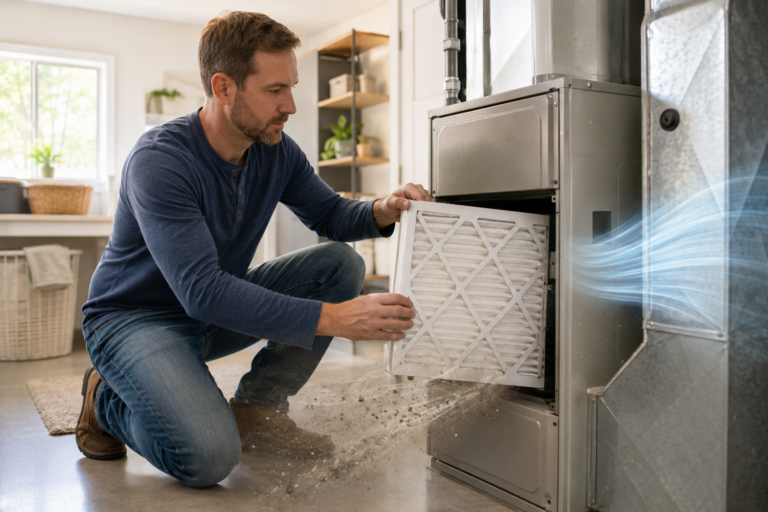
1. Dirty Air Filter Restricting Airflow
A clogged air filter forces your HVAC system to work much harder than normal.
When airflow becomes restricted:
- The blower motor runs longer.
- System temperatures increase.
- Electrical demand rises.
- Components experience greater wear.
Eventually, the increased electrical load may cause the breaker to trip.
Fortunately, this is also one of the easiest problems to prevent.
Replacing your air filter according to the manufacturer’s recommendations helps maintain proper airflow while reducing unnecessary strain on the system.
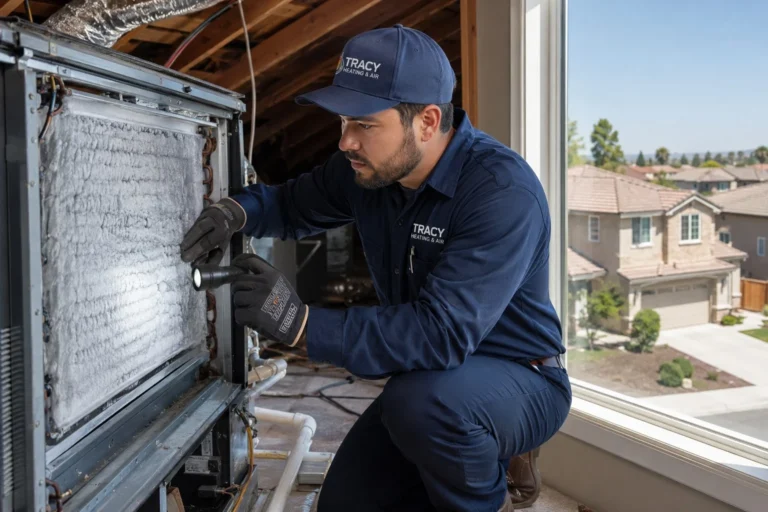
2. Dirty Condenser Coils
Your outdoor unit releases heat through condenser coils.
Over time, these coils collect:
- Dirt
- Dust
- Grass clippings
- Cottonwood
- Leaves
When airflow across the coils becomes restricted, your AC cannot release heat efficiently.
The compressor must work significantly harder, increasing electrical current until the breaker eventually trips.
Professional coil cleaning during seasonal maintenance helps restore efficiency and reduce electrical stress.
3. Failing Compressor
The compressor is often called the heart of your air conditioning system.
As compressors age, internal components wear down.
Signs include:
- Loud humming
- Hard starting
- Frequent breaker trips
- Reduced cooling performance
- Warm air from vents
A compressor drawing excessive amperage is one of the most common causes of repeated breaker trips.
Because compressor replacement involves refrigerant handling and specialized tools, diagnosis should always be left to licensed HVAC professionals.
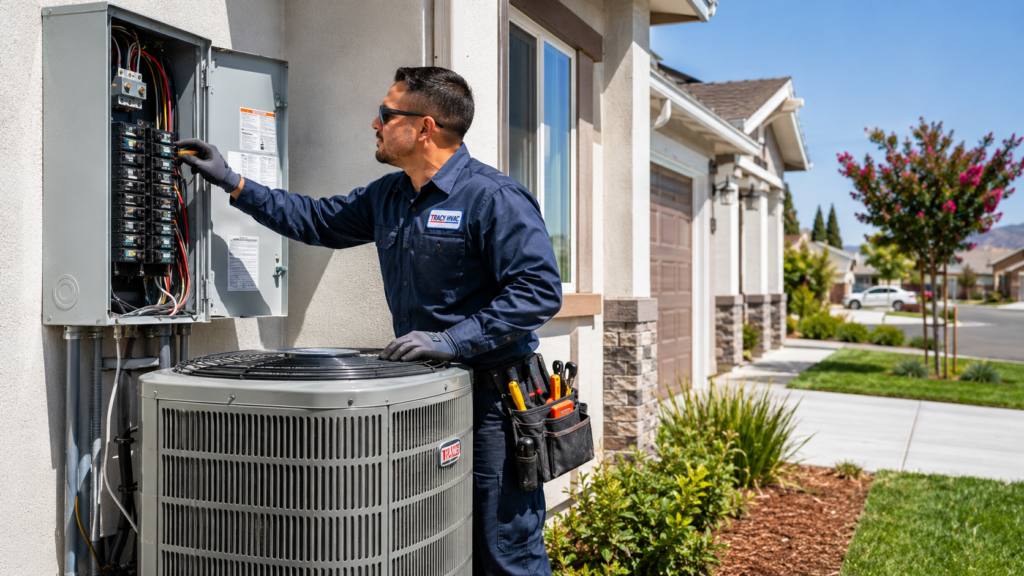
4. Loose or Damaged Electrical Connections
Electrical connections naturally loosen over time because of vibration and temperature changes.
Loose wiring creates electrical resistance.
Resistance creates heat.
Heat increases current draw.
Eventually, the breaker detects unsafe conditions and shuts off power.
Since electrical components can present serious shock hazards, homeowners should never attempt to tighten or repair HVAC wiring themselves.
5. Capacitor Problems
Your HVAC system depends on capacitors to help motors start and run efficiently.
When a capacitor begins to fail, motors may struggle to start.
Symptoms include:
- Clicking sounds
- Buzzing noises
- Delayed startup
- Breaker trips immediately after startup
Replacing a faulty capacitor is usually straightforward for a trained technician but should never be treated as a DIY repair because capacitors can retain a dangerous electrical charge even after power is disconnected.
6. Compressor Hard Starting
As HVAC systems age, compressors sometimes require significantly more electricity to start than they originally did.
This condition, known as “hard starting,” creates a brief but excessive electrical surge.
Eventually, the breaker trips to prevent overheating.
Installing a hard-start kit may help in some situations, but only after a technician confirms that the compressor itself is still in good condition.
7. An Aging HVAC System
Even well-maintained HVAC systems experience normal wear over time.
Older systems often have:
- Less efficient motors
- Worn bearings
- Electrical fatigue
- Increased power consumption
If your HVAC system is approaching the end of its expected service life and frequently trips the breaker despite repairs, replacement may be more economical than continued repairs. Many residential systems provide about 10–15 years of service with proper maintenance, though actual lifespan varies by usage, maintenance, and operating conditions.
8. A Failing Circuit Breaker
Sometimes the HVAC system isn’t the problem.
Circuit breakers themselves wear out.
Older breakers may trip prematurely even when electrical loads remain within safe limits.
An HVAC technician and, when appropriate, a licensed electrician can determine whether the issue lies within the HVAC equipment or the home’s electrical panel.
Safe DIY Checks Before Calling an HVAC Professional
There are a few simple inspections homeowners can safely perform before scheduling service.
Check Your Air Filter
If it’s visibly dirty, replace it.
Inspect the Outdoor Unit
Remove leaves, weeds, and debris around the condenser.
Maintain at least two feet of clearance for proper airflow.
Check the Thermostat
Verify that:
- Cooling mode is selected.
- Temperature is set below room temperature.
- Batteries (if applicable) are functioning.
Reset the Breaker Once
If the breaker trips immediately after being reset, stop trying to restart the system. Repeated resets can worsen equipment damage and create safety risks.
When You Should Stop Resetting the Breaker
Many homeowners unknowingly make the problem worse by repeatedly flipping the breaker back on.
This is not recommended.
If your breaker trips:
- More than once
- Immediately after startup
- Within a few minutes of running
- Along with burning smells
- While producing unusual noises
Turn the HVAC system off and schedule professional service.
Your breaker is warning you that something is wrong.
Ignoring that warning could transform a relatively inexpensive repair into a major system failure.
Why This Problem Is Common During Tracy Summers
Summers in Tracy, California place significant demand on residential cooling systems.
Long cooling cycles, high outdoor temperatures, dust accumulation, and deferred maintenance all contribute to increased electrical stress.
During prolonged heat waves:
- Compressors run longer.
- Motors operate at higher temperatures.
- Air filters clog more quickly.
- Outdoor coils collect more debris.
All of these factors increase the likelihood of a breaker trip.
Routine preventive maintenance before peak summer conditions can significantly reduce the risk of unexpected breakdowns.
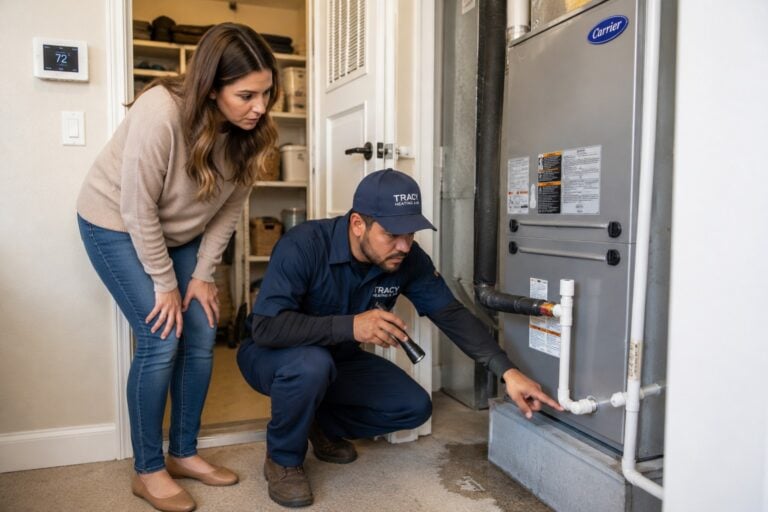
How Professional HVAC Diagnosis Solves the Problem
When a technician arrives, they don’t simply replace the breaker.
Instead, they perform a systematic inspection that may include:
- Measuring compressor amperage
- Inspecting capacitors
- Testing motors
- Checking refrigerant pressures
- Examining electrical connections
- Cleaning coils if necessary
- Verifying breaker condition
- Confirming proper system airflow
This comprehensive approach identifies the true cause rather than merely treating the symptom.
How to Prevent Future Breaker Trips
Most HVAC breaker problems are preventable.
Homeowners can reduce the likelihood of electrical issues by following a consistent maintenance routine:
- Replace air filters regularly.
- Keep outdoor units free from debris.
- Schedule professional HVAC maintenance before summer.
- Address unusual noises promptly.
- Avoid delaying repairs.
- Monitor cooling performance for changes.
- Keep vents open and unobstructed throughout the home.
Preventive maintenance not only helps avoid nuisance breaker trips but can also improve efficiency, reduce utility costs, and extend equipment life.
Final Thoughts
A circuit breaker that keeps tripping is doing exactly what it was designed to do, protect your home and HVAC system from unsafe electrical conditions.
While replacing a dirty air filter or clearing debris around the outdoor unit may resolve some issues, repeated breaker trips usually indicate a deeper mechanical or electrical problem. Continuing to reset the breaker without identifying the underlying cause can lead to expensive repairs, shortened equipment life, or safety hazards.
If your HVAC breaker continues to trip, a professional inspection can pinpoint the root cause, restore reliable operation, and help prevent future breakdowns especially during Tracy’s hottest months when your cooling system is working its hardest.